

Direct Answer
Online laser parameter charts are useful as a starting signal, not as a final production recipe. Use them to decide whether the job belongs on a CO2 workflow such as the TYVOK K1 series, or a metal-first fiber workflow such as TYVOK P2 Ultra, then build your own scrap test grid before any paid or repeat job.

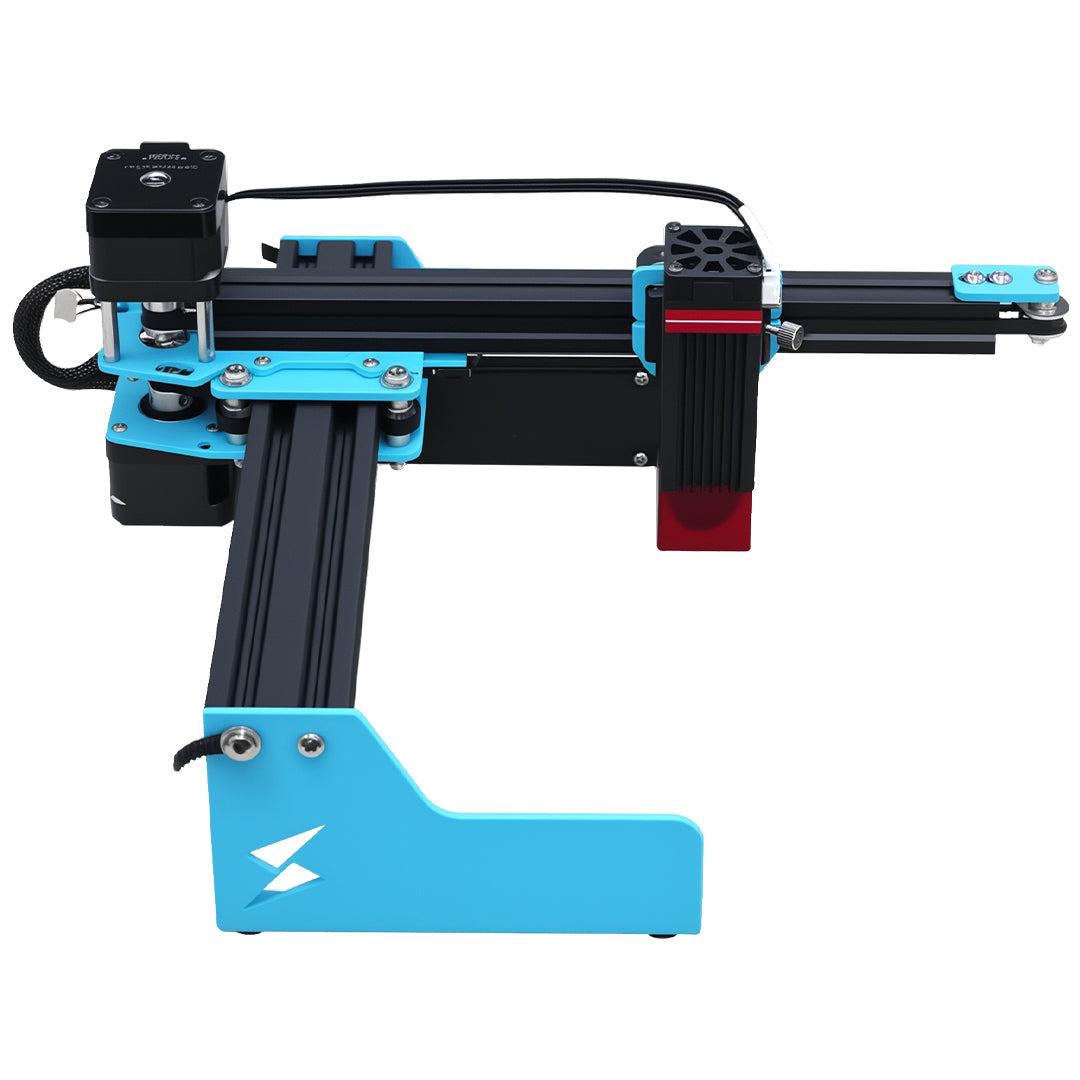
Choose the TYVOK K1 series when the work is mainly wood, acrylic, leather, fabric, paper, cardboard, glass marking, laser-safe rubber, or similar CO2-friendly studio materials. Choose TYVOK P2 Ultra when the work is mainly metal tags, serial plates, jewelry, tools, metal cards, stainless marking, aluminum marking, and compact metal personalization.
Before publishing or running jobs, check the current TYVOK product page, latest manual, and material safety data. This blog is educational workflow guidance, not a replacement for the machine manual or live product page.
Why Parameter Charts Are Trending
Creators keep sharing tables for power, speed, frequency, and fill spacing because buyers want a fast answer before buying a machine. That demand is real: people want to know whether a laser can handle acrylic signs, leather patches, stainless tags, aluminum cards, or shop labels without wasting material.
The risk is treating a screenshot as a finished setting file. The same material name can hide different thickness, coating, alloy, moisture, adhesive, surface finish, lens, focus, air assist, and machine condition. A useful chart tells you what to test first. It does not remove the test.
K1 or P2 Ultra: Match the Laser Type to the Material
| Job or material family | Better TYVOK path | Why it fits |
|---|---|---|
| Wood signs, plywood samples, cork, cardboard, paper packaging | TYVOK K1 series | CO2 workflows are the natural path for organic sheet materials and larger studio cutting or engraving jobs. |
| Acrylic signs, templates, display pieces | TYVOK K1 series | Acrylic is a classic CO2 material; test edge quality, engraving contrast, and flame behavior on scrap first. |
| Leather patches and fabric labels | TYVOK K1 series | CO2 can be a good fit when the material composition is verified and ventilation is controlled. |
| Glass marking or surface etching | TYVOK K1 series | CO2 is commonly used for glass surface marking, but focus, artwork density, and thermal stress still need testing. |
| Stainless tags, aluminum cards, serial plates | TYVOK P2 Ultra | P2 Ultra is the metal-first 20W 1064nm fiber path for compact marking workflows. |
| Jewelry, tool IDs, coated metal blanks | TYVOK P2 Ultra | Fiber marking is built for precise metal identification, small parts, and repeatable positioning. |
| Unknown plastic, vinyl, PVC, mystery coated blanks | Do not run until verified | Material safety is the first decision. Do not process PVC, vinyl, or unknown plastics. |
How to Turn a Chart Into a Real Test Grid
- Start with the material family, not the number in the chart. A CO2 chart belongs to CO2-friendly materials; a fiber chart belongs to metal-first marking workflows.
- Confirm the exact blank. Record alloy, coating, thickness, supplier, color, and any safety data sheet available from the seller.
- Build a small grid that changes only two variables first, usually power and speed. Add frequency, line interval, hatch angle, or pass count only after the first grid is readable.
- Mark every test tile with its settings. A beautiful result is not useful if you cannot repeat it.
- Judge the result under the real use condition: barcode scan, outdoor handling, gift presentation, paint-fill, adhesive backing, or customer cleaning.
- Save one approved sample and one rejected sample. The rejected sample teaches the operator what not to repeat.
What K1 Buyers Should Take From CO2 Charts
If your saved chart talks about wood, acrylic, leather, bamboo, paper, cardboard, fabric, glass, or laser-safe rubber, the larger decision is usually a CO2 decision. That is where the TYVOK K1 series belongs.
Do not map a 40W CO2 chart directly onto K1. The current K1 series includes different CO2 configurations, including K1 55W, K1 Pro 100W, and K1 Max 100W variants on the live product page. Tube power, bed size, focus, air assist, artwork density, and material thickness all change the result.
For K1 work, build separate test cards for engraving and cutting. Engraving tests should compare contrast, edge smoke, surface texture, and cleanup time. Cutting tests should compare kerf, underside residue, flame behavior, and whether the job can be watched safely from start to finish.
What P2 Ultra Buyers Should Take From Fiber Charts
If the chart talks about stainless black marking, aluminum, coated metal, serial plates, jewelry, tool IDs, or metal cards, the larger decision is usually a fiber decision. TYVOK P2 Ultra is the metal-first 20W 1064nm fiber workflow with red-light positioning for compact metal jobs.
Do not copy 30W or 60W fiber numbers into P2 Ultra and expect the same depth, color, or cycle time. Metal response depends on alloy, coating, lens, focus, hatch strategy, pass count, and the current manual. Deep steel engraving or relief-style work is a different production target from surface identification, and it must be validated against the material and depth requirement.
For P2 Ultra work, treat the first week as a library-building week. Make test cards for stainless tags, anodized aluminum, bare aluminum, coated tools, and metal cards. Keep the winning samples near the machine so repeat jobs start from evidence instead of memory.
Safety Checks Before Any Material Test
- Use ventilation or fume extraction every time, especially with coated blanks, leather, acrylic, fabric, rubber, and painted material.
- Keep fire watch active. Do not leave a laser job unattended.
- Use the required enclosure and eye protection for the machine and wavelength.
- Verify material composition before running plastics, rubber, vinyl-like labels, coated stock, or unknown blanks.
- Do not process PVC, vinyl, or mystery plastics.
- Expect coating and anodizing differences between suppliers. A setting that works on one batch may fail on the next.
- Test on scrap first, then run the paid part only after the sample is approved.
A Practical Buying Shortcut
If your product list is signs, acrylic templates, wood gifts, leather patches, paper packaging, fabric labels, and larger studio panels, start with the TYVOK K1 series page: https://tyvok.com/products/tyvok-k1-100w-co-laser-engraver-for-makers-designers.
If your product list is stainless tags, aluminum cards, serial plates, jewelry pieces, tool IDs, coated metal blanks, and small metal personalization, start with the TYVOK P2 Ultra page: https://tyvok.com/products/tyvok-p2-ultra?view=tyvok-p2-ultra-v10#buy.
If you need both categories, keep the workflows separate. CO2 and fiber machines solve different material problems. The cleanest shop process is not one giant parameter chart; it is one tested material library per laser type.
Related TYVOK Guides
- K1 product reference: https://tyvok.com/products/tyvok-k1-100w-co-laser-engraver-for-makers-designers
- P2 Ultra product reference: https://tyvok.com/products/tyvok-p2-ultra?view=tyvok-p2-ultra-v10#buy
- K1 small business review: https://tyvok.com/blogs/news/best-co2-laser-engraver-for-small-business-in-2026-tyvok-k1-series-review
- P2 Ultra first-week metal marking workflow: https://tyvok.com/blogs/news/tyvok-p2-ultra-start-metal-marking-first-week-guide
- P2 Ultra power curve workflow: https://tyvok.com/blogs/news/tyvok-p2-ultra-20w-power-curve-cutting-depth-guide
FAQ
Can I use a 40W CO2 chart directly on TYVOK K1?
No. Use it only to decide what kind of test to run. The K1 series is a CO2 path, but power level, bed size, focus, tube behavior, air assist, and material thickness change the result.
Can P2 Ultra use fiber settings from a 30W or 60W chart?
Use those charts only as a learning reference. P2 Ultra is a 20W 1064nm fiber workflow, so metal marking results need a P2 Ultra-specific test grid and current manual guidance.
Which TYVOK machine is better for acrylic?
For acrylic signs, templates, and display pieces, the TYVOK K1 series is the natural CO2 path. Always test thickness, edge quality, flame behavior, and ventilation before production.
Which TYVOK machine is better for stainless steel tags?
For stainless tags, serial plates, tool IDs, jewelry, and metal cards, TYVOK P2 Ultra is the metal-first fiber path. Validate contrast, scan readability, durability, and cycle time on the exact blank.
Why do online laser settings fail even when the material name matches?
Because the material name is incomplete. Coating, alloy, adhesive, thickness, focus, lens, air assist, supplier batch, and desired finish can all change the result.