

Test a crochet-base hole with the actual hook and yarn together. A bare hook passing through is not enough: the hook must catch the yarn, draw the loop through and move to the next hole without forcing the wood rim or scraping the fiber. Prove a short curved sample before making the complete base.
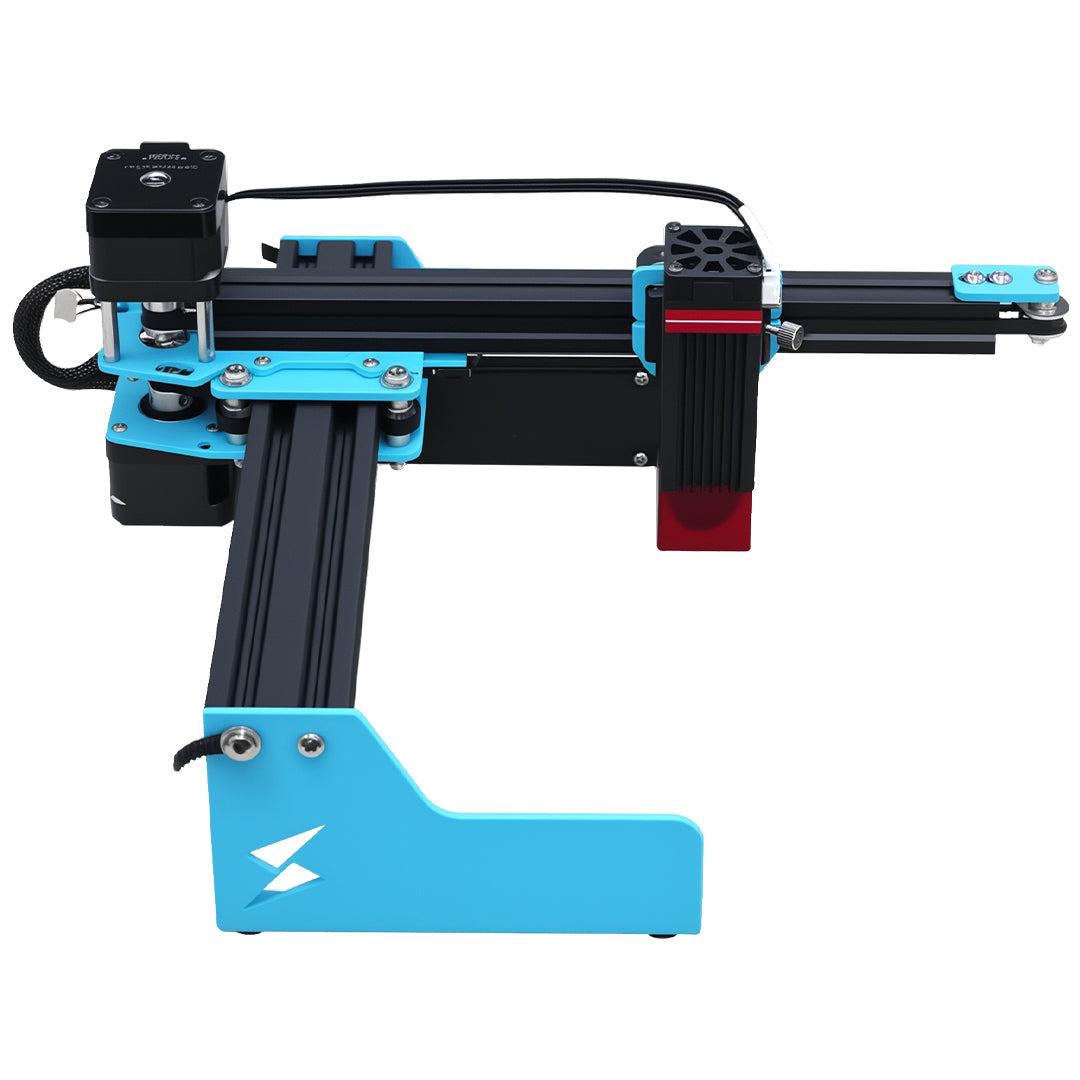
The wooden crochet basket-base collection includes a 100 mm round option as well as larger shapes. That makes a small base a plausible A1 Mini project to evaluate, but does not make every size or material in the collection suitable for the machine.
Work several real stitches around a sample edge
Measure the hook where it actually passes through the opening, not just the handle or the number printed on it. Select the intended yarn and try the planned first-round stitch. The moving loop may contain more fiber than one relaxed strand laid beside a ruler.
An original test piece with several holes and the intended edge spacing lets you inspect the motion without cutting a complete circle. After laser processing and cleanup, work across the holes normally. Watch the angle of the hook as it enters, rotates and withdraws. If you must lever against the wooden rim, revise the opening or tool choice rather than forcing the stitch.
| Base sample observation | Check before using A1 Mini for the full piece |
|---|---|
| Bare hook fits, yarn loop sticks | Evaluate the combined passage, not just hook diameter |
| Fibers catch on exit | Inspect contact edges and remove unsuitable roughness |
| Rim bends when pulling a loop | Reconsider hole placement, stock and technique |
| Stitches crowd between holes | Review spacing with the intended first-round pattern |
| Sample works but base is too large | Choose an appropriate small design, not arbitrary scaling |
Treat a 100 mm base as a measured candidate
The A1 Mini lists a 120 × 130 mm work area. A 100 mm drawing leaves limited space for positioning and supports, so inspect the actual outer envelope and all required clearances. Confirm the chosen head can process the identified stock through a controlled sample; size alone is not a cutting-capability claim.
Do not resize a 200 mm pattern to 100 mm while keeping the same hook and yarn: that also halves the hole sizes, spacing and rim sections. A purpose-sized small design or a suitable precut blank may be the better starting point. Add yarn only after all laser work is complete and the part is cool and clean.
Yarn-contact checks also matter in a small rigid heddle, where the fiber must move through slots and eyes. Here, however, the hook's sweeping motion and the doubled loop set the clearance. Inspect the first complete round before continuing the basket. Passing that trial does not establish a load rating for carrying heavy contents.
Should I enlarge every hole when one stitch catches?
First check whether the problem is local roughness, an inconsistent opening or the way the hook approaches it. Enlarging all holes may reduce the remaining rim without solving the actual cause.
Can the same base work with a smaller hook and thicker yarn?
Possibly, but test the combination. A smaller hook does not guarantee enough room to pull a bulkier loop through, and it may not suit the intended stitch or yarn.