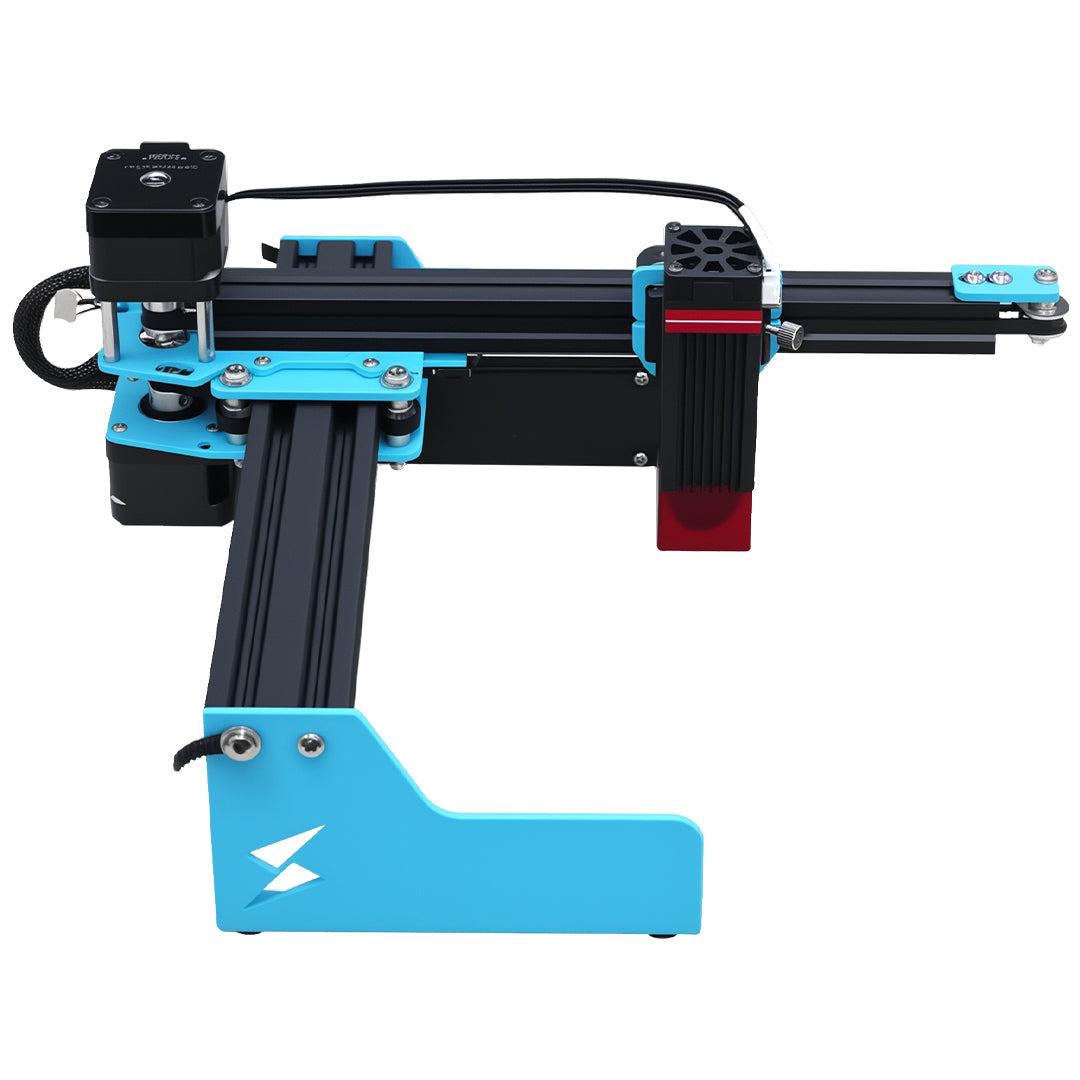


Do not accept a bare-metal job for A1 Mini from a generic claim that a laser “engraves metal.” Identify the exact machine configuration, metal, surface condition and required result, then obtain process-specific support. A visible surface mark, removal of a coating and removal of metal are different outcomes.

xTool's explanation of laser types emphasizes wavelength and material absorption. That helps explain why size, price or wattage alone cannot establish whether a proposed metal process is suitable. It does not prove the performance of a particular A1 Mini configuration.
Ask what the customer actually needs
A customer may call a dark logo “engraving,” while a drawing requires a recessed serial number that remains readable after wear. Ask for the metal specification, any coating or treatment, intended use and acceptance requirements. A photograph of a similar-looking item is insufficient to identify the material or process.
Do not assume that every blue diode can never produce any visible mark on any bare metal. Equally, do not generalize from one marked sample to a different alloy, finish or durability requirement. The useful answer is a verified process for the exact job, not an absolute slogan about laser types.
Three hypothetical customer requests
| Request considered for A1 Mini | Evidence needed before acceptance |
|---|---|
| Logo on a coated tag | Identified coating and documented compatible marking process |
| Dark mark on bare metal | Exact alloy, finish and supported method |
| Recessed number with a specified depth | Evidence of metal removal and measured acceptance |
Suppose a customer brings twenty unmarked metal tags and asks for a permanent number. The packaging identifies neither alloy nor coating. Stop at identification: there is no useful basis for selecting settings. Ask the supplier for the specification and ask the customer what “permanent” must withstand.
If documentation later supports only a surface mark while the customer needs measurable depth, the proposed process still fails the requirement. Decline that version of the job or have an appropriately equipped provider verify it. Buying a coating without resolving the requirement can add cost without creating the needed result.
If a supported method is established, use an approved supervised sample and evaluate it against the customer's written criteria. A successful visual demonstration alone does not establish wear resistance, depth or suitability for every later delivery.
A1 Mini purchasing boundaries
The A1 Mini page presents a compact blue-diode craft workflow. It does not establish universal bare-metal capability. Confirm exact configuration and supported materials before placing an order around a specialized marking requirement.
Accessories also have separate constraints. Before buying a riser, fixture or rotary for the proposed part, check A1 Mini accessory fit; physical fit cannot establish material capability. The same evidence-first discipline applies to craft plywood labels, where a familiar material name can conceal important unknowns.
Does more wattage guarantee a deeper metal mark?
No. Wattage alone does not establish a suitable interaction with the exact metal or the required result. Ask for evidence of the intended process using the actual configuration.
Can a marking spray turn A1 Mini into a fiber laser?
No. An added material does not change the machine's laser source. Any proposed coating needs documented compatibility and handling requirements, and its resulting mark must still meet the customer's acceptance criteria.