

Measure the lace tip before shrinking a shoe-lacing-board design. The rigid tip, often called an aglet, must pass through the finished hole without being crushed or forced. Scaling the whole drawing down also shrinks the holes, even though the lace you already own stays the same size.

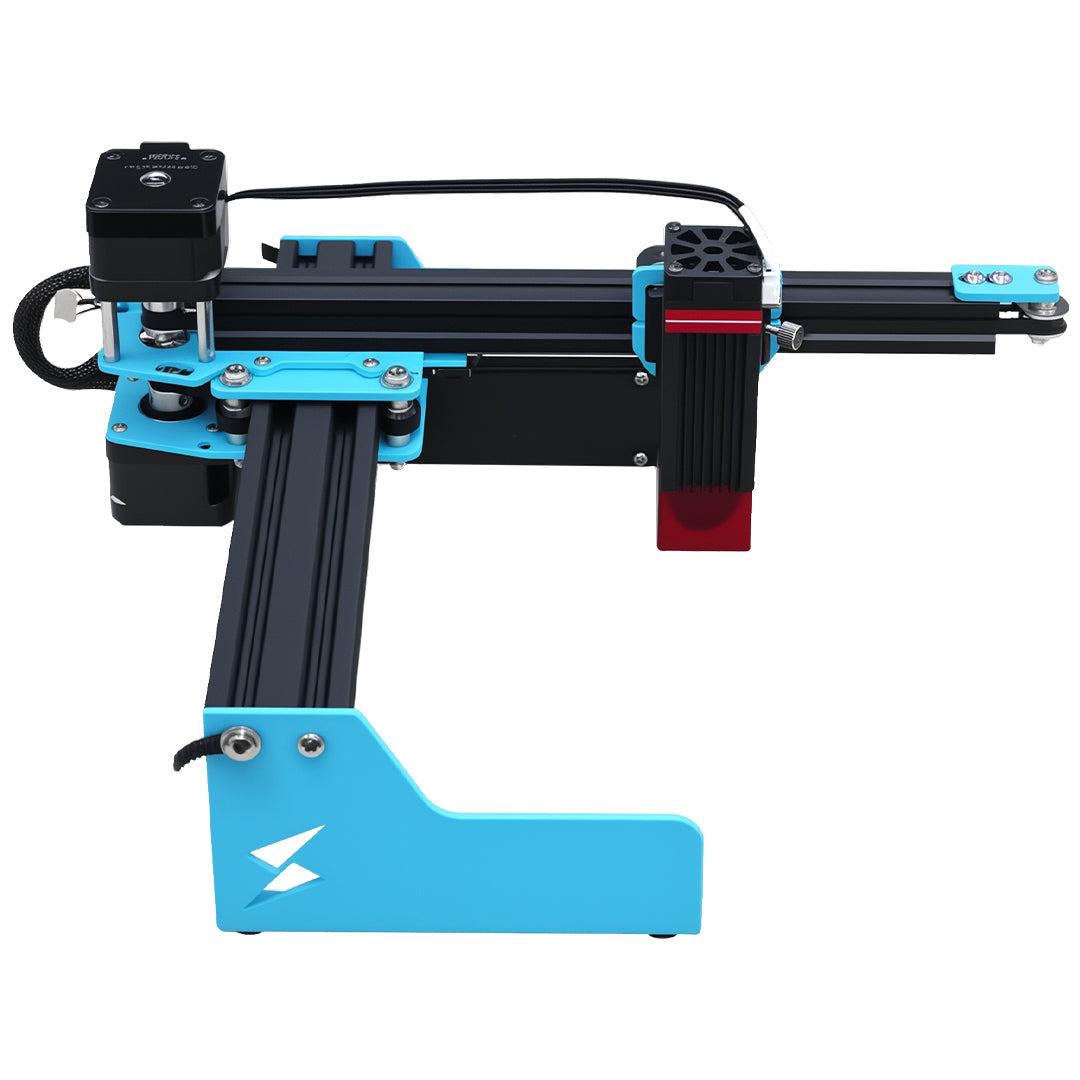
The shoe-lacing maker project discusses resizing its elements together. For an adult craft prototype, that suggests a necessary second check: confirm the real hardware still fits after scaling. The source machine's cutting settings do not establish A1 Mini capacity or toy safety.
Separate the outline size from the functional hole size
Choose the desired board outline, then measure the actual lace tip at its widest point. Test a representative hole in a suitable precut sample. Try entry from both faces because a rough edge or slight taper may make one side harder to use.
An illustrative 80-percent scale change turns a 5 mm drawing hole into 4 mm. Those numbers describe geometry, not a recommended lace clearance. Actual fit also depends on the tip shape, material edge and manufacturing tolerance. Do not compensate by forcing a tip until its sheath splits.
- Record the board's intended finished dimensions.
- Verify the drawing units using a known-size reference.
- Measure the real lace tip and try a physical sample hole.
- Check that adjacent holes still leave sound material between them.
- Keep the accepted outline and hole geometry together as one named revision.
Use the small engraver for a fitting component
The A1 Mini's 120 × 130 mm work area is a real boundary. A large educational board is not made suitable merely by reducing every feature until it fits. Consider a compatible precut test component or a larger-format production method instead. Engrave any labels with the lace removed, using the prescribed support, protective measures and exhaust while an adult supervises the machine.
The same distinction between appearance and physical fit applies to a spinning-top shaft: a proportional drawing change can alter a critical mating feature. A loom's yarn spacing likewise depends on actual material, not just how compact the drawing looks.
Fit does not certify a children's product
A successful threading trial only answers whether this tip passes through these holes. It does not establish suitability for a child, cord safety, finish safety or product certification. Treat this process as adult prototype development and obtain the appropriate product assessment before supplying anything for children's use.
Can I change only the holes after shrinking the outline?
Yes, as a design decision, but recheck the remaining material around each hole and the assembled appearance. Save the modified geometry rather than relying on the original scale percentage to recreate it later.
Does a soft lace without a rigid tip solve the problem?
It changes the user experience rather than proving the hole is suitable. Test the intended lace as supplied. A fraying end that must be twisted and forced through repeatedly is a poor functional result.