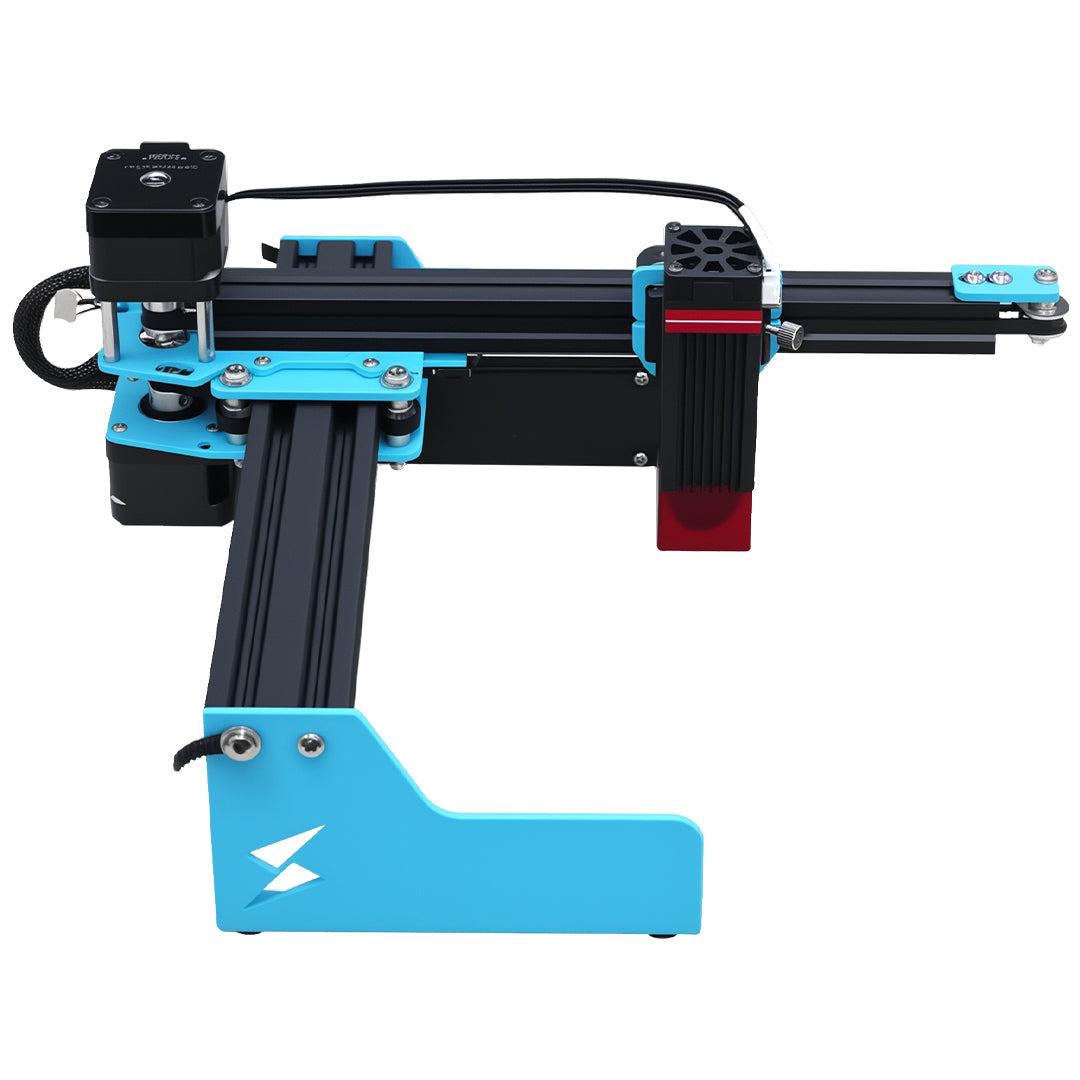


Buy documented precut wood blanks when your main goal is to personalize a small number of finished shapes and making the blanks adds more work than value. Cut your own only after a supported trial shows acceptable yield, preparation effort and edge quality. For an A1 Mini beginner, the decision should compare usable pieces rather than raw material prices alone.

A beginner budget discussion distinguished affordable engraving from convenient cutting. That distinction matters even when both tasks are possible: an attractive engraving result does not tell you how efficiently the same setup will produce the blank's outline.
Compare two routes to the same usable shape
Choose one shape with the same dimensions and finishing standard for both routes. Obtain composition information for purchased blanks as well as sheet stock. Precut does not mean laser-compatible; the wood, adhesive and existing finish still need confirmation.
For an illustrative ten-piece project, compare ten accepted purchased blanks with ten acceptable shapes made from a sheet. Count rejects and leftover stock separately. Do not count an unfinished, scorched or dimensionally unsuitable piece as equivalent to a ready-to-personalize blank.
| A1 Mini project cost | Purchased shapes | Shapes made in your workshop |
|---|---|---|
| Materials | Delivered cost of accepted blanks | Stock consumed, including rejected pieces |
| Preparation | Inspection and surface preparation | Layout, supported cutting trial and preparation |
| Finishing | Any work needed on the supplied edges | Actual edge cleanup needed after cutting |
| Flexibility | Limited to available shapes and sizes | Original outline, within validated machine limits |
| Personalization | Its own sample and engraving step | The same independent personalization step |
Put your time into the comparison honestly
Suppose purchased blanks cost $1.20 each delivered, while the material consumed making one usable blank works out to $0.55. The apparent saving is $0.65. If the extra hands-on work averages three minutes per usable piece, that saving corresponds to $13 per hour of extra work. These are hypothetical figures, not TYVOK costs or measured machine performance.
The calculation leaves out equipment wear, electricity and any value you place on machine occupancy, so it is only an initial comparison. Keep elapsed processing time separate from hands-on labor, and do not plan unattended laser operation to make the labor figure smaller. Use your first-month consumables record to replace the example with actual numbers.
Purchased shapes can win even when their unit price is higher. Original outlines can justify making your own when the shape itself is important and the supported process produces acceptable results. Neither route wins simply because it uses the laser more.
Keep the machine boundary visible
The A1 Mini product page lists a 120 × 130 mm work area. Leave room for the real setup and do not infer cutting thickness or cycle time from that area. Confirm the exact material and head capability before including self-cutting in the comparison.
For a fridge gift, adding the magnet after engraving is a separate assembly stage whichever blank route you choose. Keep hardware and unverified adhesive out of the laser operation.
Should I buy the cheapest precut blanks available?
Compare the cost of accepted, documented pieces. Mixed dimensions, unsuitable coatings or high rejection can erase a lower advertised price. Request material information and inspect a small order first.
When is making my own outline worth the extra work?
When the original shape matters enough to justify the validated time, waste and finishing effort. Record those results on the actual material before committing to a whole set.