

“Fiber laser engraver price” is a useful search only if the quote includes the entire working station. A metal-marking shop pays for the machine, but also for qualified blanks, a stable bench, extraction, part holding, inspection and rejected samples. If a sales page lists a launch price, treat it as a current storefront offer to verify at checkout, not a permanent cost assumption. This worksheet helps decide whether a TYVOK P2 Ultra 20W workflow suits your order mix.

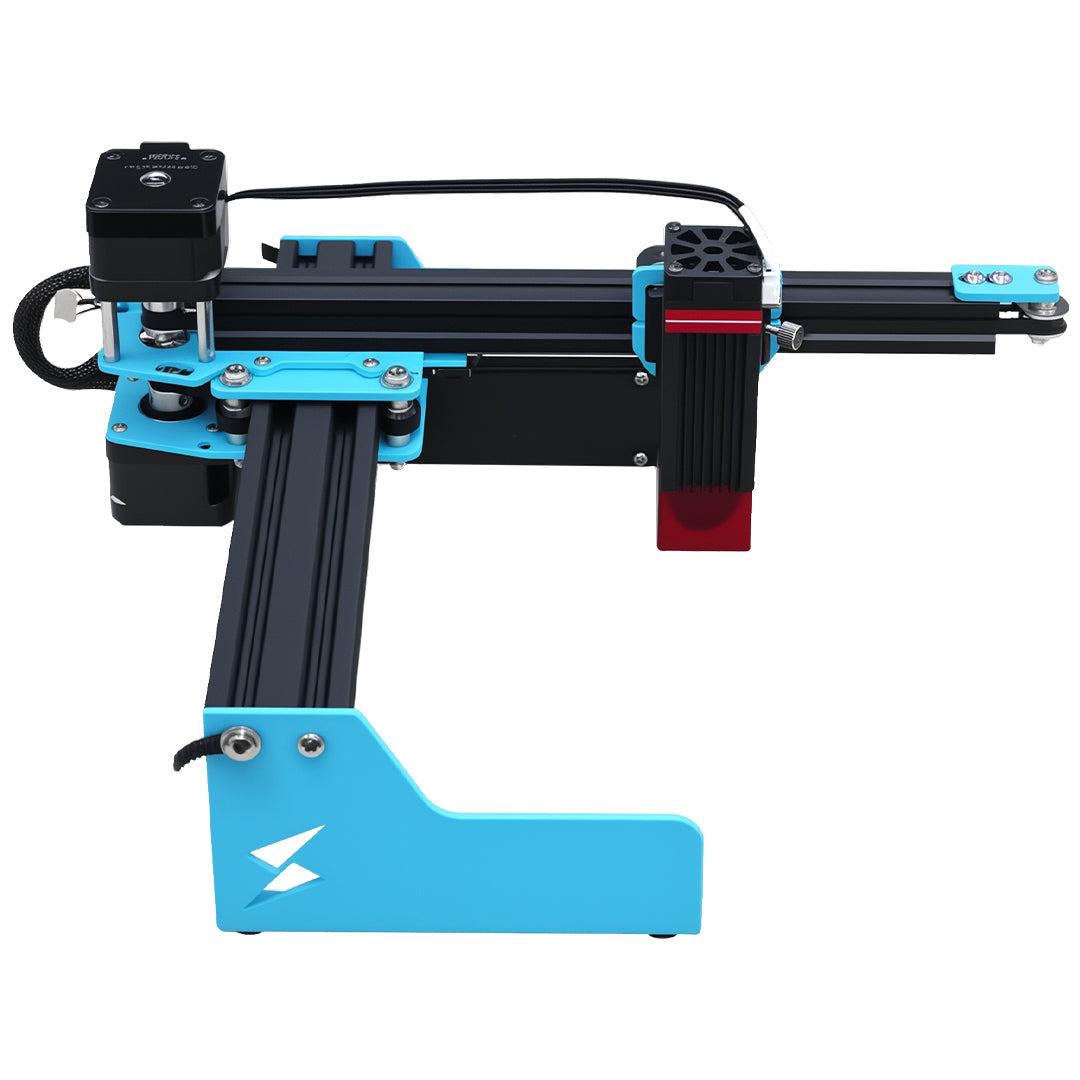
Official P2 Ultra product image. Use a real sample of your own blank to judge mark quality.
Start with the work you can actually sell
List three specific orders before comparing machines. For example: ten anodized aluminum asset tags with variable numbers, twenty stainless pet tags with names, and one engraved brass gift plate. Note blank size, material grade, finish, customer approval steps and a usable deadline. The P2 Ultra official specification is a 20W 1064 nm fiber source and a 150 × 150 mm marking area. That makes compact metal parts a sensible category to test; a machine specification alone does not promise that every alloy or requested depth is economical.
Separate surface contrast jobs from deep removal jobs. The latter can take longer and need more passes, with a different wear and cleanup profile. Ask for a sample on the actual stock if depth or final appearance is contractually important. A quote based on a glossy product photo will hide that uncertainty.
Add the costs outside the product price
Build a one-time list: machine, a Windows computer for current TyvokWorks support, a rigid workbench, suitable extraction, eye-safe operating setup, sample blanks, measuring tools, and any compatible fixture or rotary hardware needed for your parts. Confirm what is included in the offered package; rotary and conveyor-style accessories should not be assumed included just because the platform can support those workflows. Include freight, tax and regional warranty terms at the point of purchase.
Then build a per-order list: blanks, consumables, setup time, customer proofing, marking, inspection, cleaning, packaging, and expected rejects. Use actual timed test runs, including handling, rather than the advertised maximum scanning speed. The stated scan speed describes motion capability, not finished-parts-per-hour. A ten-second mark can still sit inside a several-minute order process.
| Cost item | Record for each product | Common omission |
|---|---|---|
| Blank | Unit cost plus quantity break | Variations between suppliers or lots |
| Labor | Proof, fixture, mark, clean, pack | Counting only laser-on time |
| Yield | Accepted parts divided by blanks used | Ignoring setup and rejected samples |
| Overhead | Equipment, extraction, rent allocation | Assuming every workday is fully booked |
Calculate a useful break-even point
For each product, subtract the true variable cost from its selling price. That gives contribution per accepted unit. Divide your monthly fixed costs by that contribution to estimate the number of accepted units needed to cover the station. For a mixed catalog, use the actual expected mix, not the margin of the single easiest job. Keep this as your own worksheet; no public machine can guarantee your local demand or profit.
Run a conservative version with slower production, more proofing and a few remakes. If the numbers only work with perfect yield and full utilization, change the product mix or price before investing. A sample job on your blank is especially valuable when the planned product requires fine text or a dark finish that may be hard to reproduce.
Stress-test the worksheet before committing
Make three scenarios for the same proposed catalog: expected, slow-start and high-rework. In the slow-start case, use fewer orders and the same monthly fixed costs; in the high-rework case, increase blank consumption and inspection time. Ask whether the business still supports the payment and operating costs without relying on optimistic social-media demand. Keep purchase price and available cash separate: you may need stock and packaging before the first invoice is paid. If you quote B2B orders, record payment terms because a profitable order can still tie up cash for weeks. A sample job is most valuable when it changes one of these assumptions with measured time and accepted yield.
Compare purchase options against your constraints
Check the current P2 Ultra buying page for the regional offer and package contents. Confirm the workspace footprint, Windows software requirement, 150 × 150 mm field, power supply and service terms. If your product is a large wood sign, a compact fiber marking field is a poor basis for a purchasing decision. If your business is recurring metal IDs and small personalized parts, compare fixture time and accepted output rather than wattage alone.
Should you estimate throughput from 10,000 mm/s? No. That is a maximum scan specification, not order throughput.
Is the lowest machine price the lowest ownership cost? Only after the blank, operator, extraction and remake costs are included.
When should you buy? When a small, documented sample run meets the finish, legibility and margin you need. Review the current P2 Ultra purchase options alongside your own worksheet.