















AUTHOR: Tyvok Team
TAGS: laser engraving business, pricing guide, how to price, profit calculation
BODY_HTML:
How to Price Your Laser Engraving Products: A Complete Pricing Guide for 2026
One of the most common questions we get from people starting a laser engraving business is "How do I price my laser engraved products?" Price too high and you won't get sales. Price too low and you'll end up working for pennies.
Pricing your laser engraving work doesn't have to be a guessing game. In this guide, we'll walk you through the exact pricing methods successful laser engraving business owners use to ensure they make a profit every time.
The Fundamentals: What You Need to Include in Every Price
Many beginners make the mistake of only calculating material costs. But there's a lot more that goes into pricing than just what you pay for the blank. Here's everything you need to account for:
1. Material Costs
This is the easiest one — it's what you pay for the raw material you're engraving:
- Wood blanks
- Leather pieces
- Glass tumblers
- Metal blanks
- Acrylic sheets
- Adhesives, finishes, packaging
Pro tip: Always round up your material cost estimate by 10-15% to account for mistakes and waste. It happens to everyone, so build it into your price.
2. Labor Costs (Your Time is Money!)
This is where most beginners underprice themselves. You need to pay yourself for your time. Decide on an hourly rate that makes sense for your market and experience:
- Beginners: $15 - $25 per hour
- Experienced: $25 - $40 per hour
- Master artisans: $40 - $60+ per hour
Calculate how long each product takes from start to finish:
- Design time in software
- Material prep and setup
- Actual laser engraving time
- Finishing (sanding, oiling, cleaning)
- Packaging and shipping prep
Multiply hours by your hourly rate to get your total labor cost.
3. Overhead Costs
Overhead is all the fixed costs you have to pay whether you make one product or one hundred:
- Your laser engraver (depreciation over its lifetime)
- Rent for your workshop/space
- Utilities (electricity)
- Software subscriptions
- Marketing and advertising
- Website hosting
- Shipping supplies
- Insurance
The easiest way to allocate overhead is to add it as a percentage of your total (material + labor). Most small businesses add 15-25% for overhead.
4. Profit Margin
After covering all your costs, you need to make a profit. Profit is what lets you grow your business, buy better equipment, and pay yourself properly.
For most laser engraving products, a 30-50% profit margin on top of your total costs is standard.
The Most Popular Pricing Methods
Different businesses use different pricing methods. Here are the three most common approaches:
Method 1: Cost-Plus Pricing (Most Recommended for Beginners)
This is the simplest method — calculate all your costs, then add your desired profit margin.
Formula:
Total Price = (Materials + Labor + Overhead) × (1 + Profit Margin)
Example: Let's price a custom engraved cutting board:
- Materials (wood blank + finish + packaging): $20
- Labor (1 hour at $25/hour): $25
- Overhead (20%): ($20 + $25) × 0.2 = $9
- Total cost: $20 + $25 + $9 = $54
- Profit margin (40%): $54 × 0.4 = $21.60
- Final price: $54 + $21.60 = $75.60
Round to $75 or $79.99 depending on your pricing strategy.
Pros: Simple to calculate, guarantees you make profit on every sale. Good for beginners who don't know the market yet.
Cons: Doesn't account for perceived value or what the market will actually pay.
Method 2: Market Pricing (Look at What Competitors Charge)
With market pricing, you check what other sellers are charging for similar products on Etsy, Amazon, and at craft fairs, then price accordingly.
How to do it:
- Search Etsy for products similar to yours
- Write down the prices of 10-15 similar items
- Find the average price
- Price your product slightly below or above depending on your quality and brand
Example: You find that most custom cutting boards on Etsy sell for $60-$100, average around $80. Your cutting board is higher quality with nicer wood, so you price at $85.
Pros: Aligns with what customers are already willing to pay. Simple once you know the market.
Cons: Competitors might be underpricing themselves and losing money — don't just assume their price is profitable.
Method 3: Value-Based Pricing (Price Based on Perceived Value)
With value-based pricing, you price based on what the customer is getting, not just what it cost you to make. This is where you can make really good margins if you're good at marketing.
Examples of value-based pricing:
- Wedding gifts: Customers will pay more for a personalized keepsake than a generic cutting board
- Corporate gifts: Businesses have bigger budgets than individual consumers
- Pet memorials: High emotional value = can charge more
- Branded products for companies: They're using it for marketing, so they'll pay more for quality
Pros: Highest profit margins when done right. Can charge much more than cost-plus if you have a strong brand.
Cons: Requires understanding your customer and marketing to position your product as higher value.
Quick Price Cheat Sheet for Common Products
Here's a quick reference guide to what you can expect to charge for popular laser engraved products in 2026:
| Product | Typical Price Range | Material Cost | Time to Make |
|---|---|---|---|
| Custom pet tag | $10 - $30 | $2 - $5 | 5 - 15 minutes |
| Leather keychain | $15 - $35 | $3 - $8 | 10 - 20 minutes |
| Personalized leather wallet | $30 - $80 | $10 - $20 | 20 - 40 minutes |
| Custom engraved tumbler | $25 - $50 | $8 - $15 | 15 - 30 minutes |
| Small wood sign | $20 - $45 | $5 - $12 | 15 - 30 minutes |
| Large wood sign | $40 - $100+ | $15 - $30 | 30 - 60 minutes |
| Custom cutting board | $50 - $120+ | $15 - $30 | 45 - 90 minutes |
| Personalized wedding guest book | $60 - $150 | $20 - $40 | 1 - 2 hours |
| Custom engraved jewelry | $20 - $100+ | $5 - $25 | 10 - 30 minutes |
Prices vary based on your location, material quality, and customer demographic. These are starting points — adjust based on your market.
Common Pricing Mistakes to Avoid
❌ Mistake 1: Underpricing Your Time
This is the #1 mistake beginners make. They think "I'm new, so I should charge less." But even as a beginner, your time is still worth money.
If you're underpriced, customers might even perceive your work as lower quality. Charge what you're worth, and don't be afraid to raise your prices as you get faster and better.
❌ Mistake 2: Forgetting to Include Overhead
Your laser engraver didn't cost nothing. Electricity isn't free. Your website hosting isn't free. All these costs add up, and they need to be covered by the products you sell.
❌ Mistake 3: Not Accounting for Waste and Mistakes
Sometimes you mess up a blank. Sometimes material is defective. Always add 10-15% to your material cost estimate to cover this.
❌ Mistake 4: Competing on Price Alone
Don't get into a race to the bottom with the cheapest sellers on Etsy. Instead, compete on quality, customer service, and unique designs. People will pay more for a better experience and a better product.
❌ Mistake 5: Not Raising Prices Over Time
As you get faster, your skills improve, and your costs go up — your prices should go up too. It's perfectly normal to raise your prices 5-10% per year as your business grows.
How to Handle Custom Orders
Custom orders require a different approach because every job is different. Here's a good process:
- Get all the details: What exactly does the customer want? How many units? What materials? What's the deadline?
- Calculate your costs: Materials + labor + overhead
- Add profit: 30-50% minimum
- Add rush fee if needed: If they need it faster than your normal turnaround, add 25-50%
- Quote the total: Always quote the total price, not per-hour. Customers prefer knowing the total upfront.
- Get a deposit: For custom orders, require a 25-50% deposit upfront before you start. This covers your materials if the customer flakes out.
Should You Offer Discounts?
Discounts can be good for moving inventory or getting repeat customers, but be strategic about it:
Good reasons to discount:
- Bulk orders for businesses (5-15% off for larger quantities)
- Repeat customers (loyalty program)
- Clearance of old materials or designs
Think twice before discounting:
- Don't discount just because someone asks "can you give me a better price?" If you discount too easily, you erode your profits.
- Don't discount to the point where you're barely making any profit per sale.
Pricing Strategy Tips for Success
1. Track Everything
Keep a simple spreadsheet of how long each product takes you and what your materials cost. After a few months, you'll have accurate data and pricing becomes easy.
2. Don't Be Afraid to Test
If you're not sure what price to use, try different prices and see what happens. You can always adjust based on customer response.
3. Use Psychological Pricing
Most retail pricing uses $X9.99 instead of round numbers. $74.99 instead of $75 feels cheaper to consumers. It's a small thing, but it can help increase sales.
4. Factor in Platform Fees
If you sell on Etsy, they charge 6.5% transaction fee plus payment processing. If you sell on Amazon, there are fees too. Don't forget to add these into your pricing.
5. Calculate Your Platform Fees:
- Etsy: ~8-10% total
- Amazon Handmade: ~15-20%
- Your own website: ~3-5% for payment processing
Add this percentage to your price to cover these costs.
Frequently Asked Questions
Q: How much should I charge per hour for laser engraving?
A: For most small businesses in 2026, $15-$40 per hour depending on your experience and location. Beginners can start at $15-$25, and move up as you build experience and reputation.
Q: What's the most profitable laser engraved product?
A: Jewelry and personalized gifts tend to have excellent profit margins because you're selling primarily the customization and emotional value, not just the material. Corporate gifts also tend to be higher margin because businesses have larger budgets.
Q: How do I price bulk orders for businesses?
A: For bulk orders, you can offer a slight volume discount (5-15% depending on quantity) because your per-unit setup time is lower. Just make sure you still maintain healthy profit per unit even with the discount.
Q: Should I charge for design time?
A: For simple text-based customization, most businesses include basic design in the price. For complex custom artwork from scratch, you should charge separately for design time ($25-$50/hour is typical).
Q: How often should I raise my prices?
A: Most businesses raise prices every 1-2 years as their costs increase and they gain experience. Don't be afraid to raise prices — your costs go up, and it's completely normal.
Conclusion
Pricing your laser engraving products correctly is one of the most important keys to building a profitable business. The good news is that it's not rocket science — just follow the basic formula:
- Calculate all your costs: materials + labor + overhead
- Add your desired profit margin (30-50% is standard)
- Compare to market prices and adjust if needed
- Track your actual time and costs, and refine as you go
Remember: Your time and skill are valuable. Don't underprice yourself. With the right pricing, a laser engraving business can be incredibly profitable and fun.
If you're just getting started, check out the
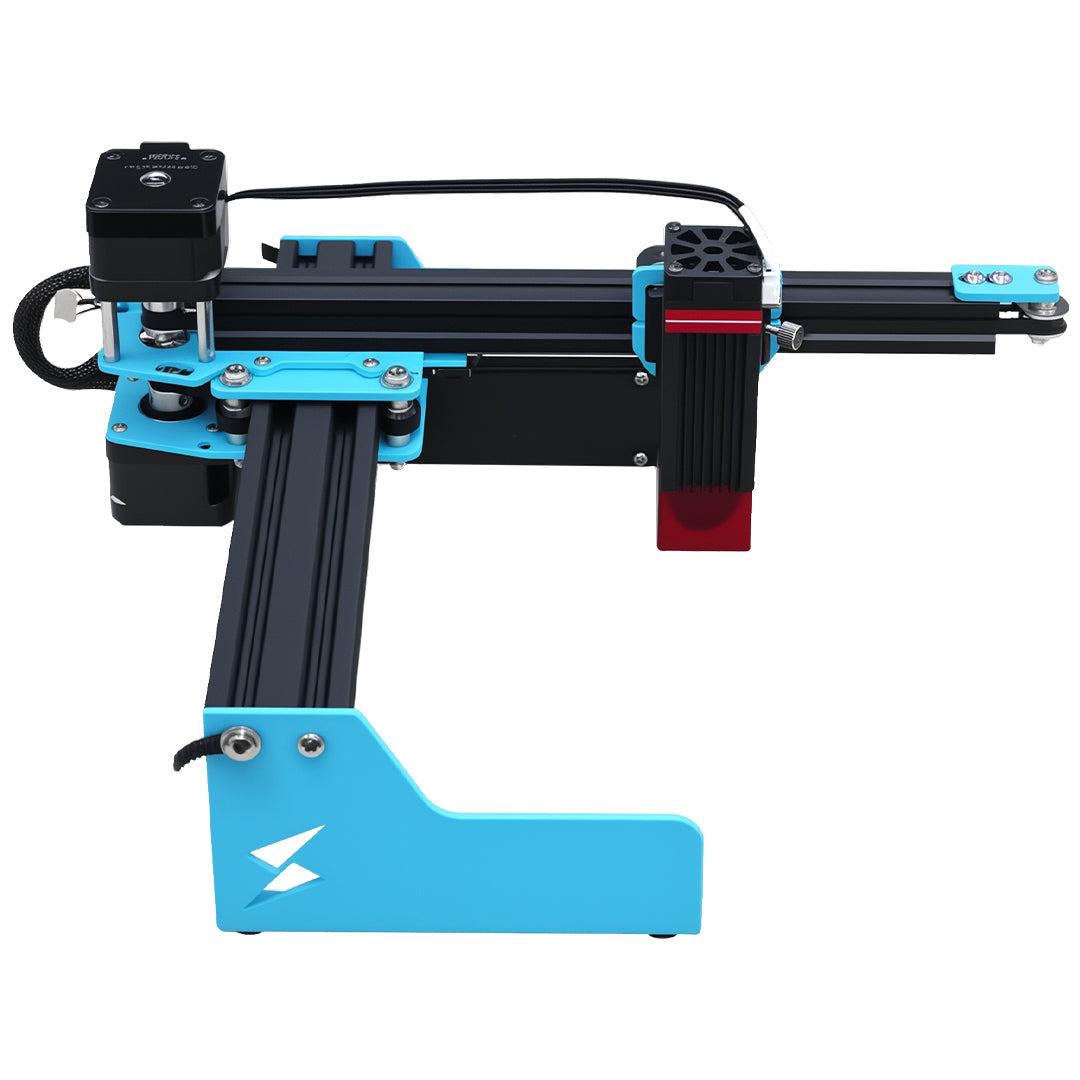
💡 Recommended: The Tyvok P2 2W Galvo Laser is our top pick for metal marking & jewelry engraving. Currently 50% OFF at just $149!