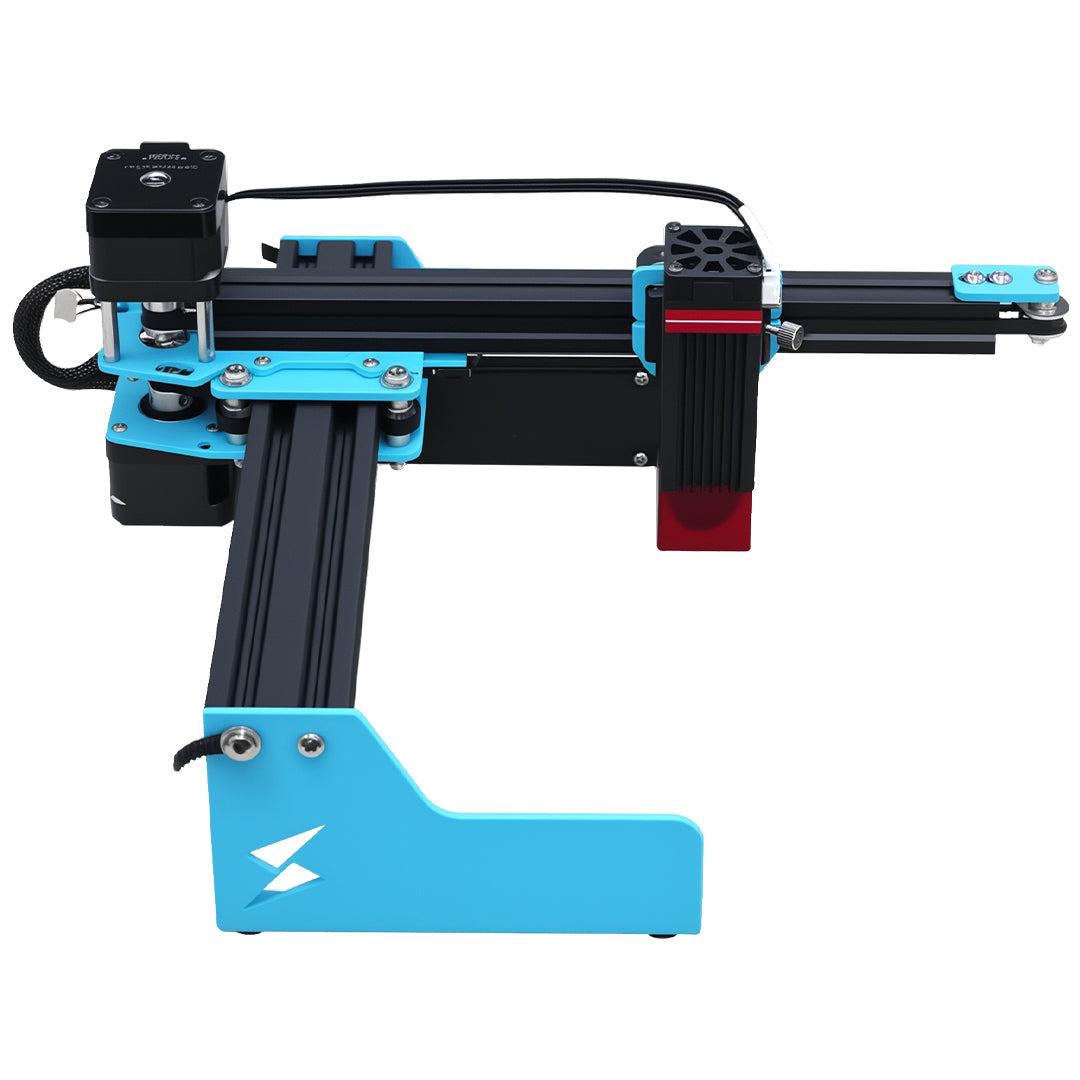


P2 Ultra 20W is a compact 1064 nm metal-marking path. It should not be tuned like a standard blue diode P2. Start with conservative test grids, then lock settings only after the exact metal finish is verified.

Compare TYVOK P2, P2 Ultra, X1S, X1S Pro, and K1 Pro
Open the TYVOK laser material settings table
Shop TYVOK P2
Shop TYVOK X1S
Where P2 Ultra fits
- Use it for stainless steel tags, anodized aluminium cards, brass or copper tags, tool IDs, coated metal blanks, and serial plates.
- For surface contrast, a faster metal-marking band can make sense. For deeper marks, expect lower speeds and multiple passes.
Starter metal marking bands
- Stainless steel surface marks can start around 300-800 mm/s with moderate to high power and 1-2 passes.
- Anodized aluminium cards can start around 600-1200 mm/s with lower to moderate power and 1 pass.
- Brass and copper often need slower testing than anodized cards because reflectivity and heat response differ.
Quality checks
- Check contrast after cleaning, not only immediately after marking.
- Use fixtures for small tags and cards so repeat batches stay aligned.
- Do not promise depth or cycle time until a real sample part has passed inspection.