

Check what is selected before rebuilding the design. A group, an individual vector path, and a raster image are different objects, even when they look like the same outline on screen. Preserve the original and inspect an editable copy in your design application; ungrouping may expose paths, but it does not automatically make them suitable for Boolean Union.

In a LightBurn tool-insert project discussion, users encountered unavailable Boolean and node-editing controls while working with grouped geometry. That example concerns artwork preparation. It does not establish direct LightBurn control or any particular software feature on A1 Mini.
Distinguish a container from a shape
Grouping keeps objects together for selection and movement. Union changes geometry by combining eligible shapes into a new result. If your intention is simply to move a kit layout as one unit, a group may already be correct; merging its pieces would destroy the boundaries you need.
Save a second editable file. Select the problem object and inspect the application's object information or selection indicators. If it is a group, ungroup only the working copy and inspect the exposed objects. Some imported files contain nested groups, so one ungroup action may still leave containers rather than individual paths.
| A1 Mini artwork-preparation finding | Next software-only check |
|---|---|
| Group selected | Inspect its contained objects on a copy |
| Raster image selected | Use an appropriate image workflow or deliberate trace |
| Open vector boundary | Compare endpoints with the intended outline |
| Multiple traced boundaries | Determine which contour belongs in the design |
| Eligible closed shapes selected | Preview the intended Boolean result and compare dimensions |
Use the editor's documented requirements for the specific Boolean operation. Do not assume every disabled command has the same cause. Check the number of selected objects, path closure, and supported object types. If a traced outline contains both inner and outer boundaries, keep the one required by the intended geometry rather than joining everything indiscriminately.
Inspect what changed before exporting
Compare the result against the preserved original at the same scale. Look for missing holes, altered corners, merged adjacent pieces, and duplicate contours. Undo the operation if it removes an intentional feature. The imported-vector preview guide helps check resulting path structure; an assembly map keeps separate kit parts identifiable without merging them.
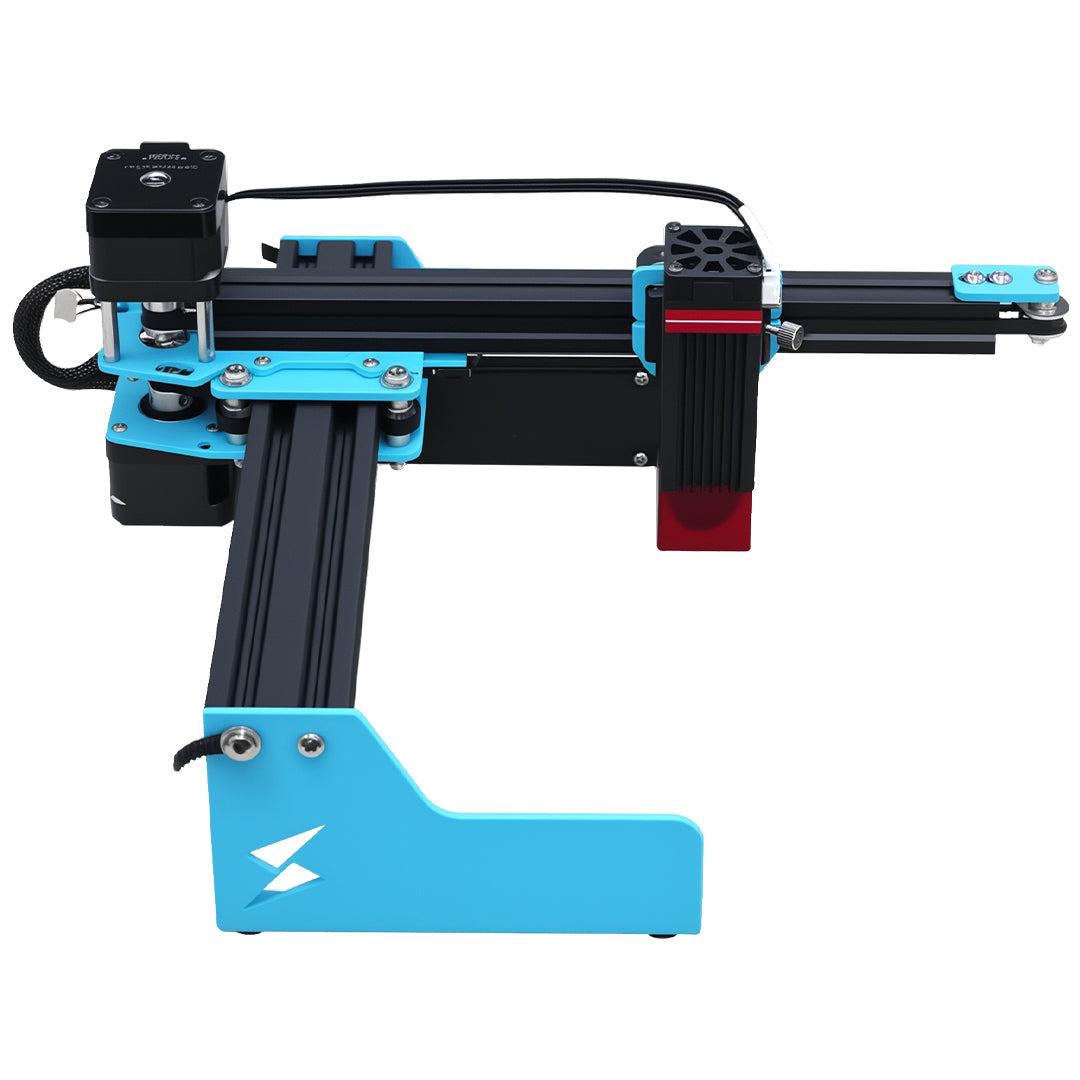
The A1 Mini product page lists a 120 × 130 mm working area. Check the final file dimensions against that field and use only the currently supported output route. Correct vector geometry is necessary preparation, not proof of hardware compatibility or material suitability.
Will ungrouping always enable Union?
No. The exposed objects may still be open paths, nested groups, images, or an unsuitable selection. Inspect the actual objects and follow the editor's requirements before changing geometry.
Can Boolean Union improve a photograph?
Not as a tonal image adjustment. A photograph needs an image workflow such as the first-photo tonal proof. Tracing it creates new vector geometry and should be an intentional choice, not a workaround for a disabled button.