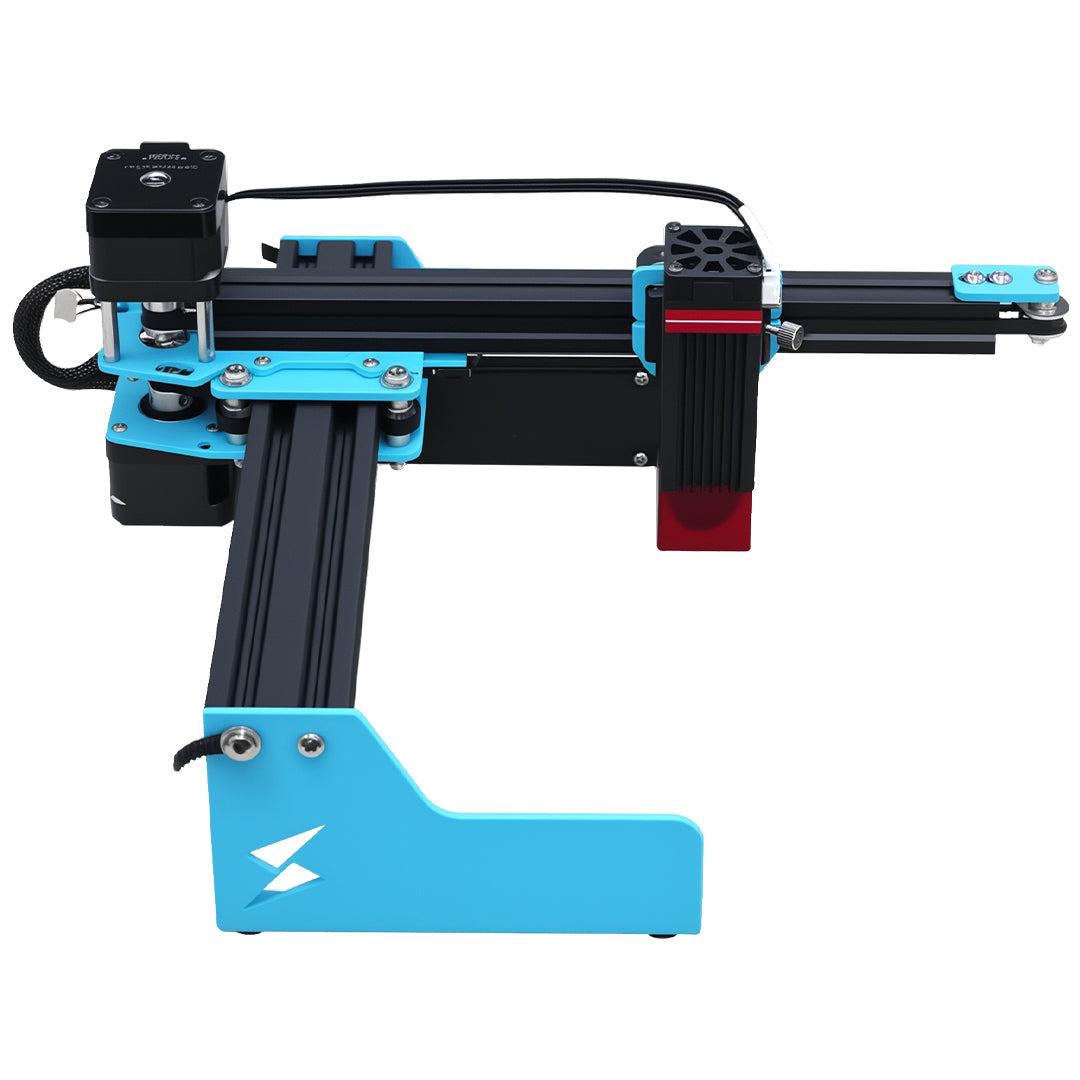


Prove the intended pocket in an eligible unfinished wood sample before making a large epoxy-inlay panel. Check actual depth, edge condition and whether the resulting cavity suits the planned fill. A diode engraving process is not automatically a substitute for a depth-controlled router. Never run this workflow over cured or uncured resin.

A July 28 wood-engraver discussion includes a maker using a diode to remove wood before pouring epoxy designs. That is an example of project demand, not a recipe that establishes what a TYVOK configuration will remove in one pass.
Define what the recess needs to do
Write down the desired visual result before choosing a process. A shallow colored accent and a deep, sharply bounded pocket require different physical results. Include the resin supplier's requirements for the substrate and preparation; do not assume a dark engraved area is ready to receive a fill.
Choose a small sample of the same identified unfinished wood as the panel. Include a straight boundary, an inside corner and the narrowest important feature. Keep any resin, finish or adhesive out of the material being lasered. Use only the supported machine profile, holding arrangement and protective setup for that wood.
Measure the result instead of reading its darkness
After the sample has cooled and been handled according to the equipment guidance, examine the cavity with suitable measuring tools. Check several points, because the most deeply marked location alone does not describe the entire pocket. Inspect whether boundary details remain recognizable and whether loose residue can be removed with the appropriate wood-preparation method.
| X1S 2026 inlay acceptance item | Question before proceeding |
|---|---|
| Recess depth | Does the measured range meet this design's requirement? |
| Small corners | Is the intended outline still present? |
| Wood surface | Can it meet the fill supplier's preparation requirements? |
| Remaining wood | Is the sample suitable for its decorative use? |
| Process repeatability | Does another qualified sample give an acceptable result? |
For a hypothetical decorative panel, suppose the design calls for a consistent shallow recess but the measured sample has substantial high and low areas. Do not label it successful because resin could cover the color. Change the design or choose a method capable of the required cavity. Avoid claiming a precise depth from an engraving percentage.
Choose among different constructions
The continuous relief versus stacked-layer comparison explains why removing material and assembling outlines are different fabrication choices. An assembled marquetry surface is another option when the visual goal is contrasting wood rather than a resin-filled recess. Neither alternative should be presented as identical to a machined pocket.
The X1S 2026 listing describes large-format layout capability, starting at 800 × 800mm with an expansion path. It does not guarantee CNC-equivalent pocket depth or edge geometry. Confirm the selected module and approved wood process without borrowing settings from the forum example.
Only after all laser processing is finished should resin work begin, following its manufacturer's separate handling and application instructions. If the filled result later needs correction, do not put it back under the laser. Use an appropriate non-laser finishing method or remake the piece.
Can I engrave again after filling to sharpen the outline?
No. This method is limited to approved unfinished wood before resin is introduced. A filled or resin-coated piece is outside that process.
Does a wider machine make a deeper pocket?
No. Working area describes layout size. The achievable surface and depth depend on the qualified process, and may not meet the requirement at any practical setting.