

A paused job should remain stopped until you know whether the original position reference is still trustworthy and the current instructions allow continuation. A pause, a stop, a disconnect and a homing operation are different events. If the board moved or the reference is uncertain, a remembered screen position is not enough to resume a long cut.

The LightBurn pause-and-start discussion shows why users need to distinguish software states before deciding what a restart means. It does not establish how every X1S 2026 configuration resumes. Use the shipping manual, current software guidance and TYVOK support for the actual recovery action.
Reconstruct the interruption without moving anything
First make the situation safe. Any smoke, abnormal heat, collision or damaged work requires the appropriate stop response; do not preserve registration at the expense of safety. Keep people away from the beam and motion area, and do not touch hot material.
Once safely stopped, write down the event sequence. Was Pause selected? Was Stop selected afterward? Did power or USB disconnect? Was homing invoked? Did anyone move the stock, head, supports or fixture? Record each event separately. A long board can shift at a distant support without obvious movement near the current cut.
| Reference evidence | Acceptable observation | Missing or uncertain evidence |
|---|---|---|
| Existing board witness marks | Previously recorded marks still align visually | No original marks to compare |
| Support and fixture position | No observed movement; mounting remains as documented | Bumped support, loosened fixture or sagging stock |
| Software state | Exact displayed status and operation history retained | Application restarted or history lost |
| Position history | No unaccounted movement or reference-reset event | Homing, manual movement or unknown travel |
These are non-output observations, not instructions to jog, home or run a laser outline. Do not invent a new reference mark and treat it as proof of the old one. Photograph existing marks only from a safe accessible position, and do not reach into a machine that can unexpectedly move.
A matched mark is necessary evidence, not resume authorization
Even apparently matching references do not prove that the controller retained the correct remaining path. Both physical position and software state must be addressed by the documented recovery method. If either is unknown, hold the work and ask support whether any recovery is valid. A replacement board can be less costly than a displaced second cut or a collision.
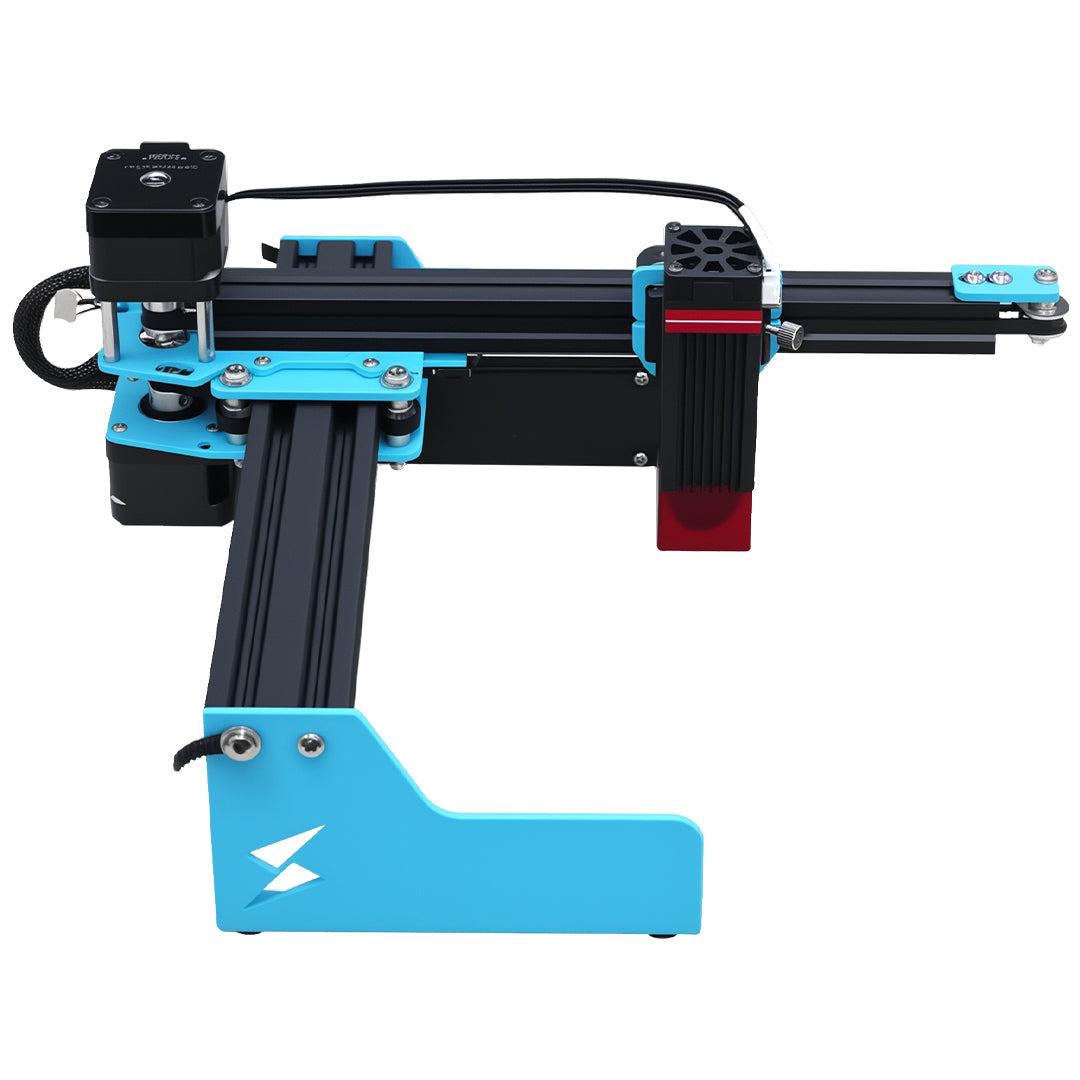
The X1S 2026 product page describes the large-format direction while retaining a final-specification caveat. Do not infer recovery behavior from another model's controller. The X1S Pro origin-recovery discussion is useful only for understanding what evidence an origin problem needs, not as an X1S 2026 button sequence.
If the file never produced output and stopped immediately after framing, retain the first console error instead; that is a different failure history.
Can I home the machine to make the position certain?
Do not use homing as a generic recovery step. It can change the relevant reference or motion state. Follow a current procedure that explicitly applies to the interrupted job and configuration.
What if only the far end of the board was bumped?
Treat registration as uncertain. A long workpiece can rotate or flex when a distant support changes, even if the near edge appears unchanged. Hold output until the situation is resolved through the documented procedure.
Check the machine before buying
For the material and workflow discussed above, review TYVOK X1S 2026 configurations and purchase options after testing the exact project materials and setup.