

Custom Design Hours: Record Them Before Pricing
Custom design time is a real job cost even when the laser run is short. Record useful design time by task, then calculate design labor cost = usable design time × internal hourly rate. This creates a defensible cost floor; it does not predict what a buyer will pay or guarantee profit.

Define usable time before starting
Use a timer or timestamped log for briefing, asset inspection, redraw or cleanup, layout, proof preparation, requested revisions, and final release. Exclude unrelated interruptions. Decide in advance how reusable development will be treated: charge it fully to this job, amortize it across a stated number of expected uses, or treat it as internal development. The choice is a business policy, so write it down rather than hiding it.
| Time category | Include when | Evidence |
|---|---|---|
| Brief and asset check | Requirements or supplied files need review | Intake note and asset version |
| Cleanup and layout | Work is necessary for this order | Timer entry and saved file |
| Proof preparation | A representative sample must be built | Sample ID and photo |
| Customer revision | Request changes approved scope | Message and revision number |
| Release | Final export and production handoff | Locked filename/checksum |
Customer messaging counts when it directly resolves design requirements, approval, or revision. General marketing conversation does not belong in a single order's design log unless your written costing policy says otherwise.
Worked cost example
Suppose a logo job records 18 minutes for intake and file inspection, 42 minutes for vector cleanup, 25 minutes for layout and proof preparation, 20 minutes for one revision, and 10 minutes for release. Total elapsed task time is 115 minutes, or 1.9167 hours.
If 15 minutes of cleanup produced a reusable house asset and policy assigns that time to internal development, usable job time becomes 100 minutes, or 1.6667 hours. At an internal labor rate of $30 per hour:
usable design time × rate = 1.6667 × $30 = $50.00
That $50 is the recorded design-labor cost. Add material, machine-use, testing, packing, transaction, shipping, overhead, and allowance for rejects separately. If you instead expect the reusable 15 minutes to serve five confirmed jobs, an amortization policy could assign three minutes to each—but expected reorders are uncertain, so do not invent volume merely to lower the first quote.
Use checkpoints, not vague hours
At intake, freeze dimensions, wording, supplied-art ownership, and intended blank. Before proofing, save a versioned file. After each revision, record who requested it and whether it falls inside the agreed allowance. At release, retain the approved preview and production file together.
A simple job line can read: JOB-184 / cleanup / v03 / 14:10–14:42 / 32 useful minutes / removed duplicate paths. Specific entries make later estimating better. “Design: two hours” does not reveal which step expanded.
For repeat work, pair the released file with a B2B reorder specification card. If raster density changed during preparation, document the DPI and line-interval conversion rather than relying on a screenshot.
TYVOK X1S Pro boundary
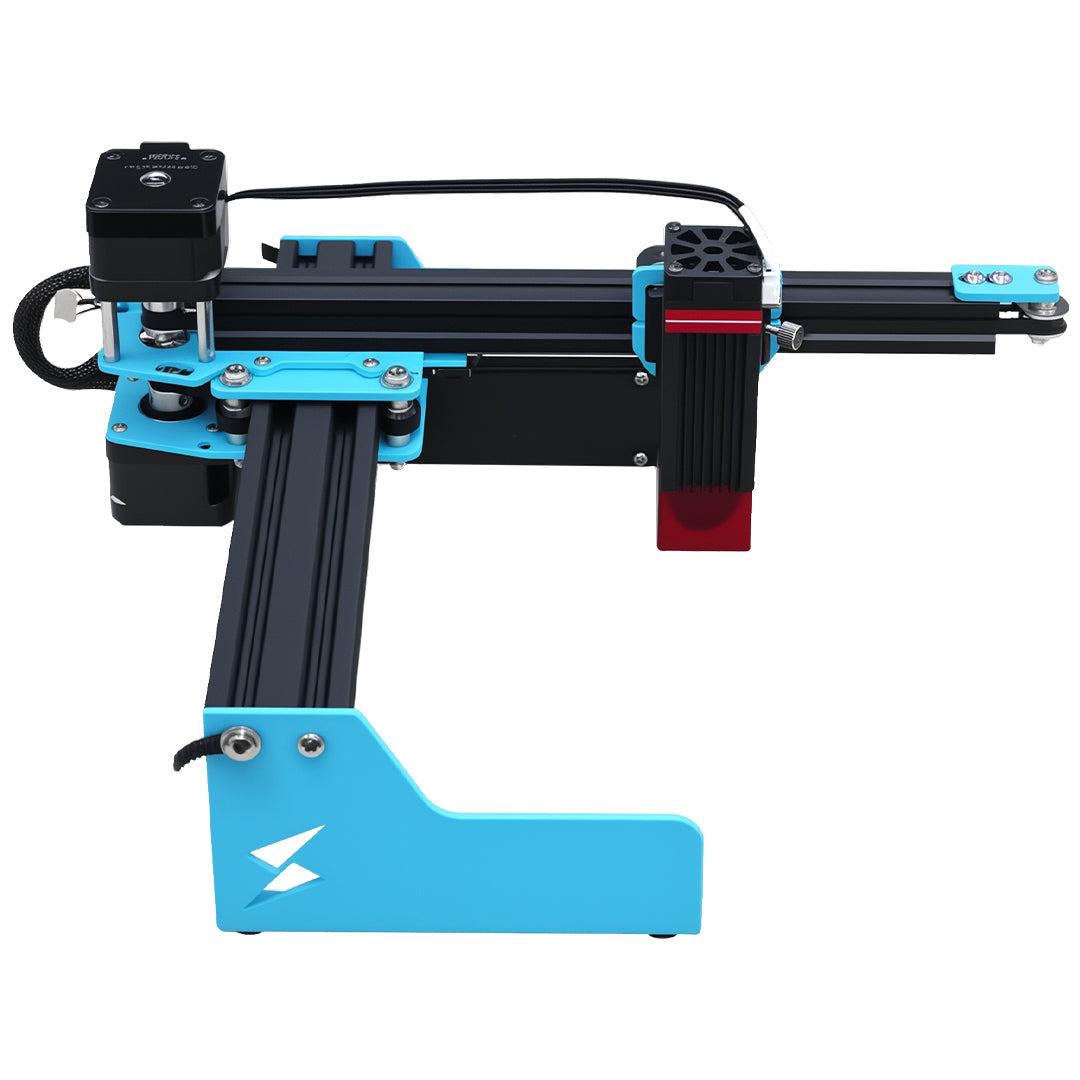
TYVOK X1S Pro may be considered for a production-oriented large-format workflow, but this worksheet makes no claim about its output rate, power, profitability, or fit for a particular material. Confirm the currently offered configuration, software, accessories, and region on the live TYVOK X1S Pro page. Qualify actual stock and settings under current safety guidance, with ventilation, fire precautions, and attended operation.
Buyer FAQ
Should customer emails and calls count as design time?
Count the portions used to clarify requirements, obtain approval, or process revisions. Record them as a separate category so the policy remains visible and unrelated sales conversation is not silently billed.
What if the artwork can be reused for another customer?
Apply a written policy: charge the current job, assign the reusable portion to internal development, or amortize it across justified uses. Do not assume future orders that have not been won.
Does this formula tell me the selling price?
No. It calculates one internal cost component. Market demand, taxes, fees, risk, overhead, and the customer's perceived value require separate decisions; no worksheet guarantees sales or profit.