

Use one fabric layer only after the exact fabric, machine configuration and extraction arrangement have been cleared for the intended process. Consider a stack only when the manufacturer explicitly supports that complete arrangement. Repeated orders do not turn an unsupported stack into a sensible experiment.

A July 28, 2026 fabric-cutting discussion asks how many layers can be processed. The question makes layering a real purchasing concern; it supplies no transferable TYVOK settings or evidence that a particular textile stack is suitable.
Separate order quantity from layer count
A repeated shape can be produced as successive single-layer layouts. That keeps each piece visible and lets the operator inspect the cut boundary before moving on. Stacking changes the physical arrangement: the bottom piece is no longer the piece observed from above, and removing completed shapes may involve separating several surfaces.
Before considering even single-layer processing, identify fibers, treatments, dyes, finishes and any backing or adhesive. Confirm eligibility with the fabric supplier and TYVOK for the selected configuration, and obtain the appropriate extraction requirements. Cotton, wool or velvet on a shop label does not identify the complete product. The plywood-label discussion offers a documentation analogy only; it cannot establish textile suitability.
| X1S Pro fabric decision | Single layer | Manufacturer-supported stack |
|---|---|---|
| Material identity | Full construction required | Same requirement for every layer |
| Geometry check | Inspect the individual outline | Inspect every separated outline |
| Orientation | Keep each grainline visible | Preserve orientation through all plies |
| Acceptance unit | One usable piece | Each usable piece, not the top view |
| Unsupported arrangement | Do not process | Do not attempt a trial stack |
Count usable pieces in a hypothetical order
Imagine an order needing twelve matching fabric leaves. If each single-layer layout contains three leaves, four layouts describe the quantity without implying any machine speed. Number the pieces by layout so a distorted outline can be traced to its original position.
Now suppose a manufacturer has separately approved a particular multilayer process. Three aligned outlines do not automatically yield three acceptable leaves: inspect the top, middle and bottom pieces independently for dimensions, unwanted bonding, edge condition and separation damage. If only two of three meet the sewing requirement, the acceptance record is two pieces, not three. Do not respond by increasing power or stacking height outside the approved procedure.
Keep the pattern's cut boundary distinct from seam allowance. A correctly separated piece can still be wrong for assembly if the file removed the sewing margin. Preserve the grainline and seam-allowance plan before comparing layer arrangements.
Buying around the X1S Pro
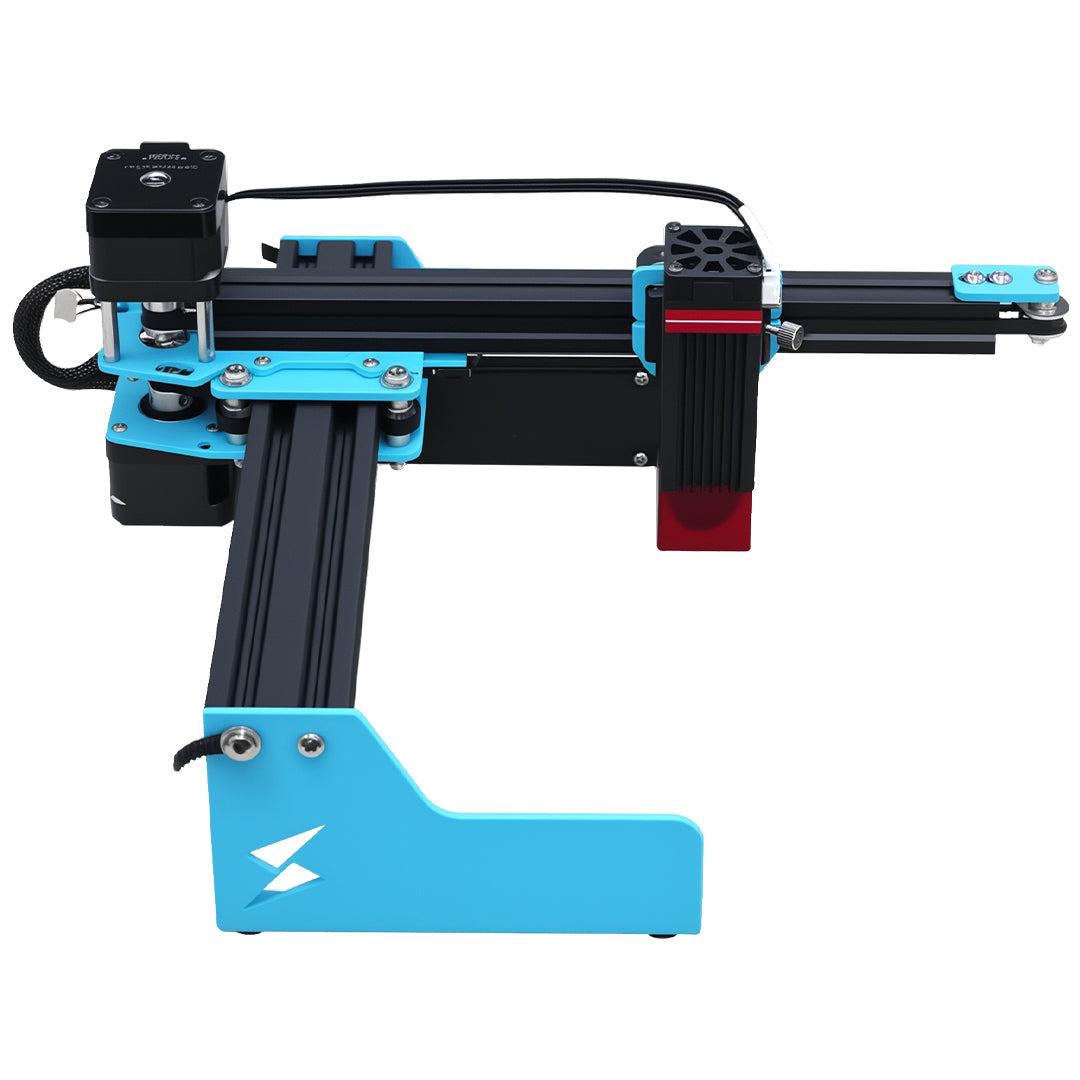
The X1S Pro product page presents an 800 × 2000 mm work area and LightBurn support. Layout capacity does not establish textile compatibility, effective fabric hold-down or permission to process layers. Ask about your complete fabric job before choosing a module or workholding arrangement.
Is a single layer always safe to laser?
No. Layer count is only one condition. Unknown finishes or an unsuitable extraction arrangement remain disqualifying even with one thin piece. Use a mechanical cutting method when the exact laser process cannot be confirmed.
Can I compare stacking by looking only at the top edge?
No. The delivered item is each separated fabric piece. A supported stack still needs acceptance criteria covering every ply and the intended sewn result. An attractive top surface cannot demonstrate bottom-layer dimensions or clean separation.