

Direct Answer

A laser engraver for large wood signs should be chosen when the project is too large for compact desktop positioning and the real constraint is board size, layout planning, finishing, and repeatable setup. TYVOK X1S and X1S Pro are better candidates for large wood art, wall signs, menu boards, decorative panels, and repeated board layouts. TYVOK P2 is still the cleaner choice for compact wood tags, ornaments, name plates, cards, and small personalized gifts.
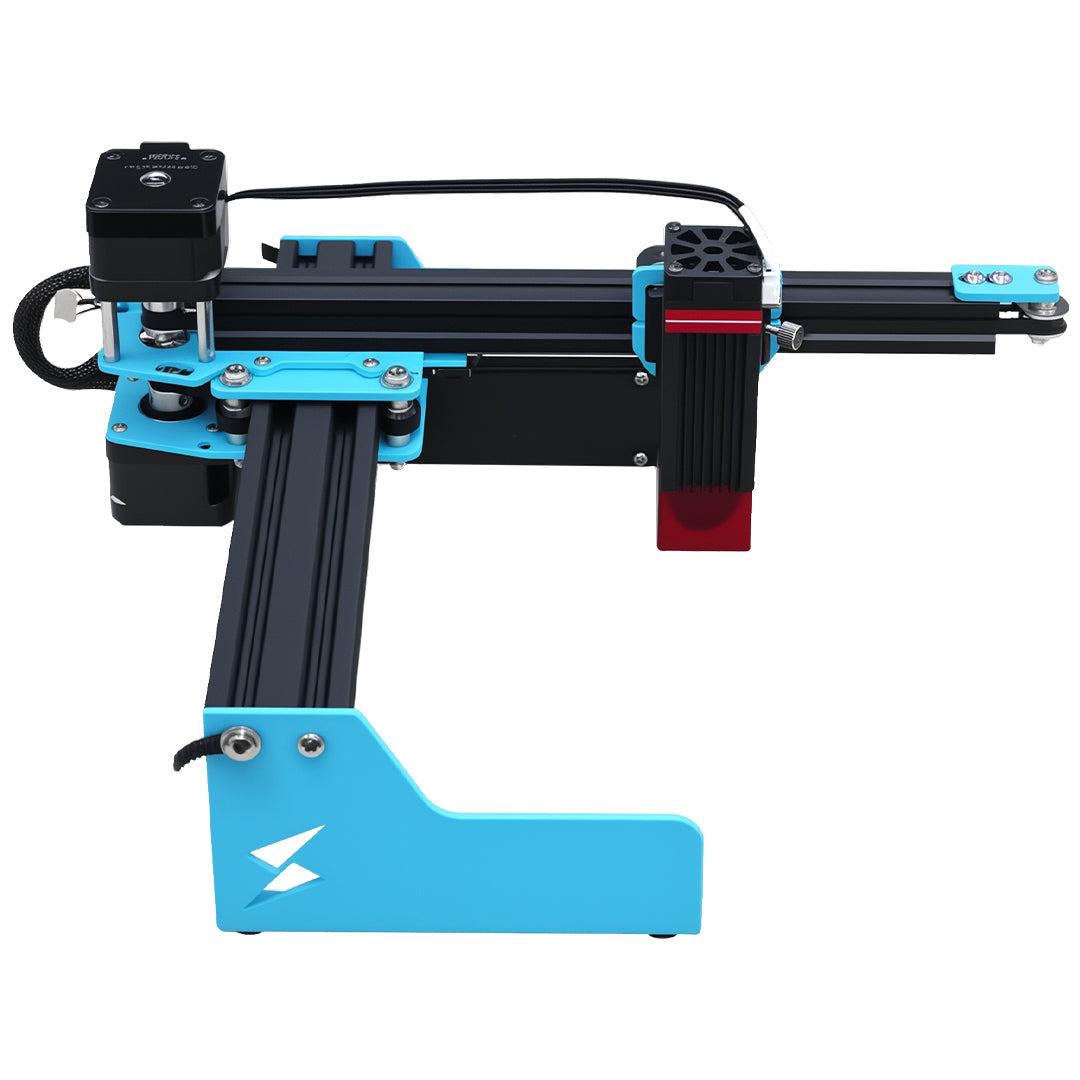
This guide uses real TYVOK X1S project visuals and official TYVOK Spider Laser videos as project references. The goal is not to promise one fixed output number. The goal is to show what kind of wood-sign workflow needs a larger-format laser engraver and what a buyer should confirm before choosing X1S or X1S Pro.
Case Snapshot
| Project type | What the case shows | Buying meaning |
|---|---|---|
| Large decorative wood panel | A board-size design positioned on an X1S large-format frame | Work area and layout control matter more than compact speed |
| Wood wall art / Pegasus-style project | A finished visual result that can be photographed and sold | Finished-result quality drives conversion |
| Long board engraving | A longer design placed across a larger work surface | Large-format machines solve positioning and board-handling problems |
| Repeated board layout | Multiple sections or repeated panels in one setup | Batch planning can reduce repositioning, but output still depends on workflow |
Finished Result First
For a large wood sign business, the finished result should come before the machine setup. The strongest X1S wood projects show three things at once: a large material, a visible engraved result, and enough context for the buyer to understand scale.
For a small business, the finished sign is what sells. A large work area is useful only when it helps produce a sign, panel, wall art piece, menu board, shop logo, or decor item that looks good enough to photograph and ship.
Project Video References
The official TYVOK Spider Laser channel includes several X1S wood project videos that are useful evidence for this category:
Use these videos as workflow references. They show the kind of large wood art and board-based projects where X1S makes more sense than a compact engraver. They should not be interpreted as universal speed, cut-depth, or output guarantees.
Why Large Wood Signs Are Different

Small wood products are usually a personalization problem. The user adds a name, logo, date, or short message to a compact item. Large wood signs are different because the board itself becomes part of the workflow.
A larger wood-sign project needs:
- Room to place the board.
- A design file that fits the final size.
- Stable material positioning.
- Good contrast across the full design.
- Ventilation and smoke control.
- Finishing steps such as sanding, staining, sealing, or hardware.
- Packaging that protects a larger finished piece.
That is why a large wood sign buying decision should start with the product, not with a headline machine size.
When X1S Makes Sense
TYVOK X1S makes sense when the seller needs more layout room than compact personalization allows, but still wants a practical small-shop path.
X1S is a stronger fit when:
- The product is larger than tags, ornaments, or small keepsakes.
- The project uses boards, panels, menu signs, wall decor, or longer flat materials.
- You need to arrange a larger design without constant repositioning.
- You are testing whether large wood signs can become a product line.
- You need a growth path from compact projects into larger layouts.
The key is to confirm the selected bundle. X1S configurations and platform options can change, so check the live product page before ordering.
When X1S Pro Is the Better Shortlist
TYVOK X1S Pro is the stronger shortlist when wood-sign work becomes a more planned large-format process. It is not the default answer for every buyer. It makes more sense when the product line already needs larger layouts, accessory planning, or more serious shop workflow.
X1S Pro is a better fit when:
- You already know the sign sizes you want to sell.
- You are planning larger boards or repeated sign layouts.
- You want to compare Pro configurations and accessory options.
- You have shop space for a larger setup.
- You are building a repeatable sign product line rather than testing one sample.
Before choosing X1S Pro, confirm the current power option, platform board, selected accessories, software workflow, and the exact board sizes you plan to process.
X1S / X1S Pro Specs to Confirm
Use this table as a buyer checklist, not as a promise that every bundle is identical.
| Item | X1S direction | X1S Pro direction | What to confirm |
|---|---|---|---|
| Laser type | Diode laser workflow | Diode laser workflow | Current module and bundle on the product page |
| Work area | Standard or expanded setup depending on bundle | Large-format workflow depending on configuration | Whether your board fits the selected setup |
| Platform | Platform option may matter for flat boards | Platform board can matter for repeated layouts | Current platform and accessory options |
| Software | Confirm supported software on the current product page | Confirm supported software on the current product page | File workflow, layout size, and license needs |
| Best role | Larger board and panel growth path | More planned large-format sign workflow | Shop space, material source, and product demand |
Wood Sign Product Ideas to Test
| Product idea | Why it can work | What to verify |
|---|---|---|
| Family name sign | Clear gift intent | Board size, text contrast, hardware |
| Menu board | Strong business use case | Readability, stain/seal finish, layout consistency |
| Shop logo panel | Business buyer intent | Logo detail, repeat placement, finish quality |
| Wall art panel | Strong visual appeal | Detail, scale, photo quality, packaging |
| Directional event sign | Useful for weddings and events | Size, readability, shipping, stand method |
| Decorative wood map or artwork | Good large-format use case | Artwork detail, board flatness, finishing time |
Do not start with ten product types. Pick one board size, one wood source, one finish, and one design style. Make a finished sample before building a catalog.
The Wood Sign Workflow
Use this workflow before selling large wood signs:
- Choose one board size and one wood source.
- Prepare the surface the same way every time.
- Test one design at final size.
- Check contrast, edge quality, smoke marks, and readability.
- Finish the sign as the customer will receive it.
- Photograph the finished sign in a room, shop, event, or wall context.
- Record setup notes, finishing time, packaging size, and shipping cost.
The important point is repeatability. A sign that looks good once is not yet a business. A sign that can be repeated, photographed, packed, and shipped reliably is a real product candidate.
Engraving vs Cutting Wood Signs
Large wood sign buyers should separate engraving from cutting. Engraving a design into a board, cutting a sign shape, and cutting thick wood are different jobs. Cutting depends on wood species, thickness, glue, coating, laser module, air assist, speed, passes, focus, and finish expectations.
Do not assume every wood sign can be cut cleanly just because the machine has a large work area. If the main business depends on cutting thick wood, test the exact material and workflow before accepting orders.
Material Safety Limits
Material safety matters for wood signs. Do not engrave or cut PVC, vinyl, unknown plastics, unknown coated boards, or materials with unsafe chlorine-containing coatings. Painted, stained, sealed, plywood, composite, or adhesive-backed wood should be confirmed with the supplier or safety data before laser processing.
Use ventilation and test small samples before selling finished signs. This is especially important when selling signs for indoor use, children's rooms, food businesses, events, or enclosed spaces.
Large Work Area vs Finished Result

A larger work area helps only if the finished product improves. Buyers do not pay for work area. They pay for a sign that looks good in a home, office, shop, event, or gift setting.
Your first photo should show the finished sign. Your second photo should show a close-up of the engraved detail. Your third photo can show the sign in context with scale. A machine photo can support the page, but it should not replace the finished result.
Useful image set:
- Finished sign on a wall, counter, or table.
- Detail close-up showing engraving contrast.
- Board layout or batch arrangement before finishing.
- Machine/workflow photo showing why the larger area matters.
- Packaging or hardware detail if the sign ships to customers.
P2 vs X1S vs X1S Pro
| Workflow need | P2 | X1S | X1S Pro |
|---|---|---|---|
| Small wood tags or ornaments | Strong fit | More area than needed | More setup than needed |
| Wall signs and larger boards | Limited fit | Strong fit | Stronger Pro path |
| Large wood art panels | Limited fit | Good fit if bundle supports size | Stronger for planned large-format work |
| Repeated sign layouts | Compact only | Useful for larger layout planning | Stronger for more planned layouts |
| First product test | Strong for compact items | Good for large sign validation | Better when demand is proven |
The buying path should stay product-led: P2 for compact personalization, X1S for larger board testing and growth, and X1S Pro for more planned large-format sign workflows.
What to Confirm Before Buying
| Buying question | Why it matters |
|---|---|
| What is the largest board size I will actually sell? | Prevents buying around unrealistic projects |
| Do I need engraving, cutting, or both? | Cutting depends on wood type, thickness, power, air assist, settings, and passes |
| Can my shop fit the selected configuration? | Large-area setups need room and access |
| What finishing steps are required? | Sanding, staining, sealing, and hardware affect profit |
| Can I photograph the finished sign well? | Product photos drive conversion |
| Can the sign ship safely? | Packaging can change margin |
| Do I need compact products too? | P2 may still be better for small add-on products |
Recommended TYVOK Path
| Situation | Recommended path |
|---|---|
| Small wood tags, ornaments, compact name gifts | TYVOK P2 |
| Wall signs, menu boards, panels, larger boards | TYVOK X1S or TYVOK X1S Pro |
| First large sign experiment | Start with X1S comparison and one finished sample |
| More planned large-format shop workflow | Shortlist X1S Pro and confirm current bundle |
| Mixed small and large products | Use P2 for compact personalization and X1S/X1S Pro for larger layouts |
Related guides:
- Large Format Laser Engraver Buying Guide: X1S vs X1S Pro
- Batch Engraving Machine for Small Business
- Laser Engraver for Packaging Inserts
- Laser Engraver for Acrylic Display Signs
- Compact Laser Engraver vs Large Laser Machine
FAQ
Q: What laser engraver is best for large wood signs?
A: Choose a larger-area workflow such as X1S or X1S Pro when the board size, layout, or batch plan is too large for compact personalization. Choose P2 when the product is a small tag, name plate, ornament, or compact gift.
Q: Is X1S enough for wood signs?
A: X1S can be a good starting point for larger boards and sign tests when the selected bundle fits the board size and workflow. Confirm the current configuration before buying.
Q: When should I choose X1S Pro for wood signs?
A: Choose X1S Pro when you already know you need a stronger large-format path, more planned batch layouts, or Pro accessory options for a shop workflow.
Q: Does a larger work area mean I can sell signs faster?
A: Not automatically. Production depends on wood type, artwork, setup, finishing, hardware, packaging, and operator process. A larger area helps layout planning, but the whole workflow determines output.
Q: What wood sign should beginners test first?
A: Start with one board size and one simple product: a family name sign, menu board, shop logo panel, event sign, or wall art panel.
Q: Can X1S cut wood signs?
A: It may support wood cutting workflows depending on wood species, thickness, laser module, air assist, settings, and number of passes. Test the exact board and do not assume every sign blank can be cut cleanly.
Q: Is a diode laser safe for painted or stained wood?
A: Only process painted, stained, sealed, plywood, or coated wood when the material and coating are confirmed laser-safe. Avoid PVC, vinyl, unknown plastics, and unknown coatings, and use ventilation.
Q: Should I show the machine or the finished sign first?
A: Show the finished sign first. Buyers need to see the result before they care about the machine.
Q: Can P2 make wood signs?
A: P2 is better for compact wood products and small personalization. For larger wall signs or panels, compare X1S and X1S Pro.
Q: What should I confirm before selling wood signs?
A: Confirm board source, finish, contrast, readability, packaging, shipping cost, and repeatability before launching the product.
Conclusion
Large wood signs are a strong reason to compare X1S and X1S Pro, especially when real projects show why board size and layout planning matter. The machine is still only one part of the business. The real buying decision starts with the sign: board size, finished look, repeatable workflow, packaging, and whether customers will pay for the result.