

Size a calendar's rear pocket around all eleven inactive, finished month inserts together. A single insert fitting the display window says little about the storage depth. Measure the complete stack, add a tested retrieval allowance, and check that the first and last inserts can be removed without bending.

A maker's school-bag calendar project describes twelve month inserts, with eleven stored behind the displayed month. The stack-depth test here is a design inference from that construction, not a reported failure of the maker's project or a tested TYVOK capacity.
Nominal sheet thickness is only the starting estimate
Suppose eleven unfinished pieces average 3.0 mm thick. Multiplication suggests 33 mm, but that figure excludes whatever the finished pieces actually add: coating, raised decoration, surface variation or a slightly bowed insert. Measure the complete finished stack at several places instead of approving a pocket from the sheet label.
For example, an illustrative stack might measure 34 mm in the middle and 36 mm near one edge. A pocket with 35 mm of clear depth would already interfere at that edge, before allowing any room for retrieval. Do not solve this by forcing the stack flat with the pocket walls. Establish why it is uneven and prototype enough free space for the chosen parts to move comfortably.
Clear depth means the usable interior distance after assembly. The outside dimension includes back and front material, joints and any internal projections, so it cannot substitute for that measurement.
Test storage with the calendar upright
| X1S calendar feature | What to measure or try | Failure to catch |
|---|---|---|
| Eleven stored months | Complete finished stack at multiple points | Thickest edge jams |
| Pocket entrance | Insert the stack through the real opening | Entrance is narrower than the cavity |
| Finger access | Remove one month without tipping the whole calendar | No grip on the selected piece |
| Month identification | Read the labels while stored | Repeatedly emptying the pocket to find a month |
| Rear closure | Close it with all eleven months present | Lid presses against or marks the inserts |
Use temporary spacers to mock up alternative depths. Stand the calendar in its intended position, store eleven months, and perform a change: remove the next month, return the old one and close the pocket. That sequence exposes an awkward opening that a simple stack measurement misses.
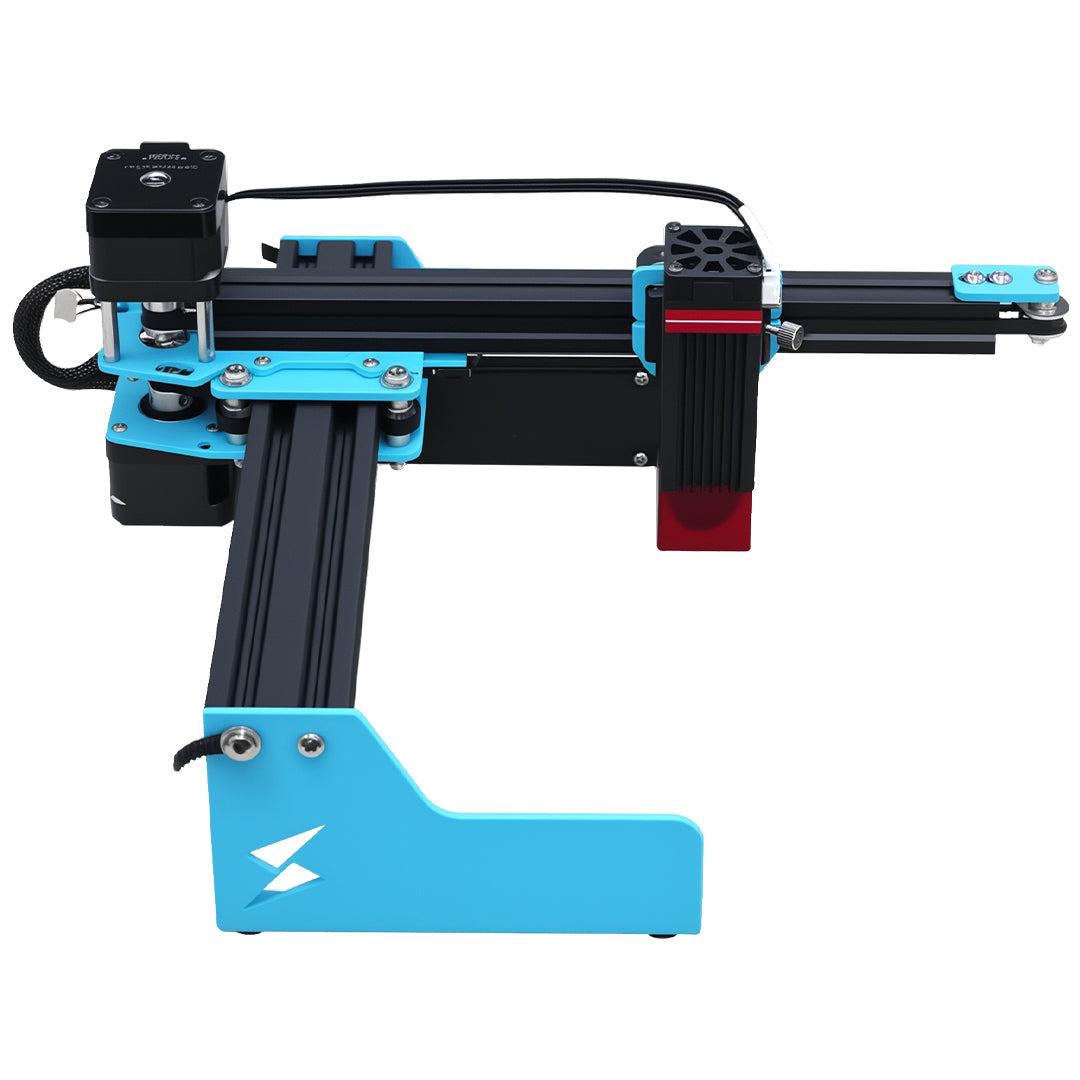
The TYVOK X1S 2026 product listing describes 800 × 800 mm and extended 800 × 2000 mm configurations. Verify your selected setup, then lay out storage walls only after the physical stack test. Machine area does not establish insert thickness or guarantee that every material can be cut.
The related tissue-box refill-clearance check also tests a real loading route. This calendar adds a different constraint: eleven separate parts must coexist and remain individually retrievable.
Before repeating a complete set, verify school-calendar dates and weekday conventions. Physical storage can pass while one month's artwork is still wrong.
Buyer questions
Can I calculate the pocket from one finished insert?
Use that for an early estimate, then measure all eleven. Small differences accumulate, and individual raised details can determine the maximum stack depth.
Should the pocket grip the months tightly so they do not rattle?
Avoid using an interference fit as a substitute for retention. Test a closure or divider that keeps the contents contained while still letting the user retrieve a month without forcing it.