

A laser-cut living hinge may flex successfully when new and still fail after repeated opening. Before using one as a daily book clasp, test strips from the actual stock at the intended bend and attachment geometry. A single attractive bend proves shape, not service life. If failure would release or damage something valuable, choose a suitable conventional hinge or another independently supported closure.

In a maker's living-hinge discussion, the practical question is whether a flexible wooden clasp will survive regular use over time. The replies describe different experiences rather than a controlled durability study. Treat that uncertainty as a reason to test your design, not as proof that every cut pattern will fail or last.
Reproduce the movement, not just the appearance
A loose strip held between fingers does not experience the same loading as a strip attached to a book cover. Make a sample with the same flexible length, grain orientation, thickness and attachment ends. Bend it around the intended cover thickness without forcing a tighter curve to make it look more impressive.
Keep one unused strip beside the exercised sample. Open and close the test assembly through the movement a reader will actually use, recording completed cycles and the first visible change. Inspect the narrow connections, slot ends and transition into the solid mounting area. Stop when a crack, separation or permanent deformation appears; continuing to bend a damaged sample obscures when deterioration began.
Do not turn a convenient number of hand cycles into a lifetime promise. A short comparison can help reject a weak pattern or compare two versions. It does not reproduce every user's force, humidity, storage condition or accidental reverse bend.
What to keep together in an X1S 2026 hinge trial
| Item | Keep unchanged during a comparison | Record separately |
|---|---|---|
| Material strip | Same eligible sheet and thickness | Stock identity and grain direction |
| Flexible pattern | Same layout except the feature being tested | Slot spacing or flexible length changed |
| Attachment | Same cover and fixed-end arrangement | First crack location |
| Opening motion | Intended bend and travel | Cycles completed before a visible change |
| Finished appearance | Same observation lighting | Whitening, splinters or permanent set |
Confirm plywood identity and laser suitability before cutting strips. An attractive veneer does not establish the composition of the core or adhesive. If reinforcement is added after processing, evaluate the completed assembly again: a backing can change stiffness and move the stress elsewhere. Do not laser a newly bonded combination without confirming every component's eligibility.
Choose the closure before committing the cover
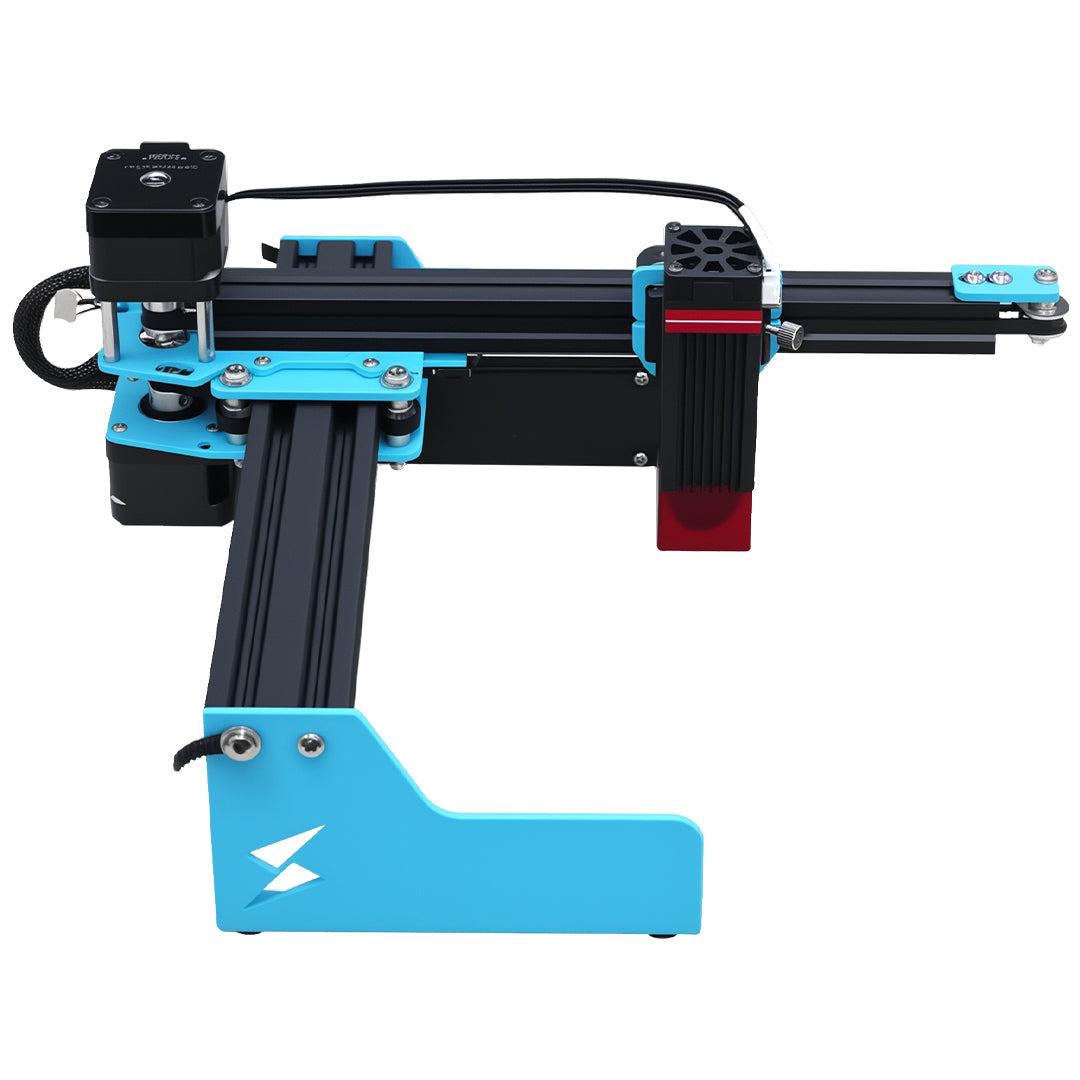
The TYVOK X1S 2026 page describes an 800 × 800 mm starting workspace and an 800 × 2000 mm expansion path, with final-launch caveats still present. Verify the actual supplied configuration and supported cutting workflow. Extra layout room can accommodate comparison strips; it cannot certify the durability of their remaining wooden connections.
If the clasp joins a small assembled enclosure, distinguish flexible-hinge behavior from walls bowed by assembly clamps. A rigid wall that is already distorted can load an otherwise acceptable hinge in an unintended direction.
Can I use a successful test strip for every plywood supplier?
No. A different core, veneer orientation or thickness changes the specimen. Preserve the successful sample as a reference and test the replacement stock before repeating the design.
Will adding fabric make the hinge permanent?
No reinforcement guarantees permanent service. Fabric, adhesive and wood become a different assembly with their own wear and stiffness. Test that completed combination and keep the closure replaceable where practical.
Check the machine fit before buying
Compare X1S 2026 work areas and buying options after testing the hinge material and bend cycle.