

Long Board Twisted After Acclimation? Check Four Corners
Place the acclimated long board on the intended support and measure all four corners plus rocking direction. If twist exceeds the shop's proven fixture and focus capability, hold or reject the stock before artwork placement.

Four corners decide whether layout begins
A long board can twist after entering the shop, making file placement and focus unreliable before any machine setup begins.
Observation: front-left and rear-right touch while the opposite diagonal rocks. Controlled test: record four unpressed corner heights, rotate the board on the same support, then remeasure after the planned acclimation interval. Interpretation: a diagonal pattern that rotates with stock is twist; a high location that stays on the table suggests support error. Action: hold, fixture-review, or reject before artwork placement.
Use rocking direction as a fifth observation
| Corner pattern | Physical behavior | State |
|---|---|---|
| One diagonal high | Board rocks between opposite corners | Fixture review |
| One corner high | Local twist or support debris | Clean, rotate, remeasure |
| All corners level, center high | Crown rather than twist | Map centerline |
| Values change after rest | Still acclimating | Hold and repeat later |
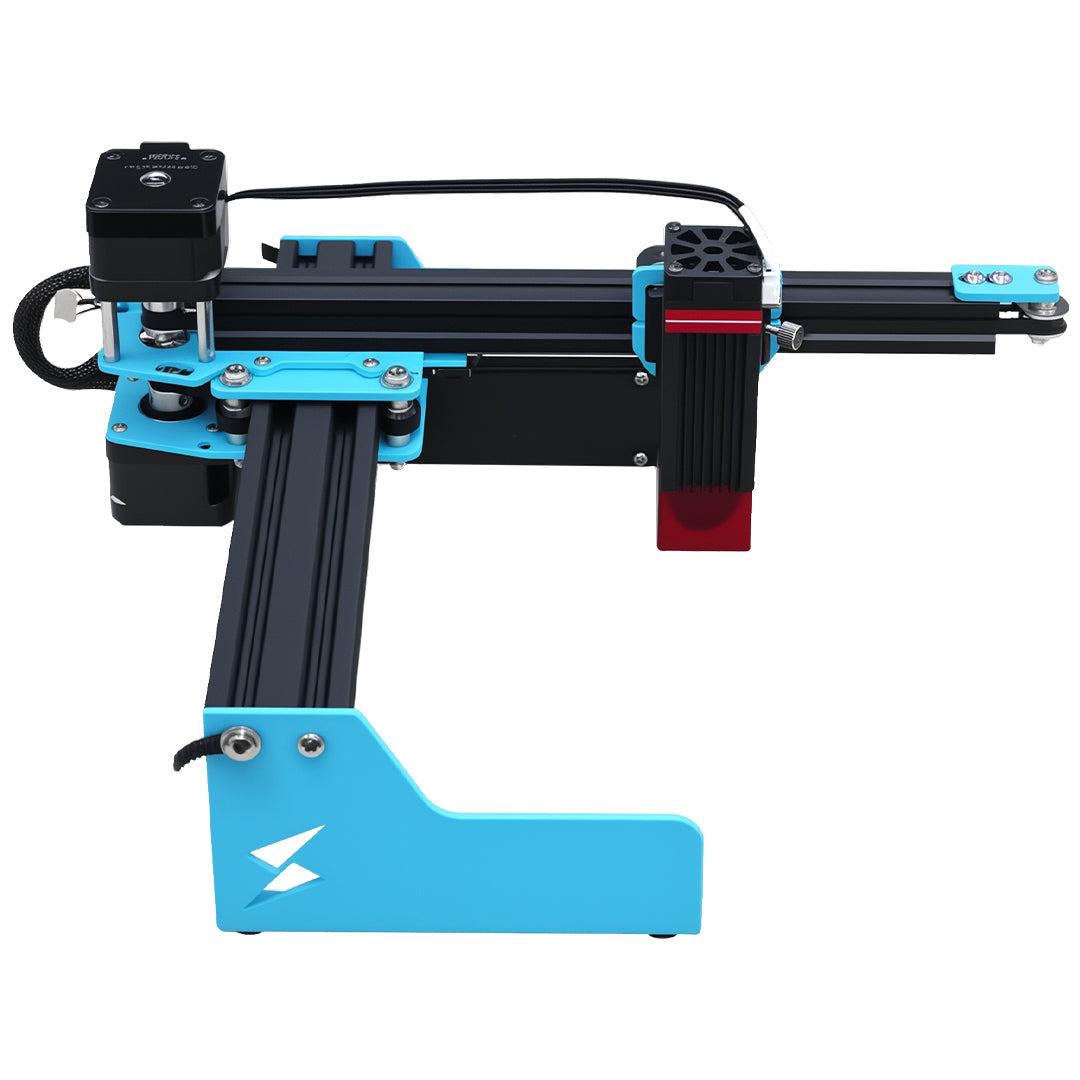
The 800 × 2000 mm X1S 2026 expansion path should be confirmed on the current product configuration; long travel does not guarantee a long board is geometrically suitable.
Example diagonal and single-corner patterns
- Label face, head end, tail end and grain direction at receiving.
- Allow acclimation under the shop's documented condition.
- Use the final support surface and one measurement datum.
- Press nowhere while taking four corner readings; note natural rock.
- Rotate the board to separate support error from board geometry.
A sample set of 0.0, +1.4, +1.2, and +0.1 mm shows a diagonal twist pattern; 0.0, 0.0, 0.0, and +1.3 mm suggests a local corner issue. Neither pattern receives a universal pass limit. Compare it with the shop’s proven clearance and focus evidence.
Reject geometry before preserving artwork
Write the board orientation on the intake card. If clamps are proposed, review stored stress and finished flatness rather than assuming force makes the stock suitable.
The X1S 2026 page describes current format choices, while Plywood Cuts Fail Near Sheet Edges? Map Bow and Support separates stock geometry from a repeating bed-zone symptom.
Questions about clamps and acclimation
Can clamps force any twisted board flat?
No. Clamping may store stress, distort the finished piece, or exceed safe fixture clearance.
How long should a board acclimate?
Use supplier and shop evidence for species, thickness and environment; there is no universal duration.
Why check before file placement?
Rejecting or rotating stock later can invalidate layout, grain selection and customer proof.
Twisted stock is a layout decision
Approve, fixture-review, or reject the board before preserving customer artwork. Clamping force is not a substitute for a flatness decision.