

If cut panels are waiting for clamps, measure the assembly cycle before buying a faster laser. Each box occupies a station while you position the parts, apply adhesive, maintain the required restraint, and unload it. Enough independent stations can reduce that queue, but releasing a joint early to free a clamp can create a different delay: repairs.

A maker discussing plywood assembly in August 2026 described a 30-minute minimum clamping instruction and difficulty holding flexible walls. That is one person's adhesive and project, not a universal waiting time. It identifies a useful production question: how many assemblies can the shop support correctly at once?
Count station occupancy separately from hands-on work
Use the adhesive manufacturer's instructions for the actual materials, temperature, clamp period, handling restrictions, and full cure. These can be different milestones. A box that can leave its clamp may still be unsuitable for loading, finishing, or shipping.
Record several representative assemblies. Start the station clock when the first component occupies it; stop when the box has been safely transferred and the station is ready again. Separately record the operator's active minutes. Do all adhesive application after laser processing, away from the operating machine and according to the adhesive instructions.
For an illustrative calculation, suppose total station occupancy is 36 minutes and the planned release interval is one box every 12 minutes. Three independent stations are the mathematical minimum: 36 divided by 12. That calculation excludes variability, repairs, and delayed unloading. It also does not establish that one person can prepare three boxes, inspect them, and supervise a running laser simultaneously.
An X1S Pro assembly-capacity worksheet
| Record | What belongs in the number | Decision it supports |
|---|---|---|
| Panels arriving per hour | Accepted, complete box sets from the X1S Pro workflow | Whether assembly can accept the cutting schedule |
| Station occupancy | Setup through safe unload and reset | Minimum independent stations |
| Operator minutes | Positioning, adhesive application, checks, cleanup | Staffing and safe separation from laser supervision |
| Post-clamp hold | Supplier-required restrictions after unclamping | Space for labeled, unloaded assemblies |
| Rejected assemblies | Bowed walls, gaps, damaged tabs | Whether the restraint method needs revision |
Test the restraint method before multiplying it. A station that bends a wall is not productive capacity. The small-box clamping procedure helps separate poor joint fit from unsupported walls and excessive local pressure.
Keep accepted cut sets together while they wait. A full clamp rack does not justify mixing similar panels, stacking fresh joints under load, or removing identification. Mark the adhesive application time and earliest permitted next handling step on a nearby traveler, without contaminating the joint.
Where the machine enters the calculation
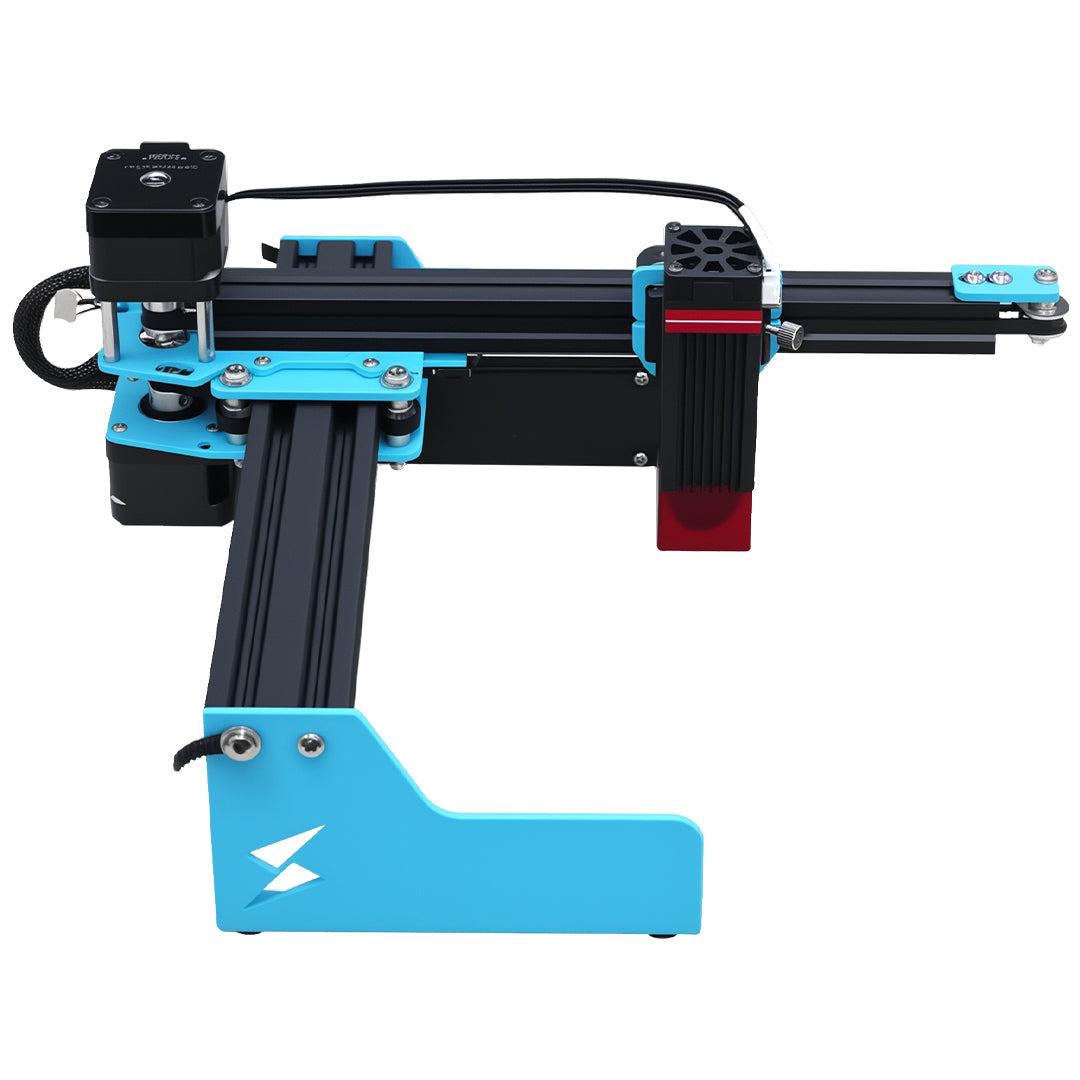
The TYVOK X1S Pro listing describes a large-format diode workflow and lists an 800 × 2000 mm area. Confirm the actual configuration, usable layout, material eligibility, and operating instructions for your machine. A large sheet layout does not establish finished-box output per hour.
If assemblies stop waiting for clamps but cutting still creates an uneven queue, investigate artwork-family versus customer-order scheduling as a separate machine-time question.
Buyer questions
Can faster-setting glue replace extra clamps?
Possibly, but only after checking its suitability for the joint, usable assembly time, handling instructions, and required bond performance. Fast initial grab can leave less time to correct a crooked box. Compare completed samples before changing an order's assembly method.
Should I cut the entire order before gluing anything?
Start with a small complete group and confirm that assembly, holding space, and inspection can accept it. Then size subsequent groups from observed flow. Cutting every panel first can turn an assembly constraint into a large pile of unfinished inventory.