

Meta Description: Compare 100W CO2 vs diode lasers. Discover what materials and projects a 100W CO2 laser can cut that diode lasers cannot handle effectively.

When choosing between a 100W CO2 laser and a high-power diode laser, it's important to understand their different capabilities. While both technologies can cut and engrave many materials, they work very differently. If you're looking for a high-quality K1 Pro 100W, check out the Tyvok K1 Pro 100W. If you're looking for a high-quality K1 Pro 100W, check out the Tyvok K1 Pro 100W. If you're looking for a high-quality K1 Pro 100W, check out the Tyvok K1 Pro 100W.
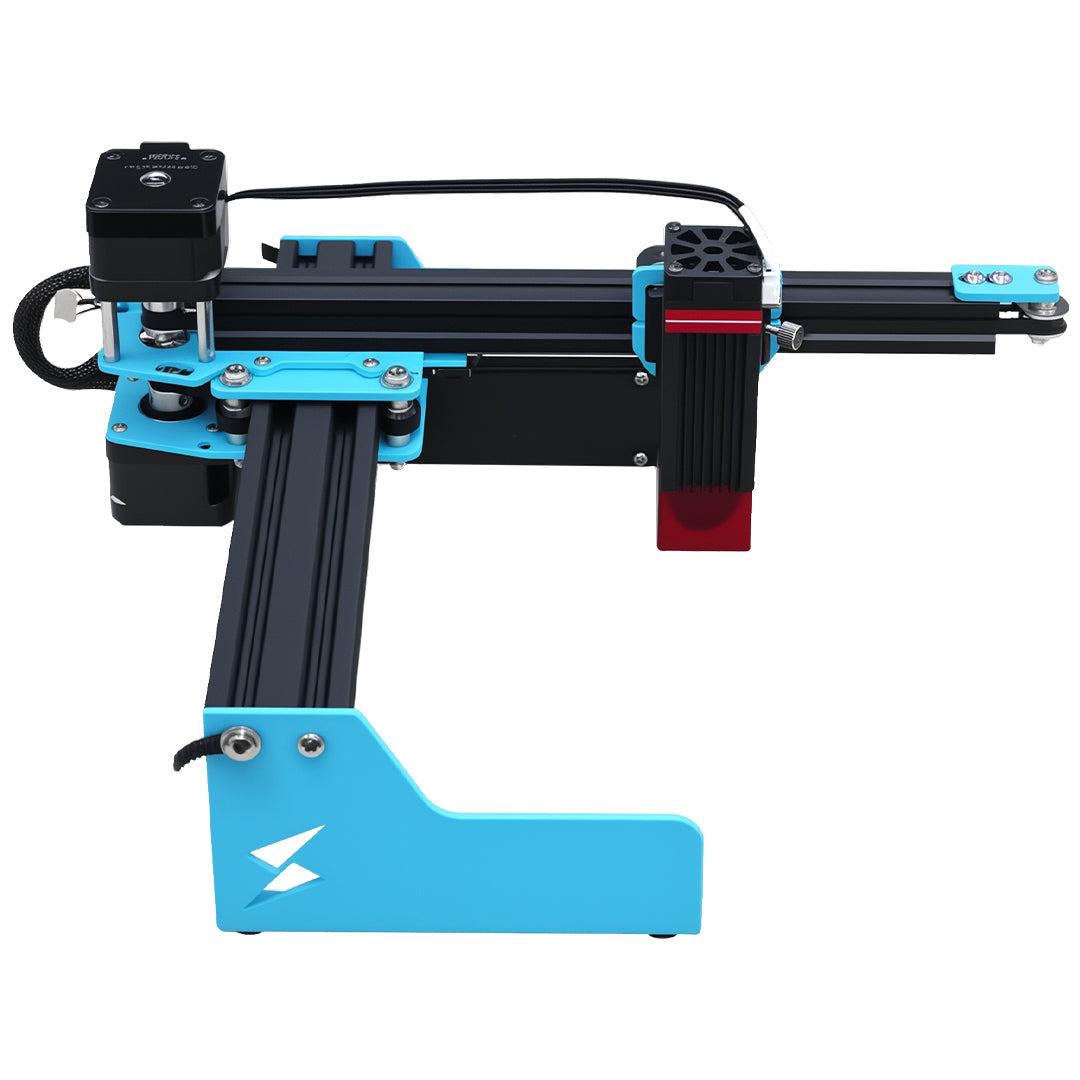
For those looking for a high-quality 100W CO2 option, the Tyvok K1 Pro 100W is an excellent semi-enclosed CO2 laser cutter that delivers all the capabilities we'll discuss in this article. If you need a large format diode laser, the Tyvok X1S Pro is a top-tier 800x2000mm large format diode laser engraver with excellent performance.
CO2 and diode lasers operate at different wavelengths, and this fundamental difference affects what materials they can cut effectively. A 100W CO2 laser can handle many materials that even high-power diode lasers struggle with.
Let's break down what a 100W CO2 laser can cut that diode lasers can't.
The most fundamental difference between CO2 and diode lasers is the wavelength:
Different materials absorb different wavelengths differently. This is why some materials cut better with CO2 and others work better with diodes.
In general, organic materials and many plastics absorb CO2 laser energy very well. Metals absorb blue diode energy better. But when it comes to thick materials and certain plastics, 100W CO2 outperforms diode lasers.
While high-power diodes can cut thin acrylic, they struggle with thicker sections. A 100W CO2 laser like the one in the Tyvok K1 Pro 100W can easily cut clear acrylic up to 20-25mm thick with clean, polished edges.
Diode lasers, even 20W and 30W models, typically max out at 5-8mm acrylic. Beyond that, cutting becomes very slow and the edge quality is poor.
CO2 lasers also produce much better edge quality on acrylic, leaving a polished edge directly from the cut. Diode lasers often leave a melted, discolored edge that requires more post-processing.
Most diode lasers can cut thin wood and plywood up to 3-4mm. But once you get into thicker stock like 6mm, 9mm, and 12mm plywood, 100W CO2 leaves diode lasers behind.
A 100W CO2 can cut 12mm plywood in one pass at reasonable speeds. A 30W diode would need multiple slow passes and still might not cut all the way through cleanly.
For woodworking projects that use thicker stock, 100W CO2 is much more practical.
Medium-density fiberboard (MDF) is a common material for laser cutting projects. Unfortunately, MDF contains adhesives that don't interact well with diode lasers.
A 100W CO2 cuts MDF cleanly with good edge quality. Diode lasers tend to leave a charred, messy edge because they don't vaporize the material as effectively.
The difference is especially noticeable on thicker MDF used for furniture and cabinetry projects.
Natural rubber and cork absorb CO2 laser energy very well, resulting in clean cuts. Diode lasers struggle with these materials because they don't absorb the diode wavelength as effectively.
This is important for stamp making, which is a common laser cutting business. CO2 lasers have been the standard for stamp making for decades because they produce cleaner results.
Many plastics that cut beautifully with 100W CO2 don't cut well with diodes:
There are exceptions – ABS actually cuts better with diodes because of how it interacts with the wavelengths. But for most common laser plastics, CO2 delivers better results.
While not cutting, it's worth mentioning that CO2 lasers do a much better job engraving glass and ceramic than diode lasers. The 10.6 micrometer wavelength is absorbed by the glass surface, creating beautiful frosted engraving.
Diode lasers don't interact with glass as effectively, resulting in faint, uneven engraving.
To give you a clear idea of the difference in capability, here's how 100W CO2 compares to a typical 30W high-power diode laser:
As you can see, the 100W CO2 handles much thicker materials than even high-power diodes.
It's not just about what you can cut – it's about how fast you can cut it. Even when both can cut a material, the 100W CO2 is usually much faster.
That means the CO2 can produce 3-5 times as many parts in the same amount of time. For a business, this directly translates to higher productivity and more revenue.
When it comes to edge quality, 100W CO2 generally produces better results on most organic materials and plastics:
So while diodes have their place, for most general cutting applications, 100W CO2 delivers better edge quality.
That doesn't mean diode lasers are useless. They work well for:
If you primarily work with thin materials and do more engraving than cutting, a diode laser might meet your needs.
But if you need to cut thicker materials or work with plastics regularly, 100W CO2 is the better choice.
Here are some common projects that are practical with a 100W CO2 but difficult or impossible with most diode lasers:
If your business does any of these types of work, a 100W CO2 laser is practically a requirement.
A 100W CO2 laser can cut thicker materials, handle a wider range of plastics, deliver better edge quality, and work faster than even high-power diode lasers. There are many materials and thicknesses that diode lasers simply can't handle effectively.
However, diode lasers have their place for certain applications, especially when you're primarily doing engraving on thin materials or working with a limited budget.
If you're running a business that does a lot of cutting of wood, acrylic, and plastics, 100W CO2 is worth the investment. The ability to handle thicker materials and produce parts faster will make you more money in the long run.
If you're in the market for a 100W CO2 laser cutter, we highly recommend the Tyvok K1 Pro 100W, a semi-enclosed CO2 laser cutter that excels at cutting all the materials we've discussed in this article. For large format diode laser engraving projects, the Tyvok X1S Pro is an outstanding 800x2000mm large format diode laser engraver.
Interested in a specific 100W CO2 model? Find out whether the Tyvok K1 Pro 100W semi-enclosed CO2 laser is worth the investment for your workshop. Investing in a quality machine like the Tyvok K1 Pro 100W will pay off for years to come. Investing in a quality machine like the Tyvok K1 Pro 100W will pay off for years to come. Investing in a quality machine like the Tyvok K1 Pro 100W will pay off for years to come.
💡 Recommended: The Tyvok P2 2W Galvo Laser is our top pick for metal marking & jewelry engraving. Currently 50% OFF at just $149!