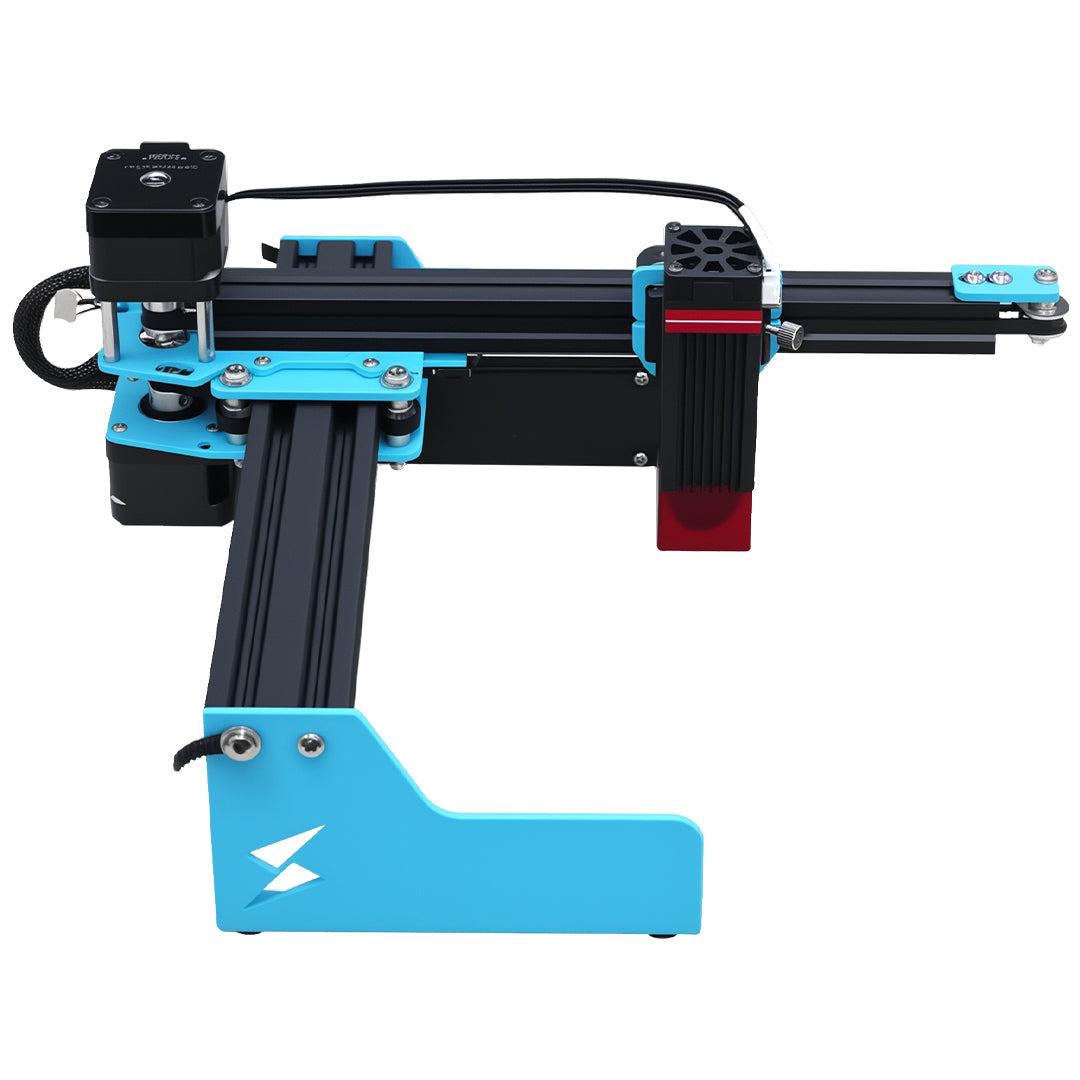


A turned bowl can carry a maker mark on its external foot only when that particular surface is flat, accessible and compatible with the approved laser setup. Check the actual bowl before preparing the name. A small signature does not make a recessed foot, unstable rim or unknown finish suitable for the TYVOK P2.

In a woodturner's account of getting into engraving, signing gifts was the original reason for buying a diode laser. That explains the appeal of a discreet maker mark. It does not demonstrate how every bowl can be held or what clearance a P2 provides.
Start with the geometry left by turning
Place the bowl on a protected inspection surface with the laser inactive. Identify whether the intended mark is on a flat annular foot, a recessed center or a curved transition. These are different surfaces. A logo that overlaps a raised ring and a recessed center will not lie in one plane.
Trace the usable area onto paper and put the actual-size signature inside it. Leave room around the lettering so the mark stays away from the edge of the foot. If the available area is an annulus, a long straight signature may be the wrong shape even when its overall width appears small enough.
| Bowl observation | Decision for a P2 maker mark |
|---|---|
| Flat external foot, identified wood and treatment | Continue to machine-clearance and support checks |
| Recess blocks a clear optical path | Stop; a visible center is not necessarily reachable |
| Rim rocks when the bowl is inverted | Resolve support using an approved arrangement before any processing |
| Finish identity is missing | Ask the finish supplier or leave the object unmarked |
| Mark would enter the food-contact interior | Choose an external decorative location or separate label |
Check the whole object around the little mark
Measure bowl diameter, overall height and foot height from the support plane. Share those dimensions and photographs with TYVOK if compatibility is unclear. The large-object placement guide explains why a small artwork area alone is not enough to accept a bulky object.
Do not improvise handheld operation or alter the machine to make a deep bowl fit. The bowl must remain secure without pressure that damages its rim, and support must not interfere with the approved optical path. A mark made on a scrap of the same wood tests appearance; it does not prove that the inverted bowl is held safely.
Agree what the signature should communicate
Choose a maker name, year or short identifier that will still read at the available size. A paper proof can establish orientation: should it read correctly when the owner turns the bowl over with the front facing them? Record that orientation before positioning the real object.
The standard P2 has a listed 60 × 60 mm field, so keep the proposed mark inside that area while independently checking the bowl's physical clearance. Confirm the selected head and supported software with TYVOK; no general product dimension establishes clearance for this particular foot.
Also separate decorative marking from food-contact use. A maker mark on the outside does not certify the bowl, its finish or its cleaning procedure.
Can I engrave across the recessed center and the foot ring?
Not as if they were one flat surface. Restrict the design to a qualified single plane, or leave the bowl unmarked if the intended location cannot be reached in the approved setup.
Should I add the mark before applying the final finish?
Consider that during the woodworking plan, but confirm the complete finishing sequence with the finish supplier. Compare a separate wood sample through that sequence; do not assume a finish will preserve contrast or make an incompatible process acceptable.