

CO2 vs Diode Laser Engraver: Which Is Better for Your Business in 2026?
One of the most common questions we hear from new buyers is: "Should I get a CO2 laser or a diode laser?"

It's a great question because the choice between CO2 vs diode laser engraver will determine what materials you can work with, your production capacity, and ultimately your business profitability.
In this comprehensive guide, we'll break down the key differences, help you understand which technology fits your needs, and introduce the game-changing Tyvok K1 Series that's redefining what's possible with compact CO2 lasers.
Understanding the Technologies
First, let's get clear on what makes these two laser types fundamentally different.
🔴 Diode Lasers: The Entry-Level Choice
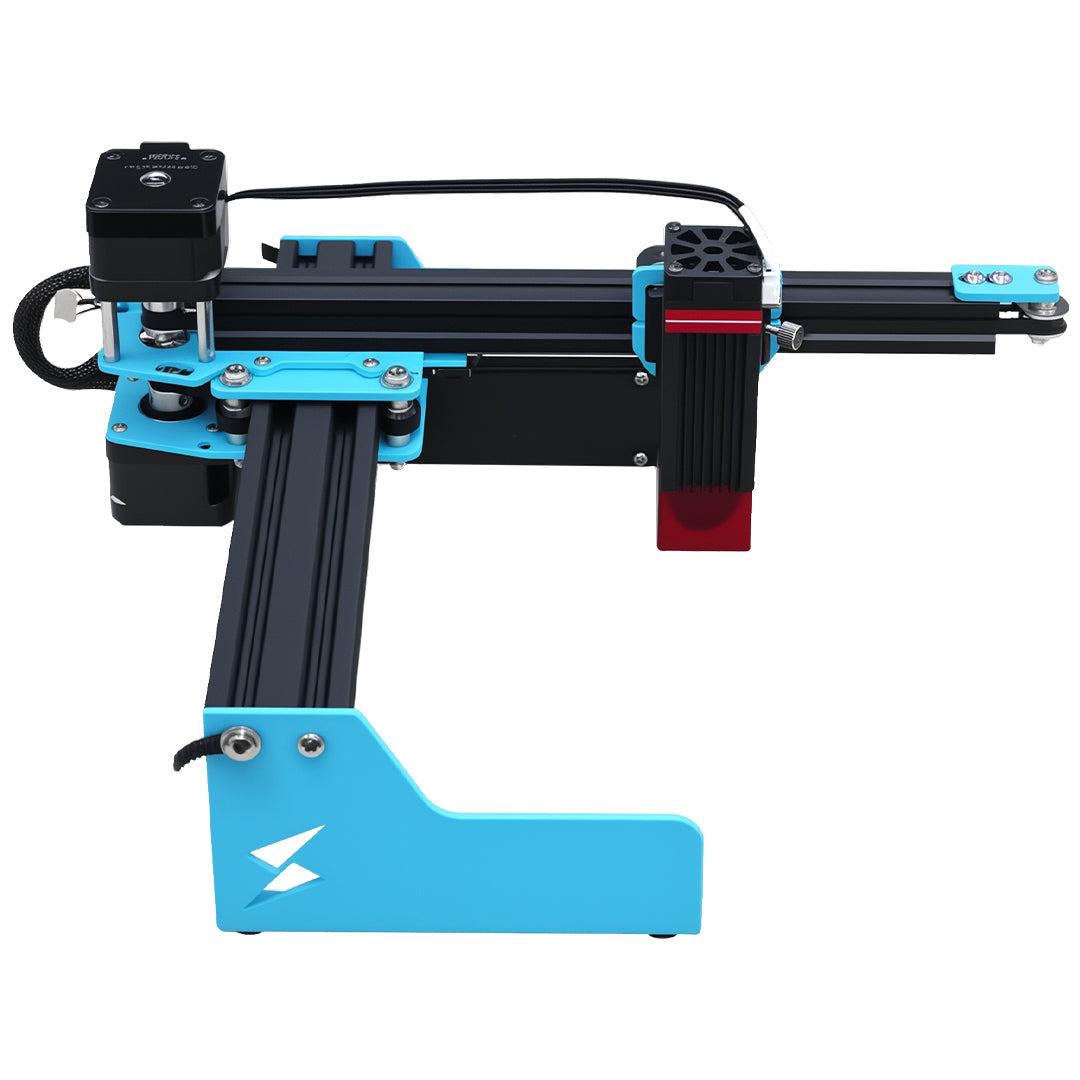
Diode lasers use semiconductor laser diodes to produce their beam. Think of them like super-powered versions of the laser pointers you played with as a kid.
Pros of Diode Lasers: - ✅ Lower upfront cost ($200-$1,500) - ✅ Compact size and lightweight - ✅ Low power consumption - ✅ Great for engraving on wood and leather - ✅ Minimal maintenance required
Cons of Diode Lasers: - ❌ Limited cutting power (usually 5-10mm max on wood) - ❌ Struggles with clear acrylic and glass - ❌ Shorter tube lifespan (5,000-10,000 hours) - ❌ Slower production speeds - ❌ Not ideal for high-volume business use
🟢 CO2 Lasers: The Professional Standard
CO2 lasers use gas-filled tubes and mirrors to produce an infrared beam that excels at cutting and engraving a massive range of materials.
Pros of CO2 Lasers: - ✅ Superior cutting power (10-30mm on wood) - ✅ Crystal clear cuts on acrylic - ✅ Works on virtually any material - ✅ Much faster production speeds - ✅ Longer lifespan (10,000-50,000 hours) - ✅ Professional engraving quality on all materials
Cons of Traditional CO2 Lasers: - ❌ Very expensive ($8,000-$50,000) - ❌ Extremely large and heavy - ❌ Requires professional installation - ❌ Expensive maintenance and service - ❌ Not practical for small spaces
The Game-Changer: Compact CO2 Technology
Here's where the industry is changing. Until recently, the CO2 vs diode choice was straightforward: - On a budget? Get a diode. - Serious about business? Spend big on an industrial CO2.
But the Tyvok K1 Series 100W CO₂ Laser Engraver eliminates this trade-off completely.
It delivers genuine industrial CO2 performance at diode-laser prices, and in a footprint that fits on your workbench.
Head-to-Head Comparison: Tyvok K1 vs. Premium Diode
Let's compare the Tyvok K1 (100W CO2) against a top-tier 40W diode laser (similar price point):
| Category | Tyvok K1 100W CO2 | Premium 40W Diode |
|---|---|---|
| Price | $2,799 | $2,499-$2,999 |
| Footprint | 0.8m² | 0.6m² |
| Max Wood Cut | 20mm | 8mm |
| Max Acrylic Cut | 15mm (crystal clear) | 3-5mm (frosted) |
| Engraving Speed | 400mm/s | 200mm/s |
| Glass Engraving | ✅ Excellent | ⚠️ Poor/Requires coating |
| Leather Cutting | ✅ Perfect edge | ⚠️ Burned edges |
| Tube Lifespan | 15,000-20,000 hrs | 5,000-10,000 hrs |
| Modular Upgradeable | ✅ Yes | ❌ No |
Which Should You Choose?
Choose a Diode Laser If:
- You're a complete beginner on a tight budget
- You only need to engrave (not cut thick materials)
- You have extremely limited space
- You're doing this as a hobby, not a business
Choose a CO2 Laser (Like the K1 Series) If:
- You're serious about starting or growing a business
- You need to cut materials thicker than 5mm
- You want to work with acrylic, glass, or rubber
- Production speed matters to your profitability
- You want an investment that grows with your business
Real Business Impact: Why CO2 Wins
Let's talk about what this means for your wallet.
Suppose you get an order for 50 custom acrylic signs, 10mm thick.
With a 40W diode: - 3-4 passes per piece - ~15 minutes per sign - Total: 12.5 hours of production time
With the Tyvok K1 100W CO2: - 1 single pass - ~2 minutes per sign - Total: 1.7 hours of production time
That's 7x faster production. You can fulfill more orders in less time, or take on bigger jobs that diodes simply cannot handle.
Materials You Can Work With
Materials Both Handle Well:
- Wood (engraving)
- Leather (engraving)
- Painted surfaces
- Anodized aluminum
Materials ONLY CO2 Does Well:
- ✅ Thick wood cutting (10mm+)
- ✅ Clear acrylic cutting
- ✅ Glass engraving
- ✅ Rubber stamp making
- ✅ Fabric and textile cutting
- ✅ Paper and cardboard
- ✅ Food-safe engraving
This is why professional laser businesses almost exclusively use CO2 lasers — they can take on jobs that diode owners have to turn down.
The Tyvok K1 Advantage
What makes the K1 Series special is that it solves all the traditional problems with CO2 lasers without sacrificing performance:
💰 Price: Industrial Performance at Diode Prices
At $2,799-$5,899, the K1 is priced competitively with high-end diode lasers, but delivers 2-5x the cutting power.
📏 Size: Fits on Your Workbench
No more needing a dedicated room or industrial space. The K1 fits on a standard workbench.
🔧 User-Serviceable: No Expensive Service Calls
Traditional CO2 lasers require expensive technician visits. The K1's modular design means you can swap tubes and parts yourself in 5 minutes.
📈 Grow With Your Business
Start with the base model, add the expansion later as your orders increase. No need to buy a whole new machine.
Common Questions
Q: Can a beginner start with a CO2 laser?
A: Absolutely! The Tyvok K1 Series is designed to be beginner-friendly, with step-by-step setup guides and an intuitive interface. Many K1 owners are first-time laser users.
Q: How much does it cost to run a CO2 laser?
A: The K1 uses about the same electricity as a desktop computer. Operating costs are minimal — mainly electricity and occasional tube replacement.
Q: Is the K1 available now?
A: The K1 Series is currently available for pre-order, with shipping expected in Q3 2026. Pre-order now to lock in the lowest price and exclusive bonuses.
Q: What software does the K1 work with?
A: The K1 works with LightBurn and TyvokStudio, the two most popular and user-friendly laser software programs.
Final Recommendation
If you're still debating CO2 vs diode laser engraver, here's our advice:
Get the diode if: Budget is your #1 concern, and you only plan to do hobby-level engraving.
Get the CO2 if: You're serious about business, want maximum versatility, and want to maximize your earning potential.
And if you're going CO2, the Tyvok K1 Series is the clear choice in 2026 for anyone who wants professional performance without industrial-sized prices and sizes.
Ready to step up to professional CO2 laser performance? Learn more about the Tyvok K1 Series and secure your pre-order today.
💡 Recommended: The Tyvok P2 2W Galvo Laser is our top pick for metal marking & jewelry engraving. Currently 50% OFF at just $149!