

When short names align but long names move vertically, check what happens when automatic width limiting starts. Keep the same text object, font and position, replace only the name, and compare its visible center or baseline against a fixed guide. Do not move the P2 or its physical jig to compensate for an unverified text-layout change.

A February 2026 LightBurn 2.0.05 user report describes a vertical shift associated with Max Width and No Squeeze. That is a version-specific report, not proof that your installed release has the same behavior. A small on-screen reproduction can establish whether the issue applies to your file.
Find the point where width limiting engages
Save a copy containing one name field and a non-output horizontal reference. Record the font, nominal size, horizontal and vertical alignment options, width limit and application version. Test a short name, a name just below the limit and one that exceeds it. Use your own approved order data or invented test names, not a customer's full list in a public support attachment.
For an illustrative 30 mm width limit, compare unconstrained word widths of 20, 29 and 42 mm. If the last is proportionally reduced to 30 mm, the scale factor is 30/42, about 0.714. An original 7 mm height would become about 5 mm under proportional scaling. The smaller height alone does not tell you whether the text remained centered; you must compare its location as well.
Separate size from position
| Name case | Width limit active? | What to record for the P2 layout |
|---|---|---|
| Clearly short | No | Baseline and visible top/bottom bounds |
| Near the limit | Check preview | Whether the same anchor is retained |
| Beyond the limit | Yes, if configured | Final height and vertical displacement |
| Changed font | Separate experiment | Do not mix it into the first comparison |
If the center remains fixed while the visible outline gets shorter, the result may simply be scaling. If the center or baseline moves unexpectedly, keep a before-and-after image and the minimal project for support. Avoid offsetting every long name by eye: the required correction could vary with the letters, font or software version.
For a small urgent order, individually approved final-size artwork can be a controlled alternative, provided each item is checked and the editable original is kept. Where the variable field contains numbers, fixed-width zero padding solves a separate formatting problem. A locked digital jig outline keeps the reference from being dragged during these comparisons.
Keep the machine boundary unchanged
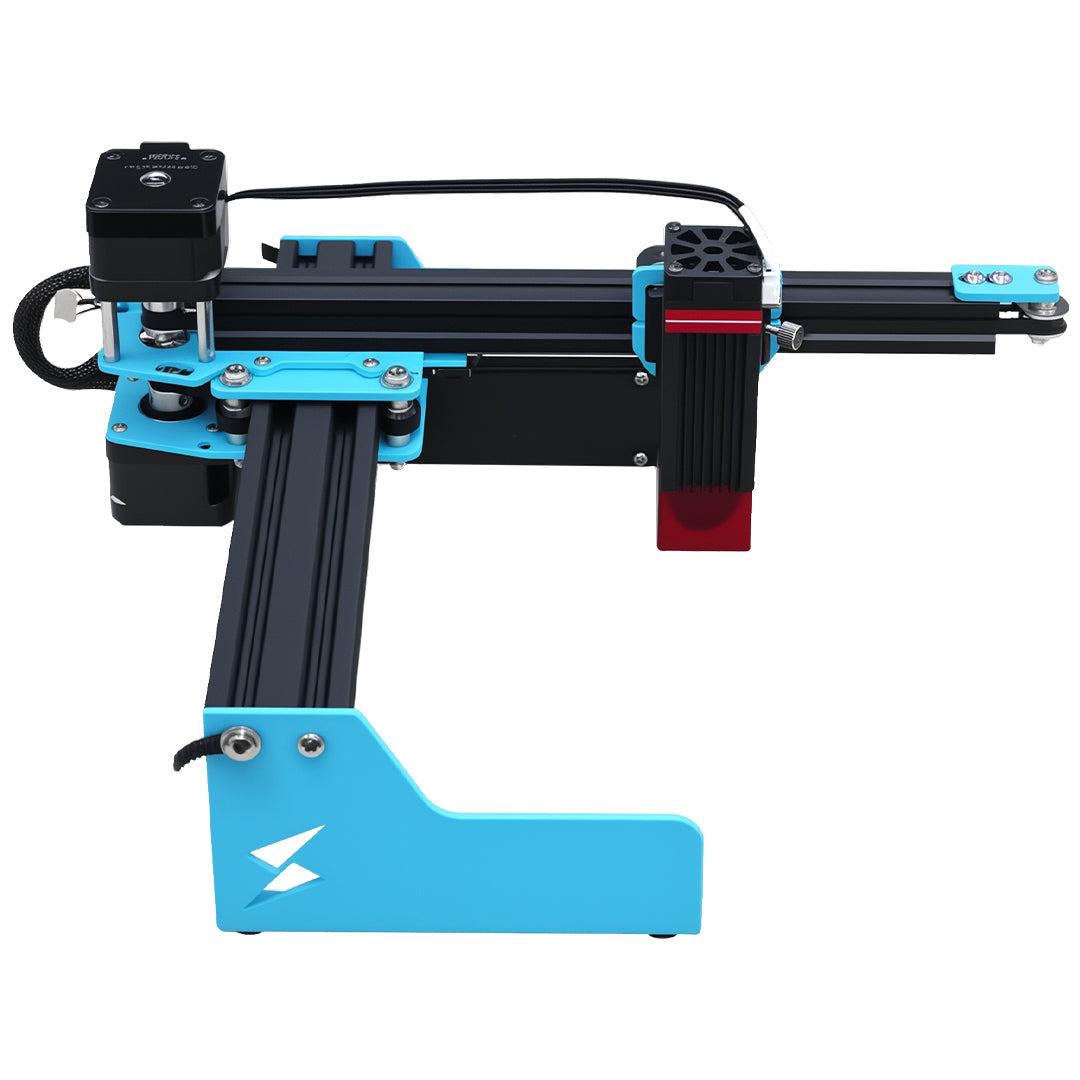
The P2 listing specifies a compact 60 × 60 mm field and lists software workflow options. Confirm the supported device profile and installed version. Text alignment is an artwork concern; it does not justify changing machine calibration, origin settings or laser power. After the file is correct, approve a sample on documented compatible stock using the actual setup.
Is No Squeeze supposed to keep every name the same height?
Do not assume that. A width-limiting option can affect proportional scaling. Check the documented behavior for your version and measure both dimensions in the output preview.
Can I fix the problem by lowering all long names a little?
Only a separately measured and approved final layout establishes a result for that name. A guessed global shift can make other names worse. Preserve a reproduction first so the underlying behavior can be assessed.