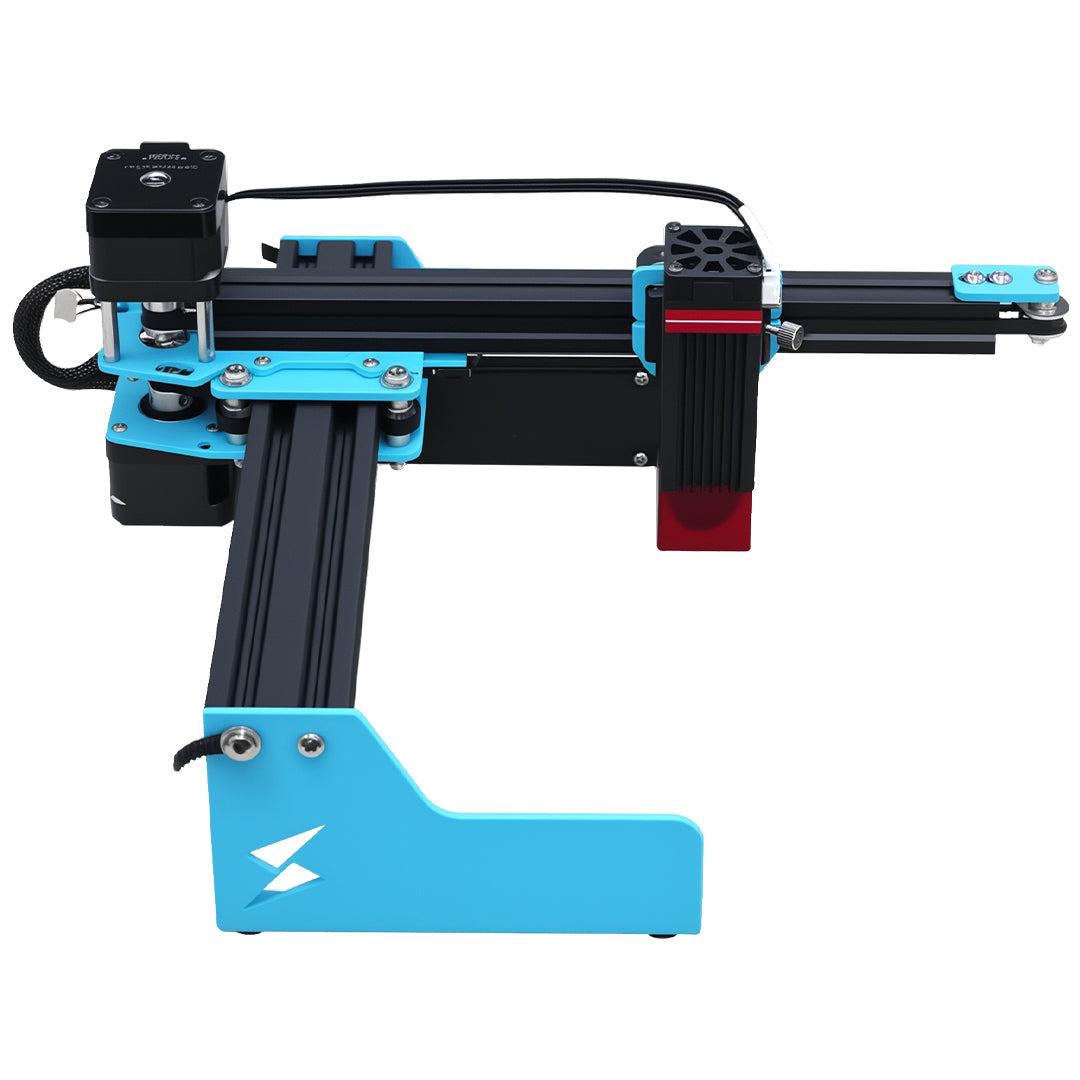


If you're new to laser engraving wood, one of the first questions you might have is: "What color laser is best for engraving wood?"

🛒 Check out the TyvokStudio Laser Software here
With so many different laser types and colors available today – blue (450nm), infrared (1064nm), green (532nm), even CO2 (10.6μm) – it can be confusing to know which one will give you the best results on wood projects.
🛒 Check out the Tyvok Spider X1S Pro here
In this guide, we'll break down everything you need to know about laser colors for wood engraving, including which one gives the best contrast, which works fastest, and what to expect from different laser types. Whether you're just choosing your first laser engraver or looking to expand your capabilities, this guide will help you make the right choice.
🛒 Check out the Tyvok A1 Mini here
If you're looking for an affordable, beginner-friendly diode laser that works great on wood, check out the Tyvok A1 Mini 10W blue diode laser. If you need faster, more precise engraving, the Tyvok P2 10W galvo portable galvo laser also works beautifully on most wood types.
The Short Answer
For most hobbyists and beginners cutting or engraving wood with a consumer laser engraver, blue diode lasers (450nm) give the best overall results for wood. They provide excellent contrast, cut through wood cleanly, are affordable, and work on almost all types of wood.
🛒 Check out the Tyvok A1 Mini here
CO2 lasers (10.6μm) are also excellent for wood, but they're much larger and more expensive for most beginners. Infrared (1064nm) and green lasers (532nm) can engrave wood, but they're better suited for other materials like metal and aren't the best choice if you're mainly working with wood.
🛒 Check out the Tyvok A1 Mini here
So if you're mainly going to be working with wood, go with a blue diode or a CO2 laser. For most beginners, a 10W blue diode like the A1 Mini is the perfect starting point.
🛒 Check out the Tyvok A1 Mini here
Understanding Laser Colors and Wavelengths
Before we dive deeper into how different laser colors work on wood, let's quickly clarify what we mean by "color":
👉 Learn more about How to Choose Laser Power for Different Materials here
The "color" of a laser actually refers to its wavelength, which determines what the laser looks like to the human eye and how it interacts with different materials:
👉 Learn more about How to Choose Laser Power for Different Materials here
| Laser Type | Wavelength | Visible Color | Common Uses |
|---|---|---|---|
| Blue Diode | 445-450nm | Bright Blue | Engraving/cutting wood, plastics, leather |
🛒 Check out the TyvokStudio Laser Software here | Green Diode | 520-532nm | Green | Marking, some plastics, visibility alignment | | Infrared (IR) | 1064nm | Invisible | Fiber lasers, marking metal, some plastics | | CO2 | 10.6μm | Invisible (far infrared) | Cutting wood, acrylic, fabric, organic materials |
🛒 Check out the Tyvok K1 CO₂ Laser here
Different materials absorb different wavelengths better than others. The key to getting good engraving results is matching the laser wavelength to what the material absorbs best.
🛒 Check out the TyvokStudio Laser Software here
Why Blue Diode Lasers Work So Well on Wood
Blue diode lasers (450nm) have become the most popular choice for hobbyist wood engraving, and for good reason:
🛒 Check out the TyvokStudio Laser Software here
1. Wood Absorbs Blue Light Very Well
Wood is made up of organic material (cellulose and lignin), and it absorbs blue light very effectively. When the blue laser hits the wood, the energy is absorbed quickly right at the surface, creating that nice dark brown/black char that gives great contrast.
This means you don't need extremely high power to get a good contrast mark on most woods with a blue diode. A 10W blue diode is more than enough for beautiful engraving.
🛒 Check out the TyvokStudio Laser Software here
2. They're Affordable
Blue laser diodes have gotten incredibly affordable in recent years. You can get a complete 10W diode laser engraver like the Tyvok A1 Mini for a fraction of the cost of a CO2 or fiber laser, making it perfect for beginners and hobbyists.
🛒 Check out the Tyvok A1 Mini here
3. They Cut as Well as Engrave
Blue diodes don't just engrave – they can also cut thin woods (up to 1/4 inch or more with 10W power). This means you can do both engraving and cutting projects like plywood puzzles, wooden signs, and box making with the same machine.
🛒 Check out the TyvokStudio Laser Software here
4. Good Focus for Fine Detail
Modern blue diodes can be focused down to a very small spot size (around 0.1mm for the A1 Mini), which means you can get really fine detail in your wood engravings – perfect for text, photos, and intricate designs.
🛒 Check out the Tyvok A1 Mini here
5. Visible Beam for Alignment
Because blue lasers are visible to the human eye, you can easily see where the laser is going when you're setting up your project. This makes alignment much easier than with invisible infrared or CO2 lasers.
🛒 Check out the Tyvok Spider X1S Pro here
How Do Other Laser Colors Compare?
Let's look at how other common laser colors perform on wood:
CO2 Lasers (10.6μm, Far Infrared, Invisible)
CO2 lasers have been the standard for wood cutting and engraving for decades, and they still work excellently on wood.
🛒 Check out the Tyvok K1 CO₂ Laser here
Pros: - Excellent absorption by wood – very clean cutting - Higher power options are great for cutting thicker wood - Very clean cuts with minimal charring
Cons: - Much more expensive than blue diodes
👉 Learn more about Is Galvo Laser Faster Than Diode? Real Speed Test Results here - Larger and bulkier - Require more maintenance - Slower for engraving than modern galvo diodes
🛒 Check out the Tyvok P2 10W Galvo here
Bottom line: CO2 is still great if you need to cut thick wood (1/2 inch or more) and you have the budget. But for most hobbyists who do mostly engraving and cutting thin to medium wood, a 10W+ blue diode gives you very similar results for much less money.
🛒 Check out the Tyvok K1 CO₂ Laser here
Infrared (1064nm, Invisible)
Infrared lasers (usually fiber lasers) are primarily designed for marking metal. But can they engrave wood?
🛒 Check out the TyvokStudio Laser Software here
The answer: Yes, they can, but they're not ideal.
What happens when you engrave wood with 1064nm IR: - Wood doesn't absorb IR as well as blue light - The laser penetrates deeper into the wood before it's absorbed - You get less surface charring, which means lower contrast - You need higher power to get a visible mark
Bottom line: If you already have a fiber laser for metal work, you can certainly use it to engrave wood when you need to. But if you're mainly working with wood, don't buy an IR laser specifically for that – a blue diode will give you better contrast at a lower price.
🛒 Check out the TyvokStudio Laser Software here
Green Lasers (532nm, Green)
Green lasers are less common for hobby engraving, but how do they do on wood?
🛒 Check out the TyvokStudio Laser Software here
Performance on wood: - Better than IR, but not as good as blue - Wood absorbs green light better than IR, but not as well as blue - Contrast is better than IR, but still not as good as blue - Green diodes are generally more expensive than blue diodes for the same power
👉 Learn more about Is Galvo Laser Faster Than Diode? Real Speed Test Results here
What green lasers are good for: Green lasers are sometimes used for alignment because the human eye sees green better than blue, but they're not the best choice for actual wood engraving work.
🛒 Check out the TyvokStudio Laser Software here
Bottom line: Stick with blue for wood. Green isn't worth the extra cost for worse results.
Contrast Comparison: Which Laser Gives the Darkest Marks?
One of the most important factors in good wood engraving is contrast – how dark and visible your mark is against the natural wood color.
Here's how the different laser types rank for contrast on most woods:
👉 Learn more about How to Choose Laser Power for Different Materials here
- Blue Diode (450nm) – Best overall contrast, nice dark charring that shows up well on light woods
- CO2 (10.6μm) – Very good contrast, slightly less charring than blue sometimes
- Green (532nm) – Moderate contrast, not as dark as blue
- Infrared (1064nm) – Lowest contrast, usually a lighter brown mark rather than deep black/brown
Of course, this can vary a bit depending on the specific type of wood. Some very dark woods don't need a lot of contrast because the laser actually removes material to create a lighter mark on dark wood. But for the most common scenario (engraving light-colored wood like pine, birch, maple), blue gives you the darkest, most visible marks.
🛒 Check out the TyvokStudio Laser Software here
This is why when you look at all the beautiful wood engravings people post in hobby groups, most of them are done with blue diode lasers these days. The contrast is just that good.
🛒 Check out the TyvokStudio Laser Software here
How Does Power Affect Engraving Quality on Wood?
It's not just about color – power matters too. For blue diode lasers on wood:
🛒 Check out the TyvokStudio Laser Software here
5W Blue Diode
- Can do good engraving on most woods
- Needs slower speeds for dark contrast
- Can cut thin wood (1/8 inch plywood)
- Fine for beginning engraving projects
👉 Learn more about Laser Cutting and Engraving Plywood here - Budget-friendly option
10W Blue Diode
- Our recommendation for most beginners
- Excellent engraving contrast at moderate speeds
- Cuts 1/4 inch plywood cleanly in 1-2 passes
- Perfect for 90% of hobby wood projects
- Balances price, speed, and capability very well
The Tyvok A1 Mini 10W is a great example of this power class – it handles wood beautifully at a price that's accessible for beginners.
20W+ Blue Diode
- Faster engraving and cutting
👉 Learn more about Laser Cutting and Engraving Plywood here - Can cut thicker wood (3/8 inch to 1/2 inch) in multiple passes - Great if you're doing production work or need to cut thicker stock - Still gives excellent contrast on wood
Higher power means you can run faster, which is great if you're doing production work. But for most hobbyists, 10W is all you really need for great wood engraving.
Tips for Getting the Best Contrast When Engraving Wood with a Blue Diode
No matter what color laser you have, here are some tips to get the darkest, clearest engraving on wood:
🛒 Check out the TyvokStudio Laser Software here
1. Get Your Focus Right
Focus is everything with laser engraving. If your laser isn't properly focused, you'll get a faint, blurry engraving even with the best laser color. Always double-check your focus before starting a job.
🛒 Check out the Tyvok Spider X1S Pro here
The Tyvok A1 Mini includes a simple focus gauge that makes this quick and easy every time.
🛒 Check out the Tyvok A1 Mini here
2. Adjust Your Speed and Power
For most woods with a 10W blue diode, we recommend: - Engraving: 30-50% power, 200-300 mm/s for light woods - Dark contrast engraving: 60-80% power, 100-150 mm/s - Cutting: 80-100% power, 5-20 mm/s depending on thickness
Always do a small test engrave on a scrap piece of the same wood to find your perfect settings. Different woods absorb energy differently, so settings that work great on one wood might not work as well on another.
3. Consider the Wood Grain and Color
- Light-colored woods (maple, birch, pine, beech): Blue laser gives excellent contrast – the charred area turns dark brown/black against the light wood.
- Dark-colored woods (walnut, mahogany, cherry): You can actually get a lighter mark from the laser removing the dark surface, which also gives good contrast.
- Plywood: Most plywoods engrave well with blue diodes. Just make sure you're using laser-safe plywood (some cheaper plywoods have glue that can create nasty fumes).
🛒 Check out the TyvokStudio Laser Software here
4. Clean Your Engraving After
After engraving, there's usually some loose soot on the surface. Wiping it off with a damp paper towel or a soft brush removes the loose soot and makes the contrast pop. For really dirty engravings, a little bit of dish soap and water works great – just make sure you let the wood dry completely before you seal it.
👉 Learn more about How to Make Money Selling Laser Engraved Products on Etsy here
5. Seal It After Engraving
Sealing your wood engraving after it's clean and dry protects it from moisture and keeps the contrast looking good for years. A quick spray of clear lacquer or a wipe-on polyurethane finish works great. It doesn't affect the contrast much, and it protects the wood.
Common Projects That Work Great with Blue Diode Lasers on Wood
Blue diode lasers are versatile – here are some of the most popular wood projects people do:
🛒 Check out the Tyvok Spider X1S Pro here
1. Wooden Signs
Personalized wooden signs for homes, weddings, businesses are extremely popular. The good contrast from blue diodes makes the text easy to read from a distance.
2. Photo Engraving
Photo engraving on wood looks amazing with a blue diode. The good contrast allows you to get great detail in the grayscales, and the natural wood grain adds a beautiful texture to the photo.
🛒 Check out the TyvokStudio Laser Software here
3. Cutting Plywood Projects
Puzzles, boxes, jewelry, coasters – all of these can be both cut and engraved with a 10W blue diode. You don't need a separate CO2 laser for most projects.
🛒 Check out the Tyvok Spider X1S Pro here
4. Personalized Gifts
Custom cutting boards, wine boxes, picture frames – all of these make great personal gifts, and the blue laser gives you beautiful, permanent engraving.
🛒 Check out the Tyvok K1 CO₂ Laser here
If you're doing a lot of personalized wood gifts and need faster turnaround, a galvo laser like the Tyvok P2 can engrave most designs in seconds instead of minutes, which is great for small business production.
5. Inlays
Laser cut wood inlays are a popular advanced project, and blue diodes do a great job cutting the pieces accurately enough for nice fitting inlays.
🛒 Check out the Tyvok Spider X1S Pro here
Frequently Asked Questions
Q: What wattage blue diode do I need for wood engraving?
A: For most beginners, 10W is the sweet spot. It gives you great contrast at reasonable speeds, and it can cut up to 1/4 inch plywood. 5W works for engraving only, but it's slower for cutting. 20W+ is great if you need to cut thicker wood or do faster production.
👉 Learn more about Laser Cutting and Engraving Plywood here
Q: Can a 10W blue diode cut wood?
A: Yes – a 10W blue diode can cut 1/4 inch plywood in 1-2 passes, and thinner woods like 1/8 inch in a single pass. That's enough for most hobby projects.
👉 Learn more about Laser Cutting and Engraving Plywood here
Q: Is a blue laser better than a CO2 laser for wood?
A: It depends on what you need. For most hobbyists and beginners, a 10W blue diode is better because it's cheaper, smaller, and gives excellent results for most projects. If you need to cut thick wood (3/4 inch+) regularly, then a higher power CO2 is still the better choice.
🛒 Check out the TyvokStudio Laser Software here
Q: Can infrared fiber lasers engrave wood?
A: Yes, they can, but they don't give as much contrast as blue diodes. If you already have a fiber laser for metal work, it works fine for occasional wood engraving. But don't buy a fiber laser specifically for wood – blue is better.
🛒 Check out the TyvokStudio Laser Software here
Q: Does laser wavelength matter for wood engraving?
A: Yes – different wavelengths are absorbed differently by wood. Blue (450nm) is absorbed best at the surface, which gives the best contrast. CO2 (10.6μm) is also absorbed very well. Longer infrared wavelengths penetrate deeper and give less surface contrast.
👉 Learn more about How to Choose Laser Power for Different Materials here
Final Thoughts
At the end of the day, for 90% of hobbyists and small business owners who work with wood, blue diode lasers (450nm) are the best choice for wood engraving. They give excellent contrast, are affordable, cut wood well, and work on almost every type of wood.
🛒 Check out the Tyvok P2 10W Galvo here
If you're just starting out, a 10W blue diode like the Tyvok A1 Mini is the perfect starting point – it has enough power for most wood projects, it's easy to use, and it won't break the bank. If you need faster engraving for production work, the Tyvok P2 galvo blue diode laser gives you blazing fast engraving speeds while still delivering excellent contrast on wood.
CO2 lasers are still great if you need to cut really thick wood, but the gap in performance between modern blue diodes and CO2 lasers for most hobby projects has gotten really small. For most people, the affordability and convenience of a blue diode makes it the better choice.
🛒 Check out the Tyvok Spider X1S Pro here
Whatever laser you choose, remember to do test cuts and adjusts your settings based on the specific wood you're using – that's the real secret to getting great results every time.
👉 Learn more about How to Choose Laser Power for Different Materials here