

Introduction
Wood is the most popular material for laser engraving, and for good reason — it's affordable, readily available, relatively easy to engrave, and produces beautiful results. But when you're new to laser engraving, you might be wondering: what's the difference between engraving softwood vs hardwood, and which one should you choose for your project?

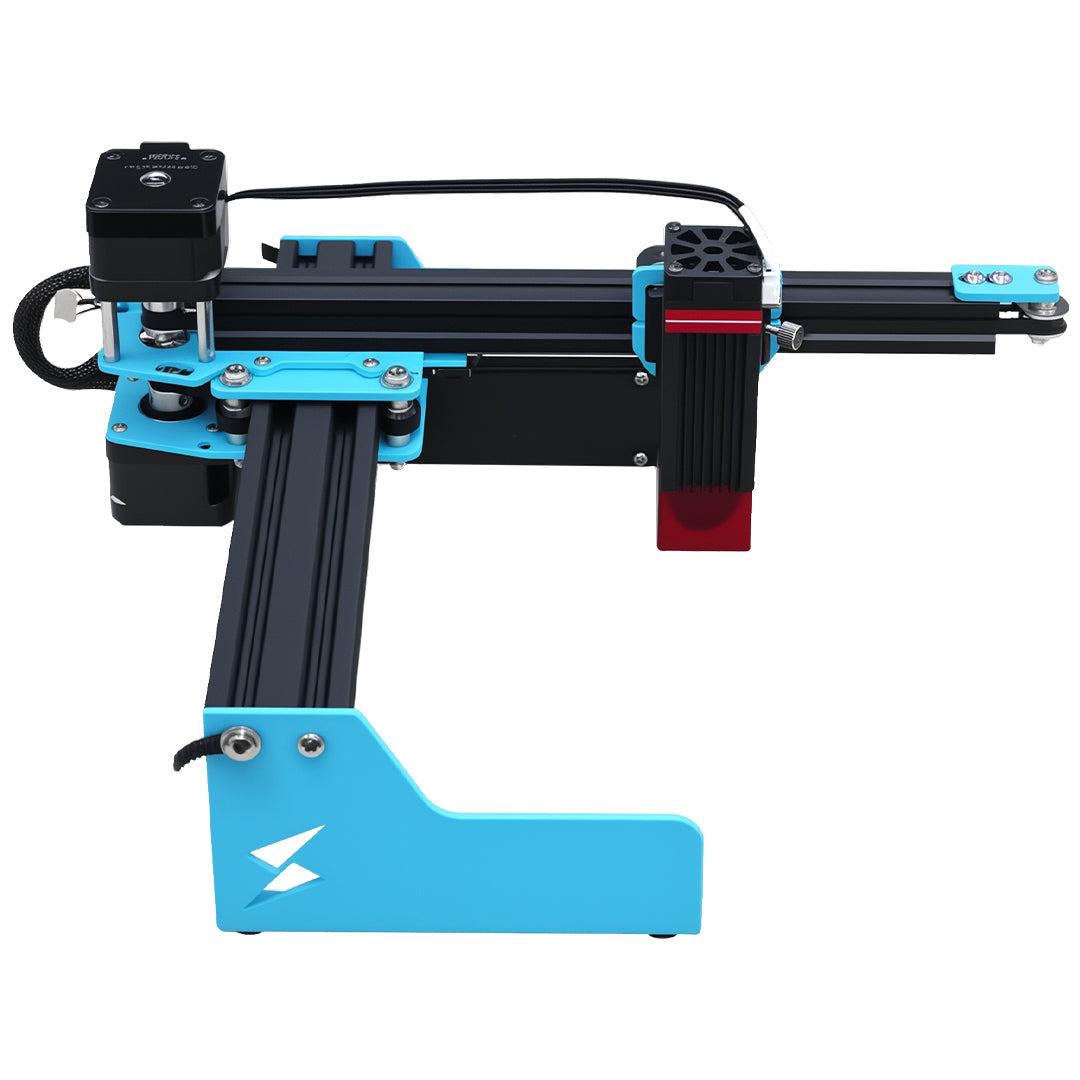
Whether you're using an entry-level machine like the Tyvok A1 Mini 10W diode laser or a more powerful galvo laser like the Tyvok P2, both softwoods and hardwoods can be engraved successfully. But they produce different results, have different costs, and are better suited for different types of projects.
In this guide, we'll break down the key differences between laser engraving softwood vs hardwood, including how they engrave, what kind of contrast you can expect, cost comparisons, safety considerations, and which type is best for common projects. By the end, you'll know exactly which one to choose for your next laser project.
What's the Difference Between Softwood and Hardwood?
First, let's clarify what we actually mean by softwood vs hardwood — it's not just about how hard the wood is, it's about how the tree reproduces:
- Softwoods: Come from gymnosperm trees (conifers, which are cone-bearing trees that usually keep their needles year-round). Examples: pine, fir, cedar, spruce, redwood, Douglas fir.
- Hardwoods: Come from angiosperm trees (deciduous trees that lose their leaves each year and produce flowers/fruits). Examples: oak, maple, cherry, walnut, birch, mahogany, beech.
Myth busting: Not all softwoods are actually "soft" and not all hardwoods are "hard." For example, balsa is a hardwood but it's very soft, and yew is a softwood that's actually quite hard. But for the most part, hardwoods are generally denser and harder than softwoods.
For laser engraving purposes, the density is what matters most, and the general rule holds: most softwoods are less dense than most hardwoods.
How Does Softwood Engrave?
Softwoods have a lower density and more open grain structure compared to hardwoods. How does this affect laser engraving?
Engraving Results on Softwood
- Contrast: Softwoods typically have good contrast when engraved. The laser burns the wood, creating a dark brown/black engraving against the lighter natural wood background.
- Depth: Because the wood is less dense, the laser penetrates more easily, so you get deeper engravings with less power.
- Grain visibility: The natural grain of the softwood still shows through the engraving, which gives a nice rustic look.
- Charring: Softwoods tend to produce more charring (blackened edges) than hardwoods because they burn more easily. This can be good or bad depending on the look you want. If you like that rustic burned look, it's great. If you want crisp clean edges, you'll need more post-processing.
Common Softwoods Used for Laser Engraving
- Pine: Probably the most common softwood for beginners. It's cheap, widely available, and engraves well. Light color gives great contrast.
- Cedar: Has a wonderful natural aroma and beautiful reddish color. Engraves very easily. Popular for cedar chests and decorative boxes.
- Balsa: Very soft and light. Easy to cut, but can be too soft for fine detail engraving. Mostly used for model making.
- Douglas Fir: Common construction lumber. Affordable, works for larger projects where cost is a concern.
- Redwood: Beautiful reddish color, naturally rot-resistant. Good for outdoor projects.
Pros of Softwood for Laser Engraving
- More affordable than most hardwoods
- Easier to cut and engrave with lower power lasers
- Widely available at any home improvement store
- Excellent contrast between engraving and background
- Lighter weight than hardwoods for the same size project
- Perfect for beginners who are practicing
Cons of Softwood for Laser Engraving
- More prone to charring — requires more post-processing to clean up edges if you want a clean look
- Less durable than hardwoods, especially for items that will get heavy use
- More likely to have knots and grain irregularities that can affect engraving
- Not as strong as hardwoods for structural projects
- More prone to warping with changes in humidity
How Does Hardwood Engrave?
Hardwoods are denser than softwoods, which changes how the laser interacts with the wood.
Engraving Results on Hardwood
- Contrast: Contrast is generally good, but it depends on the color of the wood. Dark hardwoods like walnut have less contrast because the background is already dark, while lighter hardwoods like maple have excellent contrast.
- Depth: Because hardwood is denser, the laser doesn't penetrate as easily. You need more power to get the same depth as you would with softwood.
- Cleaner edges: Hardwoods tend to produce less charring than softwoods, so edges are cleaner right off the laser bed.
- Smoother finish: The denser grain produces a smoother engraved surface than softwood.
- Fine detail: Better for really fine detail engraving because the denser grain holds detail better than softwood's more open grain.
Common Hardwoods Used for Laser Engraving
- Maple: Light-colored, dense, very uniform grain. Produces excellent contrast. One of the most popular hardwoods for laser engraving.
- Walnut: Beautiful dark brown color with nice grain. Engraving is lighter than the background, still good contrast. Very popular for cutting boards and高档 gifts.
- Cherry: Rich reddish-brown color that darkens with age. Engraves beautifully, good contrast.
- Birch (plywood): Birch plywood is extremely popular for laser cutting and engraving. Uniform, stable, affordable, and produces great results.
- Oak: Strong and durable, visible grain pattern. Good contrast on white oak, a bit less on red oak.
- Mahogany: Beautiful rich color, relatively stable. Popular for furniture and高档 decorative items.
Pros of Hardwood for Laser Engraving
- Less charring — cleaner edges right off the laser
- Better for fine detail because of denser, more uniform grain
- More durable for products that will get heavy daily use
- More stable — less likely to warp than softwood
- More aesthetically pleasing for finished高档 products
- Stronger for structural components in laser-cut projects
Cons of Hardwood for Laser Engraving
- More expensive than softwood
- Requires more laser power to get the same depth of engraving or to cut through
- Heavier than softwood (increases shipping costs if you're selling online)
- Can be harder to find in small hobby sizes at local stores (though you can easily order it online)
Cost Comparison: Softwood vs Hardwood
Cost is often the deciding factor, especially for beginners:
- Softwood: Generally 30-50% cheaper than hardwood of the same size. A 1x6x4 board of pine might cost $5-$8, while the same size of maple could cost $12-$20.
- Hardwood: More expensive, but you get what you pay for in terms of durability and appearance for finished products.
For beginners practicing: Softwood is almost always the better choice because it's cheaper — you can afford to make mistakes while you're learning your machine's settings.
For finished products that you're selling: The extra cost of hardwood is usually worth it because you can charge more for a higher-quality product.
Contrast Comparison Table
Here's a quick guide to what kind of contrast you can expect from common woods:
| Wood Type | Category | Background Color | Engraving Color | Contrast Level |
|---|---|---|---|---|
| Pine | Softwood | Light tan | Dark brown/black | Excellent |
| Cedar | Softwood | Reddish | Dark brown | Very Good |
| Douglas Fir | Softwood | Light tan | Dark brown | Excellent |
| Maple | Hardwood | Very light cream | Dark brown | Excellent |
| Birch | Hardwood | Light tan | Dark brown | Excellent |
| Cherry | Hardwood | Medium reddish-brown | Dark brown | Very Good |
| Oak (white) | Hardwood | Light tan | Dark brown | Very Good |
| Oak (red) | Hardwood | Reddish-tan | Dark brown | Good |
| Walnut | Hardwood | Dark brown | Medium brown | Good |
As you can see, you get excellent contrast with most both softwoods and lighter-colored hardwoods. The only time contrast is a bit lower is with very dark hardwoods like walnut.
Recommended Settings
Settings depend on your laser power and what you're doing (engraving vs cutting). Here are good starting points for a 10W diode laser like the Tyvok A1 Mini:
Softwood (e.g., Pine, Cedar):
Engraving:
- Speed: 200-300 mm/s
- Power: 40-60%
- DPI: 200-300
- Passes: 1
Cutting 1/4" (6mm):
- Speed: 80-120 mm/s
- Power: 80-100%
- Passes: 1-2
Hardwood (e.g., Maple, Walnut):
Engraving:
- Speed: 200-300 mm/s
- Power: 50-70%
- DPI: 200-300
- Passes: 1
Cutting 1/4" (6mm):
- Speed: 50-90 mm/s
- Power: 80-100%
- Passes: 2-3
The 10W diode in the Tyvok A1 Mini handles both softwood and hardwood beautifully for engraving, and can cut up to 1/4" hardwood with multiple passes. For production engraving, the Tyvok P2 can engrave both much faster than a traditional gantry laser.
Best Projects for Softwood
Softwood is the better choice for these types of projects:
- Beginner practice: Cheap enough that you don't worry about making mistakes while you're learning settings.
- Rustic decor: The more pronounced charring and grain give a nice rustic look that's perfect for farmhouse-style decor.
- Large projects where cost is a concern: If you're making a large sign and need to keep material costs down, softwood is a great choice.
- Practice projects: When you're testing new designs or techniques, use cheap softwood.
- Outdoor projects (untreated): Cedar and redwood are naturally rot-resistant and work well for outdoor projects.
- Prototypes: When you're just making a prototype to test size and fit, use softwood to save money.
Check out our 10 Easy Laser Engraving Projects for Beginners That Sell in 2026 article for more beginner project ideas that work great with softwood.
Best Projects for Hardwood
Hardwood is the better choice for these types of projects:
- Cutting boards: Hardwood is more durable and food-safe (when finished properly). People expect cutting boards to be hardwood.
- 高档 gifts and personalized products: Higher-quality appearance justifies a higher selling price.
- Fine detail engraving: The denser grain holds fine detail better than softwood.
- Products that will get heavy use: Cutting boards, utensils, furniture parts — hardwood holds up better over time.
- Photo engraving: The more uniform dense grain of hardwood gives better results for grayscale photo engraving than most softwoods.
- Furniture and structural components: Hardwood is stronger and more dimensionally stable.
- Professional products: When you're selling finished products, hardwood looks more premium.
Safety Considerations
Safety is important regardless of what kind of wood you're engraving:
- Always use ventilation: Any time you burn wood, you produce smoke and fumes. Use a fume extractor and good ventilation.
- Watch for fire: Especially with softwood, which burns more easily. Never leave your laser unattended.
- Avoid pressure-treated wood: Never laser engrave pressure-treated wood — it can release toxic chemicals when burned. Stick to natural untreated wood.
- Clean up after: Wood smoke can leave residue on your laser optics. Clean your lens regularly.
These safety tips apply to both softwood and hardwood. The Tyvok A1 Mini should always be used with proper ventilation regardless of what material you're cutting.
Tips for Better Results
Regardless of whether you choose softwood or hardwood, these tips will help you get better engraving results:
- Let the wood acclimate: If you bought your wood from a store that's much more humid or dry than your workshop, let it sit for a few days to acclimate before engraving. This reduces the chance of warping after processing.
2 Sand before engraving: A smooth surface gives smoother engraving. Sand your wood to 220-400 grit before putting it in your laser.
- Seal after engraving: Sealing your finished project not only protects the wood but also enhances the contrast of the engraving. A simple clear coat works great.
- Test settings on scrap: Always do a small test engraving on a scrap piece of the same wood before doing your final project. Different woods have different densities and moisture content, which affects how they laser.
- Clean charring if desired: If you get too much charring on softwood and you want a cleaner look, you can lightly sand the surface after engraving to remove the excess char. Or you can wipe it with a damp cloth — this removes some of the surface char.
Conclusion
So, which is better for laser engraving in 2026 — softwood or hardwood? The answer is: it depends on what you're making.
- Choose softwood if: You're a beginner practicing, you're making prototypes or large projects on a budget, you want a rustic look, or you just want the most affordable option. The Tyvok A1 Mini handles softwood beautifully, and you can get great results with lower power.
- Choose hardwood if: You're making a finished product you plan to sell, you need fine detail or cleaner edges, the project will get heavy daily use (like a cutting board), or you want the premium look and durability that hardwood provides.
The good news is that both softwood and hardwood can be engraved successfully with modern diode lasers. Even an entry-level 10W laser like the Tyvok A1 Mini can handle both, so you can start with cheap softwood to learn and move up to hardwood for your finished products once you're comfortable with your machine.
If you're just getting started with laser engraving and want to learn more about working with different woods, check out our Best Wood for Laser Engraving: Complete Beginner's Guide 2026 for more in-depth information about choosing the right wood for your projects.