

Direct Answer

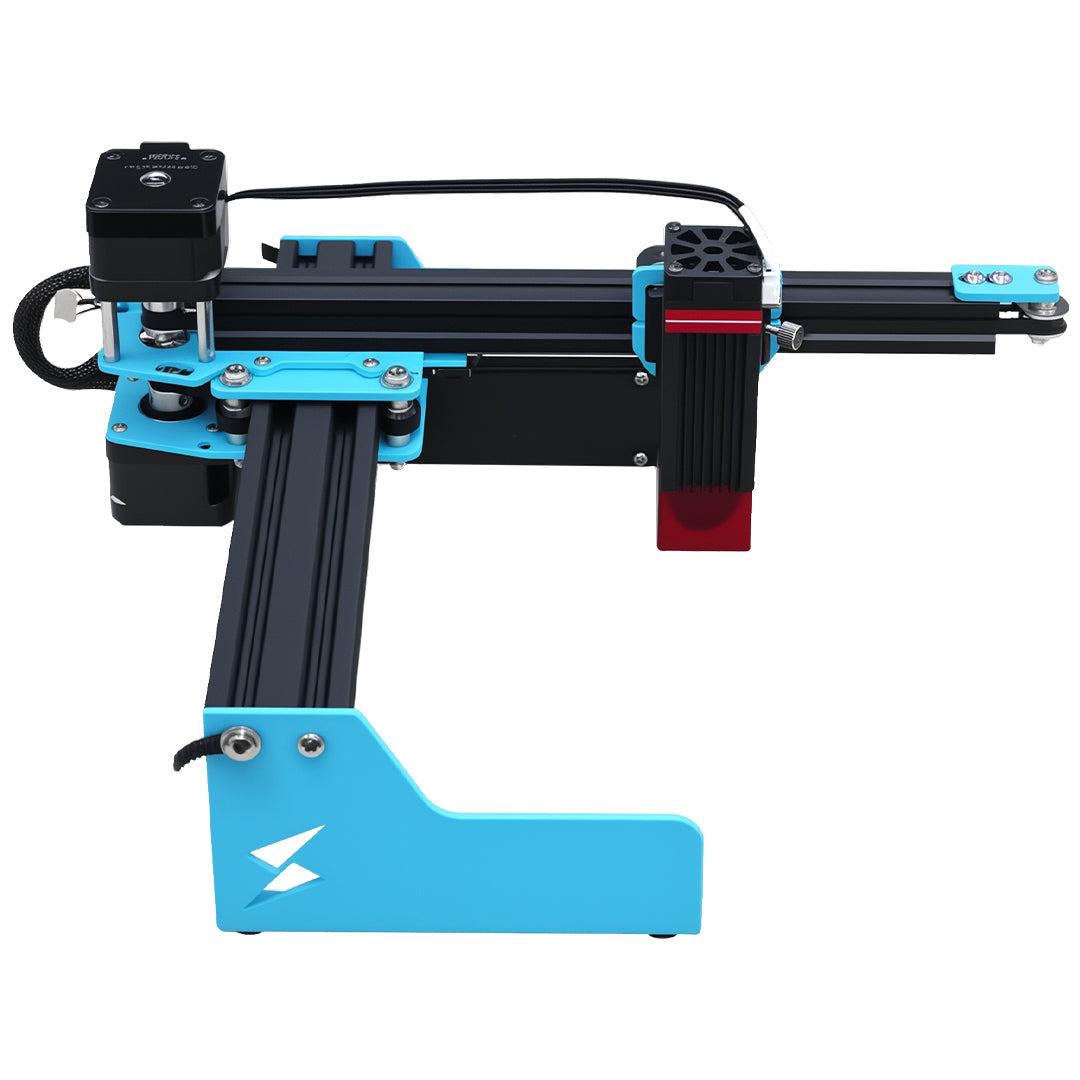
A batch rotary engraving workflow is useful when your products are cylindrical, repeated, and hard to position one at a time by eye. TYVOK X1S Pro is the stronger TYVOK shortlist when a shop wants to plan rotary work as a repeatable process for tumblers, bottles, cups, cylindrical gift items, and small-business product runs. TYVOK P2 is still the cleaner choice for compact one-off personalization, while X1S Pro makes more sense when the workflow needs a larger frame, accessory planning, and batch layout discipline.
The most important buying question is not only "Can the machine engrave a tumbler?" The better question is: can you position, rotate, inspect, clean, photograph, and package the same product consistently enough to sell it?
Choose X1S Pro only if rotary work is part of a broader planned shop workflow. Choose P2 when the business is mostly compact one-off personalization.
Case Snapshot
| Workflow question | What the X1S Pro rotary case helps answer | Buying meaning |
|---|---|---|
| Can I personalize cylindrical products? | A compatible rotary setup can support round-product engraving workflows | Useful for tumblers, bottles, cups, and similar products, after confirming the selected bundle and accessory |
| Can I batch repeat the same design? | The workflow should use repeatable product placement and inspection | Machine choice must support process control, not only engraving |
| Do I need X1S Pro instead of a compact engraver? | Larger-format planning and accessory use can matter for a shop workflow | X1S Pro is more relevant after product demand is clear |
| Can I promise fast output? | Not from the machine name alone | Output depends on artwork, blank consistency, setup, cleanup, and failure rate |
Quick Choice: P2 vs X1S vs X1S Pro
| Buyer need | Better TYVOK path | Why |
|---|---|---|
| Compact names, tags, cards, patches, small gifts | TYVOK P2 | Cleaner for one-off personalization and small products |
| Larger flat signs, boards, packaging, and layout tests | TYVOK X1S | More relevant when work area and flat layout planning are the constraint |
| Tumblers, bottles, cylindrical products, and planned rotary workflow | TYVOK X1S Pro | Stronger shortlist when compatible rotary accessory, shop space, and repeatable process are confirmed |
Project Video Reference
The official TYVOK Spider Laser channel includes an X1S Pro batch rotary engraving video that is useful for this buying decision:
Use the video as a workflow reference. It supports the category fit for rotary engraving, but it should not be treated as a universal production-speed claim. Real output depends on the product blank, rotary fixture, design size, material coating, laser settings, inspection process, cleanup, and packaging.
The video should be used only for visible setup and workflow reference, not as proof of speed, output volume, material compatibility, or finished-product consistency.
What Batch Rotary Engraving Means
Rotary engraving is different from flat engraving because the surface moves as the product rotates. The machine must work with the product shape, the rotary accessory, the artwork orientation, and the material surface. A small mistake in alignment can become visible around the curve.
For a business, batch rotary engraving means more than engraving one good sample. A useful workflow includes:
- A consistent product blank.
- A rotary setup that holds the product securely.
- A repeatable start position.
- Artwork sized for the product curve.
- Test settings for the coating or material.
- Inspection under normal lighting.
- Cleanup and packaging steps.
- A way to reject imperfect pieces before shipment.
If those steps are not repeatable, a larger or more advanced machine will not fix the business process.
Best Products to Test First

| Product type | Why it is a good test | What to confirm |
|---|---|---|
| Coated tumblers | Strong gift and small-business demand | Supplier-confirmed laser-safe coating, rotation stability, cleanup |
| Stainless bottles with coating | Clear personalization value | Whether the confirmed coating marks cleanly and evenly |
| Cups or drinkware | Easy to explain to buyers | Diameter range, handle clearance, coating safety, cleaning needs |
| Cylindrical gift items | Good for events and corporate gifts | Repeat placement and packaging |
| Small round containers | Useful for branding and product packaging | Material safety and design readability |
Start with one product shape and one supplier. Do not test five different bottles at once. The goal is to build a repeatable product, not a random sample gallery.
For drinkware, food-adjacent products, or items that may touch skin, confirm the material, coating, residue, cleaning method, and applicable use rules before selling. Do not engrave unknown coatings, PVC, vinyl, or plastics that are not confirmed laser-safe.
Why X1S Pro Can Make Sense
TYVOK X1S Pro makes sense when the seller wants a more planned shop workflow and needs to compare current Pro configuration options, compatible rotary accessories, larger-frame handling, and accessory paths. It is not automatically the right machine for every tumbler seller. It is the right shortlist when rotary engraving is part of a broader large-format or small-shop production plan.
X1S Pro is a stronger fit when:
- You already know the cylindrical products you want to sell.
- You need a repeatable rotary workflow rather than occasional one-off tests.
- You want to compare current X1S Pro bundle options and accessories.
- You have shop space for the setup and product handling.
- You plan to document settings, inspection, cleanup, and packaging.
- You may also need flat large-format projects such as signs, panels, or packaging pieces.
Before buying, confirm the current X1S Pro bundle, power option, rotary accessory compatibility, platform option, software workflow, and the product diameter range you plan to engrave.
When P2 Is the Better Choice
TYVOK P2 remains the better TYVOK path when the job is compact, fast to set up, and one-product-at-a-time. If your main products are small metal tags, cards, leather patches, compact gifts, coated small items, or live event personalization, P2 may be the cleaner first machine.
Choose P2 first when:
- Your products are compact.
- You need fast individual personalization.
- You do not need a larger frame or large-format workflow.
- You are still testing demand with small products.
- You care more about quick setup than expanded layout planning.
The practical buying path is simple: use P2 for compact personalization, use X1S for larger flat layouts, and use X1S Pro when rotary and large-format workflows become part of a more serious production plan.
X1S Pro Rotary Workflow Checklist

Use this checklist before trying to sell rotary engraving as a service:
| Step | What to do | Why it matters |
|---|---|---|
| 1. Pick one blank | Choose one tumbler, bottle, or cylinder source | Mixed blanks create inconsistent results |
| 2. Measure the product | Confirm diameter, length, handle clearance, and usable mark area | Artwork must fit the real surface |
| 3. Confirm material safety | Verify coating and base material before laser processing | Unknown coatings can be unsafe |
| 4. Set the rotary position | Use a repeatable start point | Reduces crooked or shifted designs |
| 5. Test one design | Use final-size artwork, not a tiny sample | Shows real readability and contrast |
| 6. Inspect the result | Check alignment, contrast, banding, and cleanup | One good angle can hide defects |
| 7. Repeat the run | Make several units with the same process | Batch confidence requires repeatability |
| 8. Package the product | Test box fit, scratch risk, and shipping handling | A good engraving can still fail in delivery |
Do not measure only machine time. Real batch output includes setup, loading, rotation checks, inspection, cleanup, packaging, rejects, and customer communication.
Rotary Engraving Risk Points
The most common failures in rotary engraving are process failures, not just machine failures.
| Risk | What it looks like | How to reduce it |
|---|---|---|
| Product slips | Design shifts or rotates unevenly | Check fixture contact and product stability |
| Wrong artwork size | Logo wraps too far or appears stretched | Test at final size on the same blank |
| Coating inconsistency | Uneven contrast or blotchy marks | Use a consistent supplier and test each finish |
| Crooked placement | Text is not level around the product | Mark a repeatable start position |
| Cleanup damage | Surface scratches during cleaning | Test cleaning method before selling |
| Overpromised output | Orders take longer than expected | Track full workflow time, not laser time only |
For commercial orders, build the workflow around the worst acceptable unit, not the best sample.
Batch Rotary vs Flat Batch Engraving
| Workflow | Better for | Main constraint |
|---|---|---|
| Rotary batch engraving | Tumblers, bottles, cups, cylindrical gifts | Rotation, fixture stability, artwork wrapping |
| Flat batch engraving | Tags, patches, signs, packaging inserts | Layout grid, material consistency, placement |
| Compact personalization | One-off names, logos, tags, small gifts | Speed of setup and personalization flow |
| Large-format work | Signs, panels, oversized layouts | Work area, material handling, shop space |
Many shops eventually need more than one workflow. A tumbler business may still need flat packaging inserts, branded thank-you cards, signs for events, or small add-on gifts. That is why the machine decision should follow the product mix.
What to Confirm Before Buying
Before choosing X1S Pro for rotary engraving, confirm:
- Current X1S Pro product configuration and power option.
- Which rotary accessory is compatible with the selected setup.
- The diameter and length range of your target products.
- Whether handles, lids, tapers, or unusual shapes affect rotation.
- Whether the coating or material is safe for laser processing.
- Ventilation requirements for the chosen material.
- Software workflow and artwork setup.
- Shop space for loading, unloading, inspection, and packaging.
- Whether your product photos can show the finished result clearly.
If these answers are not ready, write them down before buying. A rotary engraving business is easier to scale when the product and process are already defined.
What Finished Product Photos Should Show
For your own store, marketplace listing, or sales page, show the result before the machine. Buyers want to see the finished tumbler, bottle, or cylindrical gift in a real-use context.
Use this image sequence:
- Finished product in hand, on a desk, or in a lifestyle setting.
- Close-up showing logo or name clarity.
- Side view showing alignment around the curve.
- Small group of repeated products to show consistency.
- Packaging or gift presentation.
- Machine or rotary setup photo only after the result is clear.
The machine photo supports credibility. The finished product creates demand.
Recommended TYVOK Path
| Buyer situation | Recommended TYVOK direction |
|---|---|
| Compact tags, cards, leather patches, small gifts | TYVOK P2 |
| Larger flat layouts, boards, signs, packaging pieces | TYVOK X1S |
| Rotary plus planned large-format shop workflow | TYVOK X1S Pro |
| Unsure demand | Test one product and one finished photo set first |
| Mixed product catalog | Use compact and large-format workflows for different jobs |
Related guides:
- Large Format Laser Engraver Buying Guide: X1S vs X1S Pro
- Batch Engraving Machine for Small Business
- X1S Large Wood Sign Video Case Guide
- Laser Engraver for Packaging Inserts
- Laser Engraver for Acrylic Display Signs
FAQ
Q: What is batch rotary engraving?
A: Batch rotary engraving is a workflow for marking multiple cylindrical products such as tumblers, bottles, cups, or round containers with repeatable positioning, rotation, inspection, cleanup, and packaging.
Q: Is X1S Pro good for tumbler engraving?
A: X1S Pro is worth considering when tumbler engraving is part of a planned rotary workflow and you need to compare Pro configuration and accessory options. Confirm the current bundle and compatible rotary setup before buying.
Q: Can I use X1S Pro for bottles and cups?
A: It may be suitable for cylindrical products when the product diameter, length, surface, coating, and rotary setup are compatible. Test the exact blank before selling orders.
Q: Is P2 or X1S Pro better for small business engraving?
A: P2 is better for compact one-off personalization. X1S Pro is better to shortlist when the business needs rotary workflows, larger-frame planning, or more structured shop production.
Q: Does rotary engraving work on every tumbler?
A: No. Results depend on the tumbler shape, coating, diameter, surface consistency, rotary fixture, artwork size, and laser settings. Tapered, handled, or unknown-coated products require extra testing.
Q: Can I promise a fixed batch output number?
A: Not without testing your exact workflow. Output depends on setup, artwork, engraving area, loading, inspection, cleanup, rejects, and packaging.
Q: What should I test before selling engraved tumblers?
A: Test one blank source, one design size, one rotary setup, one cleanup method, and one packaging method. Then repeat the process several times before accepting paid orders.
Q: Is rotary engraving safe?
A: It depends on the material and coating. Avoid unknown coatings, PVC, vinyl, and unsafe plastics. Confirm material safety and use proper ventilation.
Q: What photos help sell rotary engraved products?
A: Show the finished product first, then a close-up, side alignment view, small repeated batch, packaging, and finally the machine setup.
Q: Should I buy X1S Pro only for tumblers?
A: Buy X1S Pro only when the broader workflow makes sense: rotary engraving, large-format planning, accessory needs, shop space, and repeatable product demand. If the work is mostly compact personalization, P2 may be more practical.
Conclusion
Batch rotary engraving is a strong X1S Pro use case when the buyer already has a clear cylindrical product and wants a repeatable shop workflow. A buyer should see the finished tumbler or bottle first, then understand the rotary process, accessory checks, material safety, and TYVOK product fit. For compact personalization, keep P2 in the decision path. For rotary plus broader large-format production, X1S Pro is the stronger shortlist.