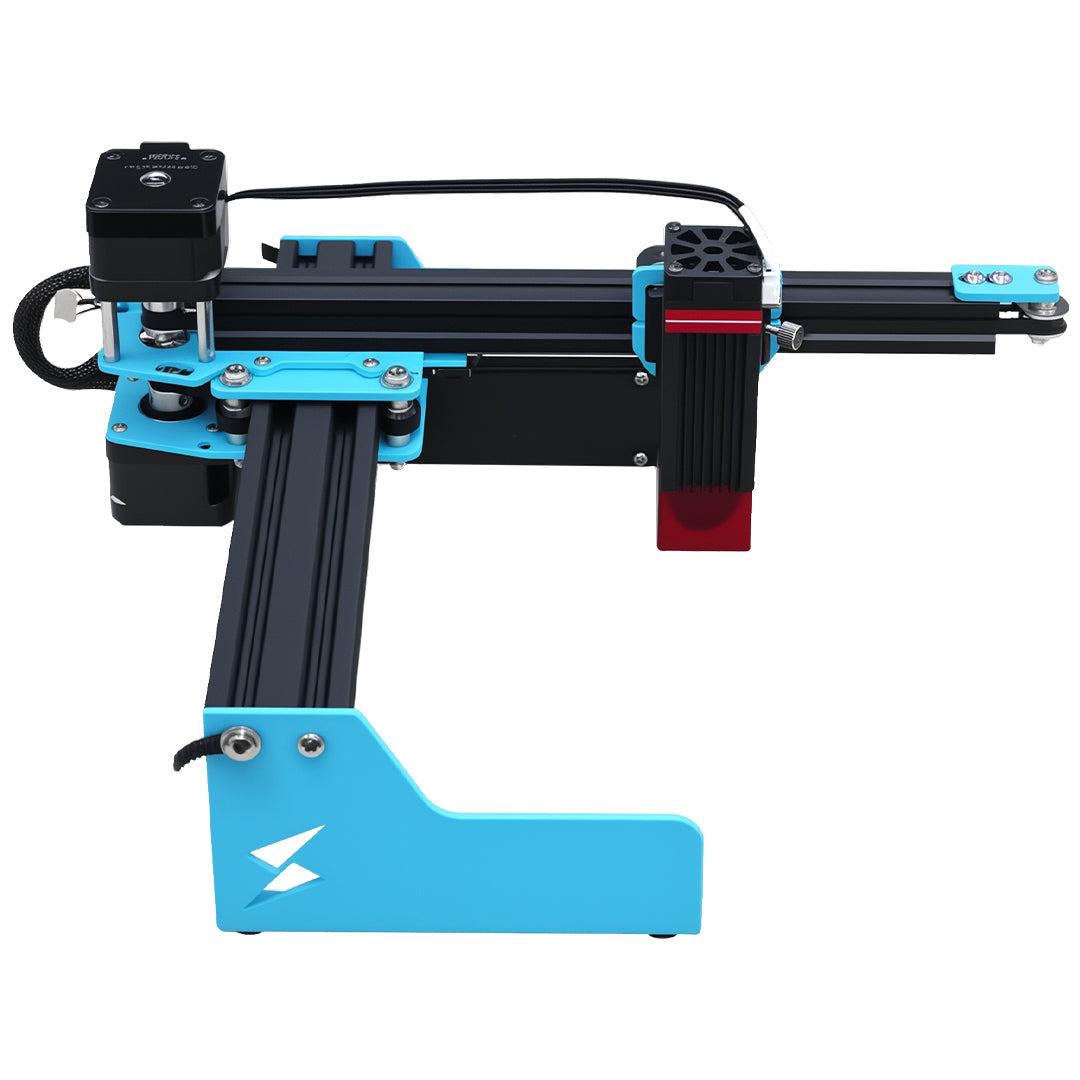


Compare a recognizable asymmetric detail after re-exporting a bitmap, before duplicating that image across a production sheet. A 180-degree rotation can be hard to notice in a symmetrical badge or background texture. For an X1S Pro layout, establish the image's intended top and bottom independently of the object's position on the page.

The LightBurn 2.2.00 RC1 early-access changelog lists a bitmap re-export rotation fix. That identifies a version-specific issue, not a claim that every installation or image export is affected. The practical check remains useful whenever artwork passes through several applications.
Give the image an unmistakable direction
Choose a detail already present: readable lettering, a face, a roof, or an off-center flourish. Note which side should face the top of the finished object. If the artwork is fully symmetrical, use a temporary asymmetric test image through the same export route to understand orientation, then remove it from the production file.
Compare the original, exported bitmap, and reimported object at similar zoom. Inspect the image itself as well as its transform controls. Rotating the page view or the entire layout can obscure which step introduced the change. Keep the first accepted image separate until its direction is established.
| Comparison | Question to answer |
|---|---|
| Source image to exported file | Did the content rotate during export? |
| Exported file to imported object | Did placement or transformation change it? |
| Imported object to physical blank | Does the top match the intended hanging or viewing edge? |
| First object to repeated copies | Did all copies preserve the accepted orientation? |
For asymmetric blanks, orientation is a physical decision too. The guest-facing napkin-ring decoration check shows why readable artwork on screen can still face the wrong way after assembly.
Freeze the accepted asset before repetition
Keep the accepted bitmap under a distinct filename and record its pixel dimensions. Avoid repeatedly exporting and overwriting that asset during layout adjustments. If a correction is necessary, compare the new result again before replacing every instance.
Text added separately deserves its own placement inspection; pasted text width and anchor changes can shift a name even when the bitmap stays correctly oriented. Record both the accepted asset and active output page for the operator who runs the sheet.
The TYVOK X1S Pro product page supplies current configuration information for large-format work. Confirm the actual material and software workflow. A software correction mentioned in early-access notes does not replace a visual acceptance check or justify changing a stable workstation during a live order.
Questions about rotated images
Is a 180-degree rotation the same as mirroring?
No. Rotation turns the image; mirroring reverses its handedness. Readable text and a directional detail help distinguish them. Correct the specific transformation rather than applying several flips until the result merely looks familiar.
Can I rotate the entire sheet to repair one inverted bitmap?
That can disturb other correctly placed objects and their relationship to the blanks. Repair the affected asset or object, compare it with the approved reference, and only then propagate the corrected version across the layout.