

Small B2B Batch: Add a Reorder Specification Card
A reorder specification card should identify the approved artwork, exact blank, placement datum, finish, acceptance sample, quantity, and packing rule. Attach it to the job record before production. A customer photo or old invoice is useful context, but neither reliably preserves scale, material lot, orientation, or acceptance criteria.

Give every variable an owner
Start with a unique specification ID and revision. Record who can approve artwork, blank substitutions, color or finish, placement tolerance, and packing changes. Link the released artwork by filename and checksum rather than “latest logo.” If the customer supplies a new logo, create a new revision and proof it; do not overwrite the accepted file.
| Card field | Example | Release rule |
|---|---|---|
| Specification | CAFE-TAG-014 Rev C | Rev C signed or messaged approved |
| Artwork | cafe-mark-v7.svg / checksum | No local edits after release |
| Blank | Supplier SKU KT-42, lot 0802 | Substitute requires new proof |
| Placement | Logo center 12 ± 0.5 mm from top datum | Fixture reference photographed |
| Acceptance | Sample C14-03, approved 2 Aug | Compare under stated light |
| Packing | 25 per sleeve, face protected | Count and label before carton |
Avoid tolerances copied from an unrelated product. Measure the accepted sample and choose a tolerance the actual blank, fixture, artwork, and inspection method can support. If the customer only says “centered,” define the datum and obtain approval before releasing the batch.
Worked reorder handoff
Imagine a café reorders 100 engraved menu tags. The old email says “same as last time,” but the original blank is unavailable. The operator must not select a similar-looking substitute and reuse the old settings. Put the job on hold, record the proposed supplier SKU and composition documentation, verify it is eligible under current material guidance, and create a labeled representative proof.
Compare the new proof with accepted sample C14-03 for dimensions, placement, legibility, surface response, and finish. Photograph both under the same light. If the buyer accepts the substitute, issue Rev D that names the new blank and new accepted sample. Rev C remains archived; it is not retroactively changed.
Before the full quantity, make a first-piece inspection. At a defined interval—such as the first piece, piece 10, and each new blank lot—check the written dimensions and appearance. That interval is a process choice, not a machine guarantee. Quarantine any piece outside the rule and investigate the earliest changed fact instead of adjusting several variables at once.
Card-to-floor checklist
- Match the open job to the specification ID and current revision.
- Confirm artwork checksum, final dimensions, orientation, and datum.
- Match supplier SKU and lot; reject undocumented substitution.
- Inspect the fixture reference and complete an attended first proof.
- Compare with the named acceptance sample under consistent light.
- Record in-process checks, rejects, final count, and packing label.
- Lock the completed record so the next reorder starts from evidence.
Track custom cleanup and revision effort with the design-hours cost record. If the accepted artwork includes a raster fill, store its spacing consistently using the DPI conversion card.
TYVOK X1S Pro boundary
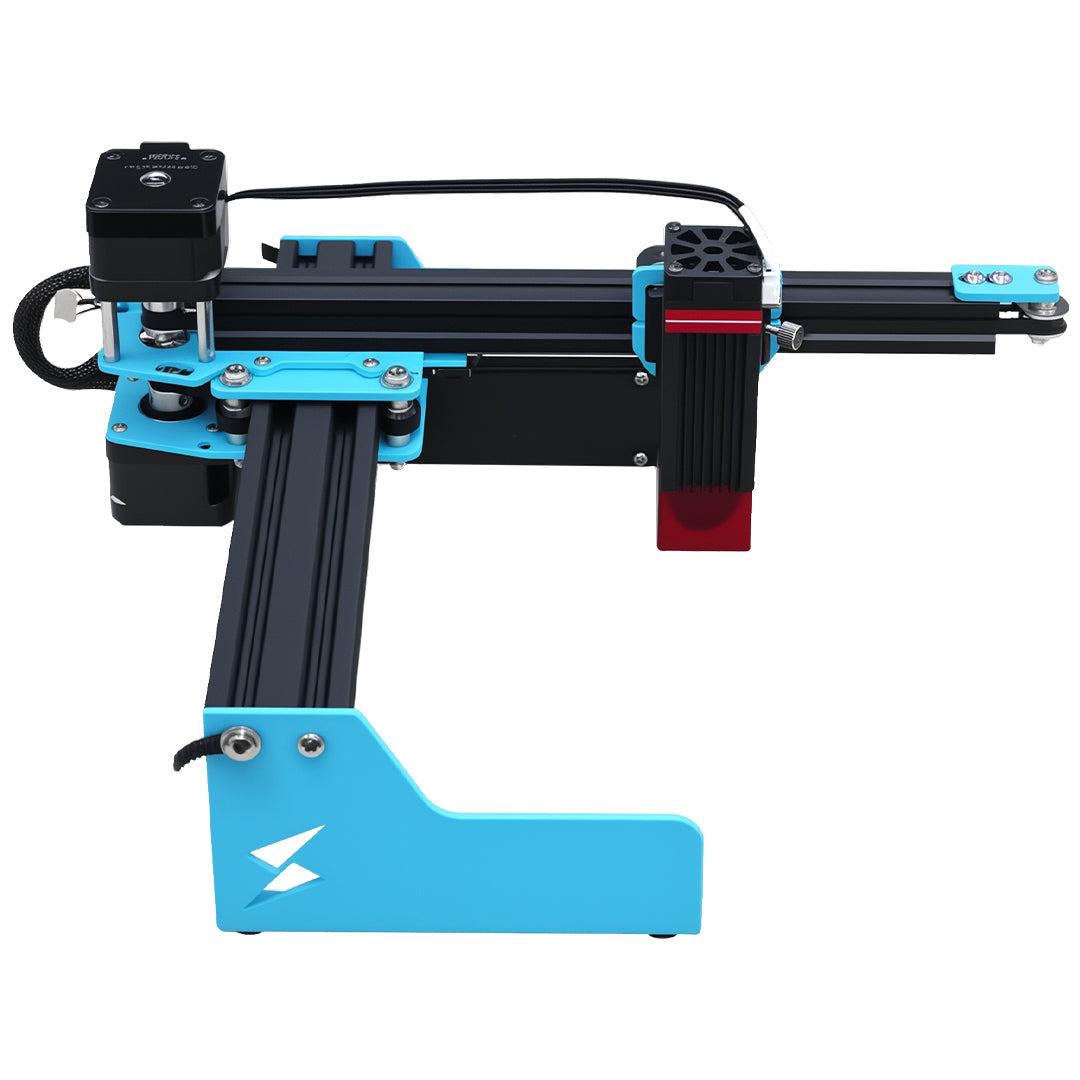
TYVOK X1S Pro can be evaluated for a production-oriented large-format workflow, but a specification card does not prove output rate, profit, suitability, or repeatability across materials and lots. Confirm current configuration, software, accessories, and availability on the TYVOK X1S Pro product page. Follow current material, ventilation, guarding, fire-safety, and operating guidance, and keep tests attended.
Buyer FAQ
Can a customer photo replace the approved physical sample?
No. A photo may distort scale, color, texture, and lighting. Keep it as context, but name a physical sample or a fully measurable written acceptance standard for release.
What happens when the original blank is discontinued?
Hold the reorder, document the candidate substitute, verify material eligibility, make a representative proof, and obtain approval. Create a new specification revision rather than silently inheriting old settings.
How much information belongs on the card?
Enough for a trained operator to identify the released file, blank, datum, tolerance, acceptance evidence, inspection frequency, quantity, and packing without guessing. Put lengthy safety and operating procedures in controlled references and link their current versions.