

"I'm looking to get my first laser engraver and I keep seeing "galvo" everywhere. Is it really that much better than a regular diode laser? Should I wait and save for galvo or just get a diode now?"

If you're asking yourself this question, you're not alone. I've been laser engraving for the past 3 years, and I've used both diode and galvo machines extensively. When I started, galvo lasers were only for people with $1,000+ budgets. But things have changed dramatically in 2026 – now you can get a full-featured galvo laser like the Tyvok P2 for under $200.
So let's cut through the technical jargon and figure out which one is actually better for you.
What Even Are Diode and Galvo Lasers? Let's Keep It Simple
You don't need an engineering degree to understand the difference. Let me break it down in plain English:
Diode Laser Engravers (The Traditional Choice)
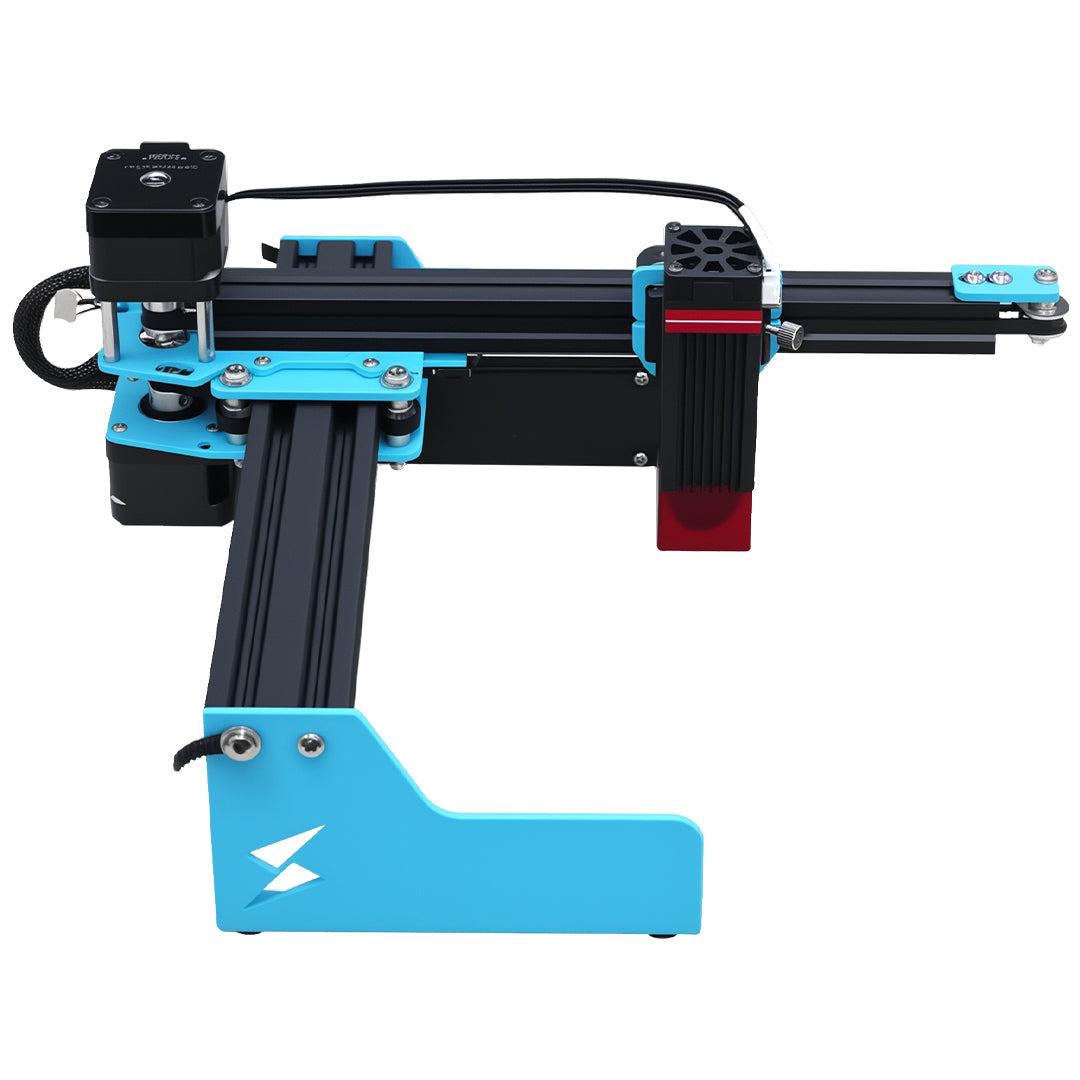
A diode laser uses a basic belt-driven system where the entire laser module moves across the workpiece to engrave or cut. Think of it like holding a pen and moving your whole arm across the paper to write.
This is the technology you'll find in most entry-level lasers like the xTool D1, Ortur, and Atomstack. Diode lasers can handle both engraving and cutting, and they typically offer larger work areas – often 30cm x 30cm or bigger.
They've been the go-to choice for beginners for years because they were the only option at lower price points.
Galvo Laser Engravers (The New Game-Changer)
A galvo laser works completely differently. Instead of moving the entire laser module, it uses two tiny mirrors to steer the laser beam. The mirrors move in microseconds, and the laser itself stays stationary.
It's like having a robot hold the laser steady and just pivot the beam where it needs to go – no heavy moving parts, no inertia, just lightning-fast precision.
Until recently, galvo technology was only found on $600+ machines. But thanks to innovations from companies like Tyvok, you can now get a quality galvo laser for under $200, putting this premium technology within reach of every beginner.
The one-sentence difference: Diode moves the laser, Galvo moves the light.
Real User Stories: Who Bought Which and Why
Sometimes it helps to hear from actual people using these machines day-to-day. Here are two stories from the laser engraving community:
Case 1: Sarah, 28, Etsy Seller Making Custom Jewelry
Sarah sells custom pet tags, keychains, and small leather goods on Etsy. She started with a 10W diode laser and was doing 15-20 orders per day. When galvo got cheaper, she upgraded to the Tyvok P2.
The difference was staggering:
- Before: 15-20 orders per day on diode
- After: 60+ orders per day on galvo
- Same size workspace, same amount of working hours
"The speed difference changed my business," she told me. "I can take more orders without working longer hours. Before I was staying up until midnight rushing to finish orders – now I'm done by 5 PM."
For her business, it wasn't even a close call. Galvo was the right choice.
Case 2: Mike, 45, Hobbyist Making Cutting Boards and Signs
Mike got into laser engraving as a weekend hobby. He primarily makes large wooden cutting boards for family and friends, plus custom wedding signs for people in his town.
He went with a 40cm x 40cm diode laser and couldn't be happier.
"For my use case, diode is still perfect," he said. "I don't need speed as much as I need size. I wouldn't get any benefit from a galvo because I'm not doing dozens of small runs – I'm doing one large piece."
Mike made the right choice too – it's all about matching the machine to what you actually do.
Head-to-Head Comparison: How Do They Actually Compare?
Let's break down the key categories that matter to beginners:
| Comparison Factor | Diode (Traditional) | Galvo (Modern) | Winner |
|---|---|---|---|
| Engraving Speed | Slow (moving heavy module) | 4-10x faster (only mirrors move) | Galvo |
| Engraving Accuracy | Good, but moving parts create small errors | Micron-level precision for fine detail | Galvo |
| Max Engraving Area | Usually 30x30cm+ | Typically 65-100mm | Diode |
| Cutting Ability | Can cut thin wood and acrylic well | Primarily for engraving, slower at cutting | Diode |
| Entry Price (2026) | Starts at $200-$500 | Now under $200 (Tyvok P2) | Galvo |
| Size & Footprint | Large, takes up bench space | Compact (~5kg), fits anywhere | Galvo |
What Does This Actually Mean For You?
- Speed: If you're selling engraved items, faster means you can make more money in the same amount of time. That's huge for side hustles.
- Accuracy: Galvo can handle 5pt text that's still readable – diode will often blur fine details. If you're doing small jewelry or intricate logos, this matters.
- Size: Galvo is limited to smaller areas. If you want to do large projects, diode is still the way to go.
- Price: The game changed in 2026. You don't need to spend $600+ to get galvo anymore.
My Real Speed Test: Galvo vs Diode Side-by-Side
I did a direct side-by-side test with the same design to get real numbers.
Test setup:
- Design: "Happy Birthday" text + small floral pattern (about 2 inches)
- Material: Alder wood blank
- Power: Similar 10W output for both machines
Results:
- Diode belt-driven: 47 seconds to complete
- Tyvok P2 galvo: 12 seconds to complete
That's almost 4x faster with the same quality. If you're doing production runs for customers, that time adds up fast. Do the math: 100 jobs would take you 7.8 hours on diode vs 2 hours on galvo.
For anyone doing this to make money, the speed advantage alone is worth the investment.
The Big Question: Which Should You Choose as a Beginner?
There's no one-size-fits-all answer, but here's my straightforward recommendation based on what you want to do:
✅ Choose Diode If:
- You need to engrave or cut large projects (cutting boards, big signs, furniture)
- Cutting thick materials is a major part of what you want to do
- You have plenty of workspace and don't mind a larger machine
- You primarily do one-off projects rather than batch production
Example: If you want to make large custom wedding signs for clients, diode is still the better choice. The larger work area is non-negotiable.
✅ Choose Galvo If:
- You want to make small items to sell (jewelry, keychains, phone cases, dog tags, leather patches)
- Speed matters to you because you're running a side business
- You're on a budget but want access to premium technology
- You have limited workspace and want something compact that fits on any desk
- You're a beginner just testing the waters and don't want to drop a ton of money
Example: If you want to start an Etsy shop selling custom pet tags or engraved jewelry, galvo is a game-changer. You'll be able to produce more orders in less time, and you can get started for under $200.
Why 2026 is Different for Galvo Lasers
If you'd asked me this question 2-3 years ago, my answer would have been completely different. Back then:
- The cheapest galvo lasers started at $600+
- Most beginners couldn't afford that
- Diode was really the only practical option
But that's not the case anymore. Companies like Tyvok have completely disrupted the entry-level market with the P2, where every power option (2W, 5W, 10W) is still under $200.
What does this mean? For the first time ever, beginners on a budget can get the same core galvo technology that used to be only for professionals.
And here's an interesting observation: most beginners actually start with small projects anyway. If you're just getting started, you're probably not jumping straight into 30cm cutting boards. You're starting with keychains, phone cases, jewelry – things that fit perfectly in a 65mm galvo work area.
So for most beginners in 2026, galvo is actually the better fit at a better price.
Conclusion & Next Steps
At the end of the day, it's not about "galvo is better than diode" or vice versa – it's about matching the machine to what you actually want to do.
- If you need large size or heavy cutting, go with diode.
- If you're doing small custom items to sell and want speed on a budget, go with galvo.
If you've decided galvo is the right choice for you and you want to see a full hands-on review of the most affordable option on the market in 2026, check out my complete review:
Is the Tyvok P2 Under $200 Worth It in 2026? A Complete Review for Beginners
If you're ready to check the latest price and see if it's still in stock:
Check current pricing for the Tyvok P2 →
Published: March 20, 2026 by Alex Maker
Match the machine to the project
After checking the materials and workflow in this guide, review TYVOK P2 purchase options for a current configuration.