

Adhesive Film on a Craft Blank? Verify Composition First
Identify substrate, coating, adhesive, and release liner separately. Refuse PVC, chlorinated vinyl, or any layer with unknown composition; a safe base blank does not make an attached film safe.

The base label does not clear the film
Craft blanks can combine a known substrate with an unidentified film or liner, creating a safety question that the base-material label does not answer.
Observation: the base says acrylic, but the protective film and adhesive have no polymer identity. Controlled test: none with heat or laser. Request layer-specific supplier evidence for substrate, coating, adhesive, and liner. Interpretation: a known base plus unknown film is still unknown as processed. Action: refuse PVC/chlorinated vinyl and hold every unidentified layer.
Build a four-layer evidence matrix
| Layer | Acceptable evidence | Decision |
|---|---|---|
| Substrate | Exact supplier material identity | Continue screening |
| Coating or printed face | Technical composition and process guidance | Hold if vague |
| Pressure-sensitive adhesive | Supplier data for laser process | Refuse unknown chemistry |
| Release liner | Identity plus instruction to remove or retain | Follow documented process |
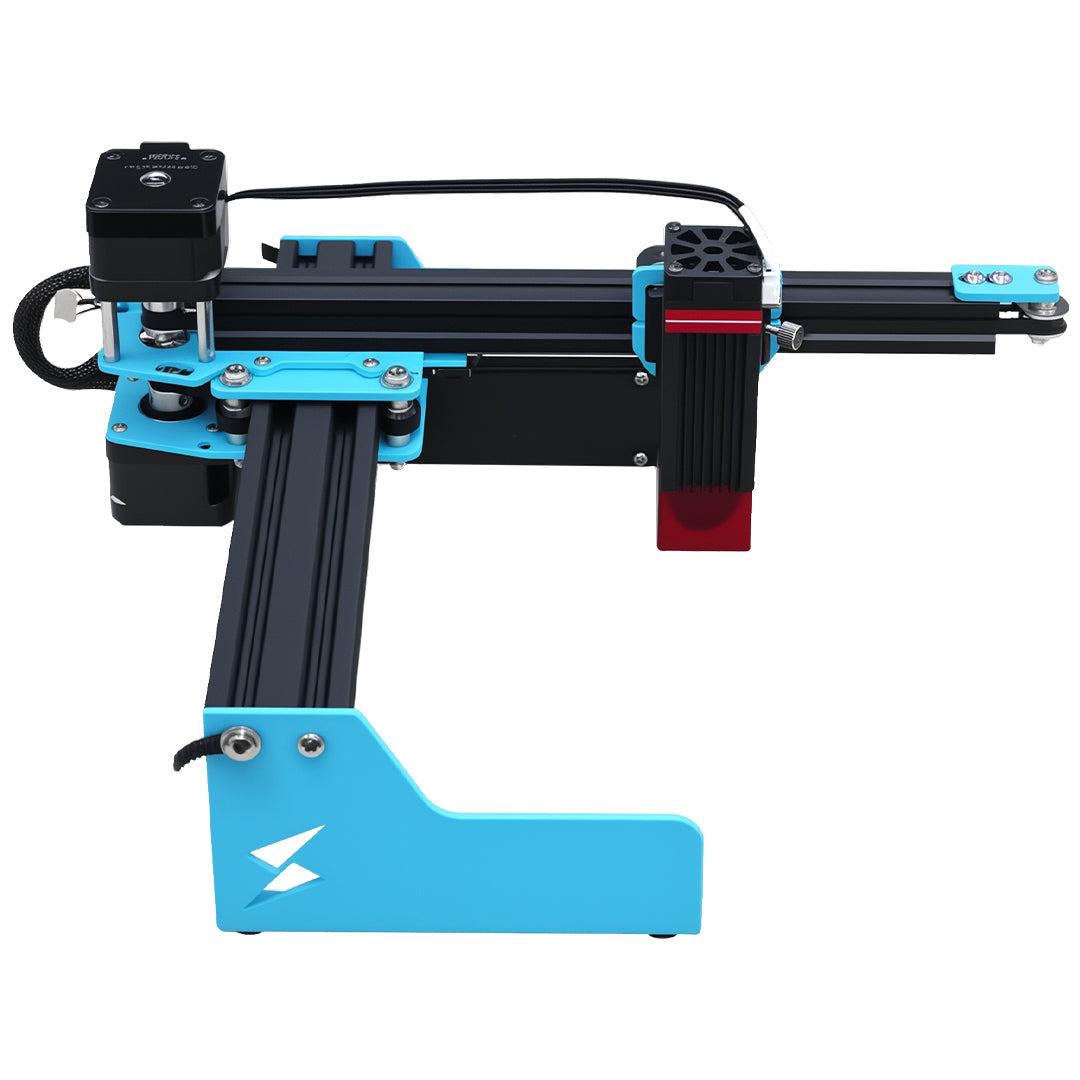
A1 Mini's compact format makes craft blanks attractive, but product size and material eligibility are separate questions.
Explicit PVC and unknown chemistry branches
- Photograph the package and exact seller listing.
- Write every layer visible at a cut edge without heating it.
- Request technical data or a safety document from the supplier.
- Never use flame, hot needle, odor or a laser pulse to identify plastic.
- Move refused or unknown stock out of the laser-material area.
If the supplier directs film removal, inspect for adhesive residue and confirm the now-exposed surface separately. A flame, hot needle, odor, or low-power pulse is not an identification method. The evidence matrix must show a source and date for every layer.
Removal does not erase adhesive uncertainty
Store refused film-bearing blanks away from eligible laser stock. Removal does not retroactively make an undocumented exposure acceptable.
Consult the A1 Mini page for current machine details. Eligible masking and rejected blanks should then be recorded in A1 Mini First-Month Consumables: Track Cost per Project.
Questions about vinyl labels and peeled films
Does vinyl always mean PVC?
The term is used inconsistently, so it cannot establish safety. Exact polymer identity is required.
Can I peel the film and laser the base?
Only if no residue remains and the now-exposed substrate is independently confirmed suitable.
Will lower power make unknown film safe?
No. Settings do not determine chemical identity.
Every processed layer needs a name
Acrylic on the base label cannot clear an unknown adhesive or liner. Hold or refuse until layer-specific evidence closes the matrix.