

Select and verify the actual alternate letter shape before converting it to outlines. A swash that has become a question mark is already wrong; outlining it merely preserves the question mark. Keep the editable font source, then export an approved shape through a format supported by the receiving workflow.

A May 2025 xTool user question, rechecked September 6, 2026, describes a decorative swash appearing as a question mark in the receiving editor. This is an enduring file-transfer problem, not evidence of a new A1 Mini defect or an undocumented glyph picker in TYVOK software.
Identify the letter, not just the font name
A font can contain an ordinary letter and one or more decorative alternatives. Choosing the same family name in two applications does not guarantee that both select the same glyph. Open the original artwork in an application that can display the desired alternative, and compare it with the customer's approved image.
Check the font version and the specific selection method available in that application. If the supplied text uses a special character, confirm the character itself survived copying. If the original relies on an OpenType alternate, confirm that the correct alternate is active before making the output copy. Do not replace it with a similar flourish from another font without design approval.
| A1 Mini personalized lettering | Required visual check |
|---|---|
| Source word | Correct spelling and exact swash |
| Output copy | Same glyph after outlining or export |
| Small-size view | Thin strokes and enclosed spaces remain visible |
| Receiving editor | No question marks or substituted letters |
| Customer proof | Approved appearance at the intended dimensions |
Preserve the shape once it is correct
Save the editable source before converting text. Make a second copy for output, convert the already-correct lettering to vector outlines where supported, and export through a mutually supported vector format. Reopen the export and compare its silhouette with the approved source, including the swash tip and any overlap with adjacent letters.
An outline transfer reduces dependence on font selection at the receiving computer, but it does not preserve every editing convenience. Keep the text source for spelling changes. Also distinguish editable artwork from executable machine output; vector lettering still needs the verified operations and destination setup before it becomes a runnable job.
For names in connected scripts, glyph selection is only one layer of correctness. Obtain language-aware approval of joining and reading order before freezing shapes. A decorative flourish must not conceal an incorrect letter connection or change the intended name.
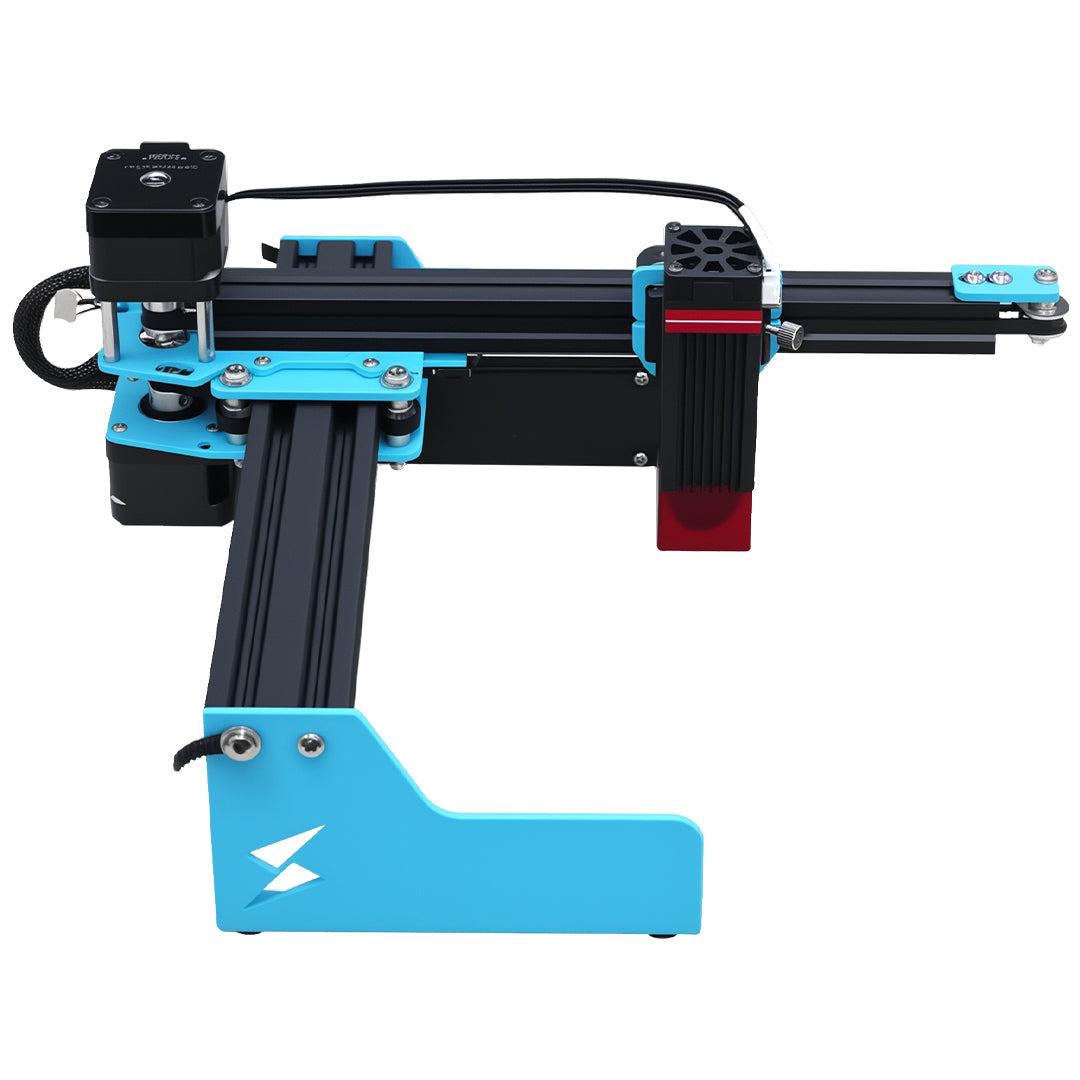
The A1 Mini listing describes a small blue-diode craft machine with a 120 × 130 mm work area. Plan the lettering within the actual blank and usable setup, but do not infer minimum reliable stroke thickness from the workspace specification. A physical proof on documented compatible stock must establish whether delicate details survive the actual process.
Will installing the font on the laser computer restore every swash?
It may resolve a missing-family problem, but the application still needs to select the correct alternate or character. Compare the actual rendered word. If the output is wrong, fix the source selection before converting or exporting it.
Can I use an outlined decorative font for products I sell?
Check the font's license for the intended commercial use and any redistribution restrictions. Outlining changes the representation, not the license. Keep the purchase or license record with the design source, especially when transferring artwork to another operator.