

Do not assume that placing two parts against each other and enabling duplicate-line removal will preserve both finished dimensions. Kerf compensation changes the processing contours. A shared design edge may therefore become two different paths, or a single remaining path may not preserve the material each part needs. Check both parts in preview before considering an output sample.

A February 2026 LightBurn discussion asks this exact question. Contributors disagree about the practicality of combining the settings and describe different arrangements. It supports careful preview, not a universal claim that the features always work together or are always incompatible.
Name the part you intend to keep
Start with a reversible copy containing two simple representative contours. Label the retained part and waste side in a non-output note. Record nominal dimensions and the required tolerance before changing spacing. A setting that moves a path outward for one retained shape may not represent the intended boundary of its neighbor.
Use the current documentation for your authoring software's kerf sign and value convention. Do not import a numeric value from the forum or assume that a field named kerf means full measured cut width in every application. Preserve the source geometry so any compensation can be removed without redrawing the parts.
| Software-only version | What changes | What must be inspected |
|---|---|---|
| Separated reference | Independent closed contours | Both complete paths and intended retained sides |
| Touching design edges | Part spacing only | Whether the preview still contains a shared processing segment |
| Compensation enabled | Documented offset applied | Direction of each contour and resulting gap or overlap |
| Duplicate removal considered | Only the documented optimization option | Which path remains and whether either part loses its intended boundary |
Compare the same region at close zoom, including the ends of the shared edge. Check the full path sequence as well as the static outlines. If a setting removes an unexpected segment or the retained dimensions cannot be explained, keep the separated layout. A theoretical reduction in travel is not worth an unqualified joint.
Prove dimensions separately from saved travel
Only after the preview is understood should a fresh coupon be considered under current TYVOK-authorized setup and operation. Use identified compatible material, documented conservative conditions, extraction, protective measures and constant supervision. Stop for flame, persistent smoke, material movement or abnormal heat. After safe cooldown, measure both resulting parts against their own requirements; measure neither by assuming the other is correct.
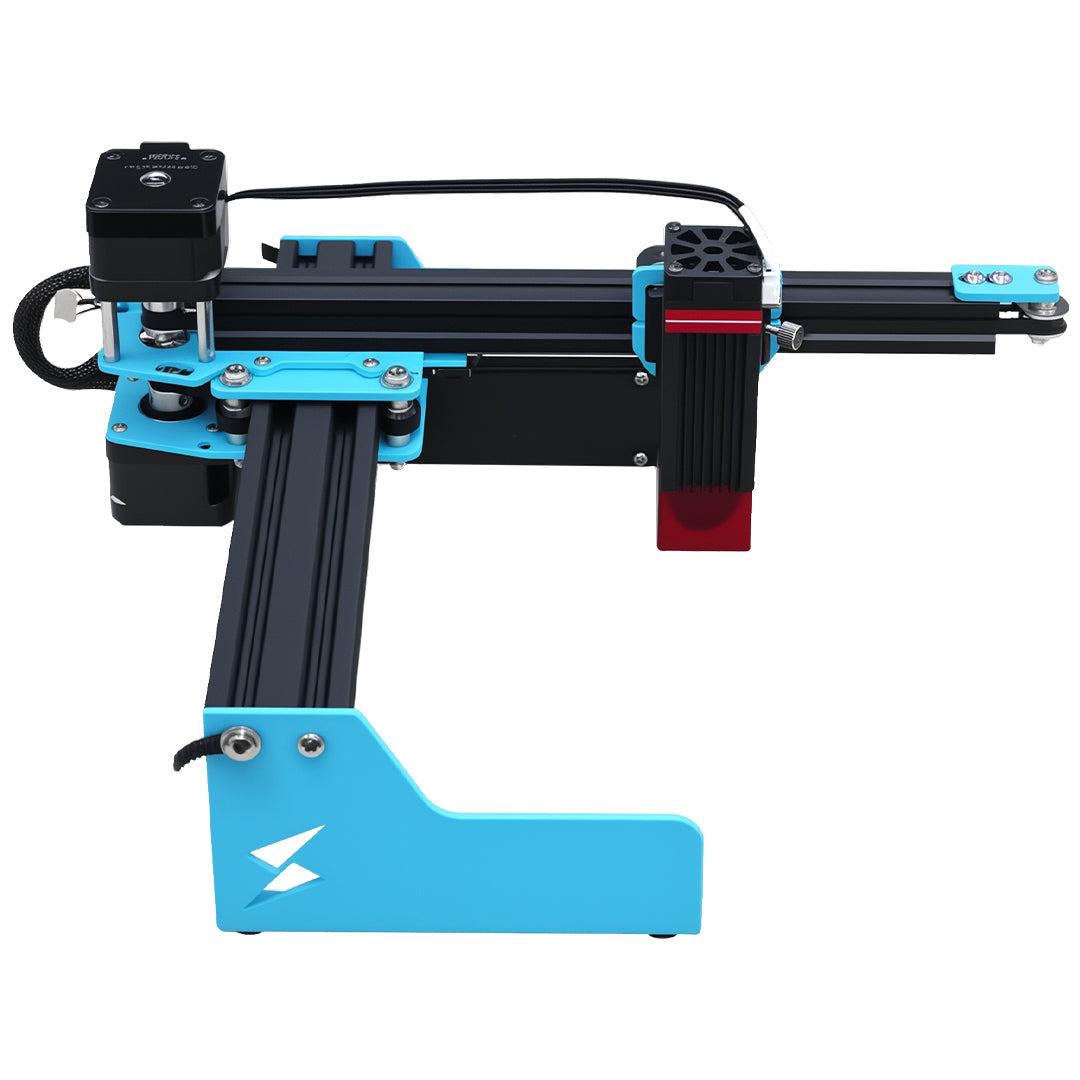
The X1S 2026 page presents an expandable large-format workflow with final specifications still pending. Area does not establish a cutting tolerance, automatic common-line nesting or material-specific kerf.
Use the imported-path order inspection when the remaining paths run in an unexpected sequence. If a real cut instead leaves isolated bridges, use the uncut-tab pattern log; increasing compensation is not a generic remedy for incomplete penetration.
Is one shared cut always more efficient?
No. Any travel saving must survive the dimensional and part-stability checks. Rework or rejected parts can outweigh a shorter preview time.
Can I reuse one kerf value for every wood sheet?
Do not assume so. The measured result belongs to a particular material and processing setup. Use a qualified value for the intended operation and verify both retained parts rather than treating the number as a machine constant.
Check the machine before buying
For the material and workflow discussed above, review TYVOK X1S 2026 configurations and purchase options after testing the exact project materials and setup.