

Beginner's Guide to Laser Safety: What You Need to Know Before Using Your Tyvok Laser
Laser engraving is an amazing hobby and business, but like any power tool, it needs to be used with respect and proper safety precautions. Whether you have a Tyvok A1 Mini entry-level machine or a Tyvok P2 galvo laser, understanding and following laser safety rules is essential to protect yourself and others.

In this beginner's guide, we'll break down everything you need to know about laser safety in simple terms. We'll cover what's dangerous, what precautions you need to take, and how to use your Tyvok laser safely for years of enjoyable projects.
Understanding Laser Classes
All lasers are classified by their power output and potential to cause harm. The classification system goes from Class 1 (completely safe) to Class 4 (can cause immediate injury to eyes and skin).
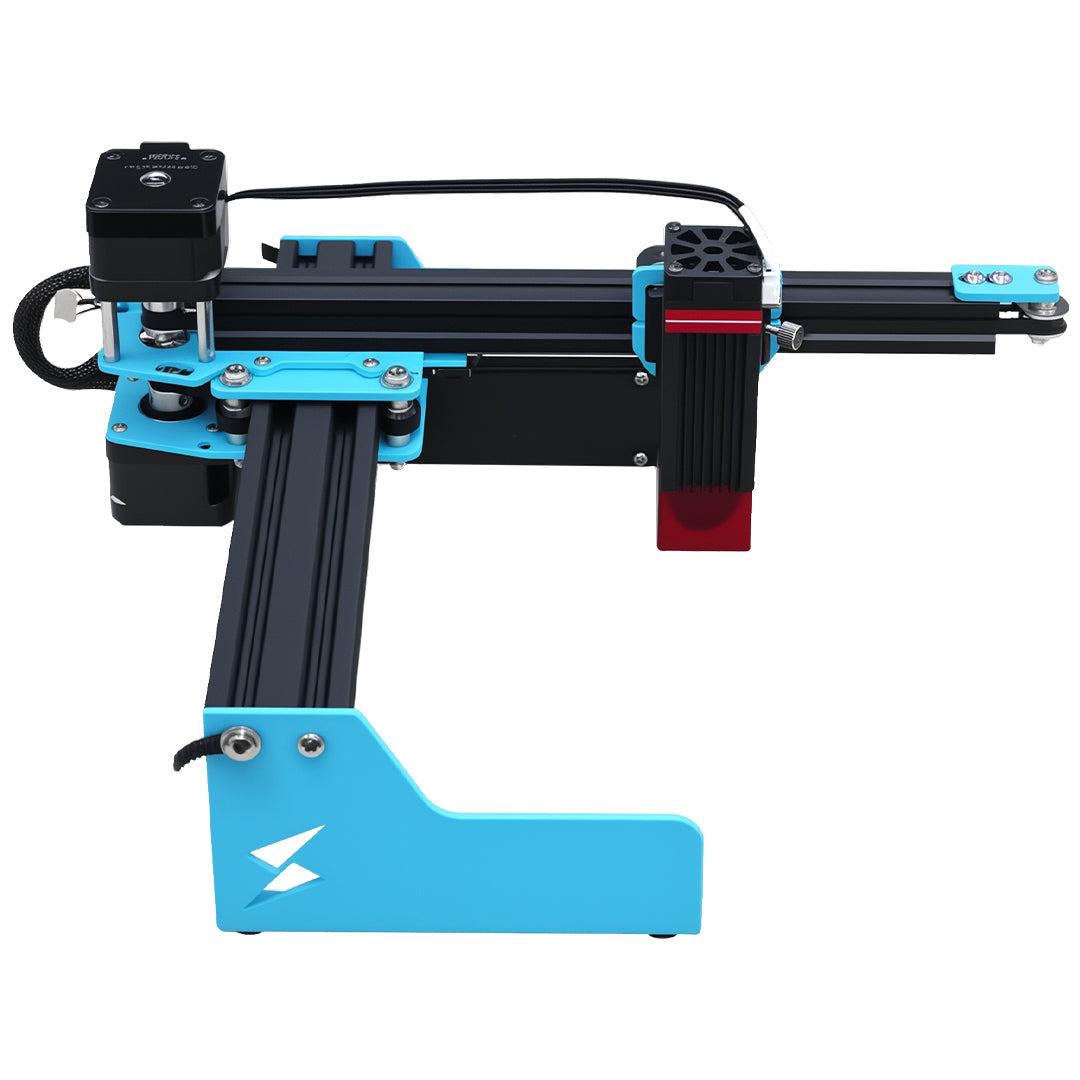
The Tyvok A1 Mini is available in 3.5W and 10W versions, and the Tyvok P2 is 10W. Both of these fall into the Class 4 category because the power is high enough to cause injury to your eyes and can burn skin and ignite flammable materials.
This doesn't mean that Class 4 lasers are unsafe to use – it just means you need to follow the proper safety precautions. Millions of people use Class 4 lasers safely every day in small workshops and home studios around the world. But you do need to understand the risks and how to mitigate them.
The Two Main Risks: Eye Damage and Fire
When it comes to home laser engraving, there are two main risks you need to be aware of: eye damage and fire.
Risk 1: Eye Damage
This is the most serious risk. The focused laser beam from your 10W laser can cause permanent eye damage in a fraction of a second. Even a reflection off a shiny surface can be enough to damage your vision if you're not wearing proper protection.
The reason laser light is so dangerous to your eyes is that all the energy is focused into a very small spot. When this hits your retina, it can burn the tissue, causing permanent damage that can't be repaired. This damage can happen before you even feel anything – you don't feel pain when the damage occurs, but your vision will be permanently affected.
The good news is that this is completely preventable if you follow one simple rule: Always wear proper laser safety glasses when the laser is running.
Not just any safety glasses will work – you need glasses that are specifically designed to block the wavelength of your laser. Diode lasers like the ones in the Tyvok A1 Mini and Tyvok P2 have a wavelength of 450nm (blue laser), so you need glasses that are rated for this wavelength.
Never use the laser without your safety glasses, even if you're just doing a quick test. It only takes one accidental reflection to cause permanent damage. It's not worth the risk.
Pro tip: Keep your safety glasses right next to your machine, so you don't forget to put them on before you turn on the laser. Make a habit of putting them on before you start the job, and taking them off only after the job is done and the laser is turned off.
Risk 2: Fire
The second major risk is fire. When you're focusing this much heat into a small spot on flammable material like wood or paper, it can catch fire if you're not careful.
Most of the time, when you're engraving or cutting, the material doesn't actually burst into flame – it just smolders. But if you're cutting through thick material, or if you leave the laser unattended, a smolder can turn into a fire.
Again, this risk is completely manageable if you follow the rules:
-
Never leave your laser unattended while it's running – If you need to leave the room, stop the job and turn off the laser. Don't let it run while you're not there to watch it.
-
Keep a fire extinguisher nearby – Make sure you have a working fire extinguisher rated for electrical fires and ordinary combustibles within easy reach of your laser.
-
Don't leave flammable materials near the machine – Keep loose paper, fabric, solvents, and other flammable stuff away from the immediate area around your laser.
-
Make sure your material is dry – Wet or green wood doesn't engrave well anyway, and the moisture can cause steam buildup, but more importantly, dry material is much less likely to catch fire than wet material that can get superheated.
If you follow these simple rules, the risk of fire is very low. But you always need to be prepared, just in case.
The Third Risk: Toxic Fumes
Laser engraving and cutting produces smoke and fumes from the material you're working on. Some of these fumes are irritating, and some of them are actually toxic. This is why proper ventilation isn't just a good idea – it's essential for your long-term health.
Different materials produce different fumes:
- Wood – The smoke is mostly irritating carbon particles, but it's still not good to breathe in large quantities.
- Plastics – Some plastics produce extremely toxic fumes when you laser them. That's why you should never laser PVC, ABS, or other toxic plastics.
- Leather – Produces smoke that has volatile organic compounds (VOCs) that you don't want to breathe.
The solution to this is proper ventilation. At a minimum, you need to have a fan that pulls the smoke away from the machine and vents it outside. If you're going to be using your machine regularly, we recommend getting a proper fume extractor with activated carbon filters that can remove the VOCs and fine particles from the air before it's recirculated.
Even with a fume extractor, you should never laser materials that are known to produce toxic fumes. If you're not sure whether a material is safe to laser, don't put it in your machine until you find out.
Basic Safety Rules for Any Tyvok Laser
Whether you have an A1 Mini or a P2, these are the basic safety rules you should always follow:
1. Always Wear Laser Safety Glasses
This is number one for a reason. Even if your machine has an enclosure, you still need to wear your safety glasses. Accidental reflections can still get through, and it's better to be safe than sorry. Make sure your glasses are rated for the 450nm wavelength of your diode laser.
2. Never Leave the Machine Unattended
Don't start a job and then leave the house or go do something else in another room. Stay nearby and keep an eye on the machine while it's running. If something starts to smolder or catch fire, you need to be there to turn it off quickly.
3. Never Engrave or Cut Toxic Materials
Some materials are simply not safe to laser. The biggest offenders are:
- PVC (Polyvinyl Chloride) – produces toxic chlorine gas
- ABS – produces cyanide when burned
- Pressure-treated wood – has toxic chemicals in the treatment
- Foam (most types) – produces toxic fumes
If you're not sure whether a material is safe, do your research before you put it in the machine. When in doubt, don't laser it. Check out our guide to safe materials for the Tyvok A1 Mini for a complete list of what's safe and what's not.
4. Always Use Proper Ventilation
Don't run your laser in a closed room without any ventilation. Even if you can't smell the smoke, the fine particles and VOCs are still there, and they're not good for your lungs. At a minimum, have a fan blowing the smoke out a window. For regular use, get a proper fume extractor.
5. Keep the Work Area Clean and Clear
Don't clutter up the area around your machine with lots of extra materials, tools, and other stuff. Keep the area around the machine clear so you can get to the emergency stop quickly if you need to, and so there's less flammable material nearby if something does go wrong.
6. Make Sure Your Material is Secure
Before you start a job, make sure your material is securely fastened to the engraving platform so it can't move during the job. If the material comes loose while the laser is running, it can cause all kinds of problems, including the laser hitting something you didn't intend it to hit.
7. Don't Modify Your Machine Unnecessarily
Don't remove any of the safety features that come with your machine. The emergency stop, the fuse, the insulation – these are all there for a reason. If you do modify your machine, make sure you know what you're doing and you don't compromise any of the safety features.
8. Keep Children and Pets Away
When your laser is running, keep children and pets out of the area. They don't know not to look at the laser, and they can accidentally knock things over. Your workshop should be secured when you're not there, so kids can't get into the machine when you're not around.
Specific Safety Tips for the Tyvok A1 Mini
The Tyvok A1 Mini is an open-frame machine, which means it doesn't come with a full enclosure. This makes ventilation easier, but it also means you need to be extra careful about safety:
- Because it's open-frame, stray reflections are more likely. Make sure you always wear your safety glasses, even for quick jobs.
- Make sure people in the house know when you're running the laser, so they don't accidentally walk into the room without warning.
- Consider putting a portable screen around your work area to contain stray reflections and keep people out when the laser is on.
- The open frame means ventilation is actually easier – just position a fan to pull the smoke out towards a window.
Even with an open-frame machine, if you follow the basic safety rules, it's completely safe to use. Many people start with open-frame machines like the A1 Mini and use them safely for years.
Specific Safety Tips for the Tyvok P2
The Tyvok P2 is also a compact open-frame galvo laser, so many of the same safety tips apply:
- Because the laser is always on when it's powered up (unlike a gantry laser where it's only on when it's actually firing), you need to be extra careful about never looking into the laser aperture when it's powered on.
- Always make sure the laser is turned off when you're doing maintenance or cleaning.
- The galvo mirrors are very delicate – don't touch them with your fingers, and don't try to adjust them unless you know what you're doing. The alignment is very precise, and if you mess it up, your engraving won't be accurate.
- Just like with the A1 Mini, always wear your safety glasses when the P2 is powered on.
The Importance of a Good Work Platform
While not directly a safety issue, using a proper engraving platform like the Tyvok engraving platform actually improves safety. The honeycomb structure allows the laser to pass through after cutting your material, which prevents the laser from hitting a solid surface underneath and causing extra heat buildup or unexpected reflections.
A solid platform underneath can cause back reflection that can actually damage the laser module in some cases, and it can also cause more smoke buildup because the smoke can't get away. A good aluminum honeycomb platform improves both safety and results.
What to Do in an Emergency
It's unlikely that you'll ever have an emergency, but it's good to know what to do just in case:
If a Small Fire Starts:
- Turn off the machine immediately – Hit the emergency stop and unplug it if necessary.
- Use your fire extinguisher – Aim at the base of the fire and sweep side to side.
- Call the fire department if needed – If the fire doesn't go out quickly, don't be a hero. Get out and call 911.
If You Accidentally Look Directly into the Laser Beam:
If you've been wearing your safety glasses, you're fine. If you accidentally looked at the beam without protection and you notice any changes in your vision – like dark spots, blurriness, or loss of vision – go to an ophthalmologist immediately. Don't wait – get it checked out right away.
If You Inhale a Lot of Smoke:
If you've had the ventilation off and you suddenly inhale a lot of smoke, move to fresh air immediately. If you're having trouble breathing or you feel dizzy, get medical attention.
Common Safety Mistakes Beginners Make
Even when people know the rules, they sometimes get complacent and make these common mistakes:
-
Taking a quick shortcut – "I'm just doing a quick 30-second job, I don't need to put on my glasses." This is how accidents happen. It only takes a split second for damage to occur. Always put on your glasses, no matter how quick the job is.
-
Leaving the machine unattended to save time – "The job will take 20 minutes, I can just go do something else while it runs." Most of the time nothing will happen, but if something does go wrong, you're not there to deal with it. Don't do it.
-
Lasering a material you're not sure about – "I found this sheet of plastic in my garage, I wonder what it is. Let me try cutting it." If you don't know what it is, don't laser it. You could be releasing toxic fumes that you can't even smell.
-
Not maintaining your fire extinguisher – People buy a fire extinguisher and then forget about it. Check the pressure gauge regularly to make sure it's still charged. If it's expired, replace it.
-
Getting complacent over time – After you've been using your machine for a while without any problems, you start to get lazy about the safety rules. Don't let this happen. Complacency is the cause of most accidents. Follow the rules every time, no matter how experienced you are.
Final Thoughts on Laser Safety
Laser engraving is a fun, rewarding hobby and business that millions of people enjoy safely every day. The risks are real, but they're completely manageable if you follow the basic safety rules.
Whether you have a Tyvok A1 Mini for getting started, a Tyvok P2 for fast galvo engraving, or both, following these safety guidelines will help ensure that you can enjoy your machine for years without any accidents.
Remember:
- Always wear your laser safety glasses
- Never leave the machine unattended
- Never laser toxic materials
- Always use proper ventilation
- Keep a fire extinguisher nearby
If you follow these simple rules, you'll be able to focus on what really matters – creating amazing projects with your Tyvok laser.
Just getting started with your Tyvok A1 Mini? Check out our complete step-by-step setup guide that includes safety setup tips, and make sure you have the right Tyvok engraving platform for safe, clean cutting and engraving.
Related Reading: Beginner's Guide to Laser Safety: What You Need to Know Before Using Your Tyvok Laser
Related Reading: Beginner's Guide to Laser Safety: What You Need to Know Before Using Your Tyvok Laser in 2026
Related Reading: How To Clean And Maintain Your Tyvok Laser Engraver Complete Guide 2026