

Can-Holder Laser Engraving Looks Tilted? Check Curve and Fixture Rotation
When a small logo looks tilted, first separate four variables: artwork rotation, fixture rotation, shallow surface curvature, and focus variation. A second pass cannot tell you which one moved.

A tilted logo has more than one possible cause
The recent maker discussion provides the concrete problem behind this workflow. A July compact-engraver project showed black-to-silver magnetic can-holder personalization and prompted questions about settings and repeatability.
What two opposing offsets reveal
If a flat coupon is square but the logo leans clockwise each time the holder is loaded, mark the locating edge and measure seating. If the lean reverses when the part reverses, curvature or the contact surface deserves review before the artwork is touched.
Read the curve-and-fixture comparison
| Observation | Artwork test | Fixture test | Interpretation |
|---|---|---|---|
| same tilt on flat proof | check file axes | fixture not implicated | file or origin leads |
| tilt changes after reseating | file unchanged | inspect stops and seating | physical rotation leads |
| edges differ across logo | square file | measure shallow height change | curvature/focus may contribute |
| coating identity unknown | no output | no fixture experiment | refuse the blank |
Rotate the evidence, not every setting
- Require supplier-confirmed coating and base composition; a magnetic product label is not chemistry evidence.
- Limit the test to shallow curvature that can be proven within the documented P2 working field and focus method.
- Run a flat eligible coupon only with active supervision, effective exhaust, fire readiness, and an immediate stop for flame, persistent smoke, abnormal heat, or deformation.
- Record the left and right edge result; do not imply rotary support, automatic curve correction, or full-wrap engraving.
P2 limits on curved coated blanks
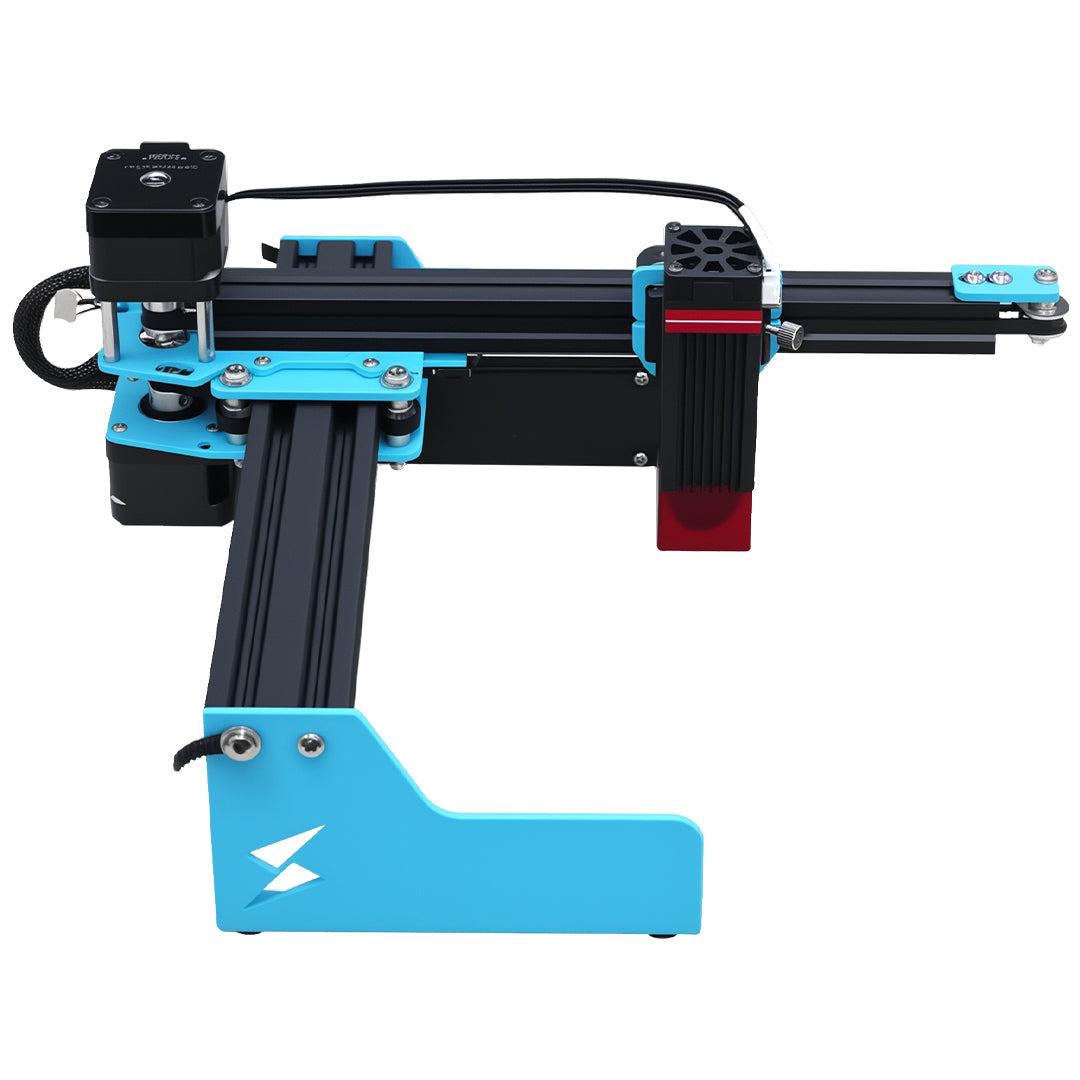
P2 is not presented here as a rotary or curve-compensating system. Only a supplier-identified coating and shallow surface proven inside the documented field and focus method belongs in this comparison. Use the current P2 specifications to check the working field and focus method before accepting a curved blank.
A repeatable lean belongs beside the jig-pocket wear audit; if the fixture is stable but artwork treatment is unclear, compare the game-token vector and raster method.
Can-holder engraving questions
Can software automatically wrap the logo around the holder?
This guide assumes no rotary or automatic curve compensation. It covers only a shallow, proven field.
Does black coating mean it is laser compatible?
No. Obtain documentation for the exact coating and substrate.
Should I correct the artwork by two degrees?
Only after a flat proof and repeated seating test show that the file—not the fixture or surface—is the stable cause.