

Choose acrylic by its exact documented construction, color and compatible laser process before deciding whether cast or extruded stock suits a sign. Manufacturing type can influence results, but it does not establish that a particular X1S 2026 configuration can process the sheet. In particular, do not assume clear acrylic is suitable for a blue-diode workflow.

The current xTool acrylic guide discusses cast and extruded material behavior. Its recommendations must be read with its laser context; a result from a different source type cannot be transferred to the TYVOK setup.
What cast and extruded actually change
Cast sheet is formed in a mold; extruded sheet is formed through a die. In the compatible laser context described by xTool, cast acrylic is commonly chosen for a frosted, contrasting engraved appearance, while extruded stock may need different process development to achieve the desired result. These are appearance-selection considerations, not a promise that clear sheet will work with the X1S blue diode.
For a sign whose lettering must contrast strongly, request an eligible cast sample first and compare it against the customer's visual reference. For a mainly cut shape, evaluate the approved edge and assembly requirements instead of assuming the engraving preference decides everything. Supplier documentation identifies the manufacturing type more reliably than appearance alone.
Ask the supplier four separate questions
Request the sheet's material identity, cast or extruded manufacturing type, exact color or opacity, and documentation for the intended laser process. Also ask about protective films, coatings and additives. A sample photograph cannot answer these questions, and “laser acrylic” is too broad if the supplier assumes a different laser source.
Create an order note that separates eligibility from appearance. Eligibility asks whether the documented combination may be processed at all. Appearance asks whether a compatible sample produces the edge or surface effect the customer wants. A pleasing result does not retroactively establish safety.
| X1S 2026 purchasing question | Acceptable evidence | Insufficient evidence |
|---|---|---|
| Is the stock identified? | Supplier specification for the exact sheet | Generic acrylic listing |
| Is the laser process compatible? | Explicit source/process guidance for the configuration | Cast or extruded label alone |
| Are film and coating known? | Documented preparation instructions | Guessing from film color |
| Is the appearance acceptable? | Approved representative sample | Another machine's promotional photograph |
Compare eligible samples before buying a large sheet
Suppose two suppliers offer visually similar opaque sign stock, one cast and one extruded. After both pass the documented compatibility check, use the same small design and record the approved process for each. Compare lettering appearance, edge requirements and the intended assembly fit. Do not report one as universally better: the customer may value a surface effect differently from a cut-edge requirement.
Keep the sample and exact stock identifier with the purchase decision. Substituting a different color or coating on a reorder can invalidate the original qualification even when the manufacturing type remains unchanged. If documentation is missing, pause the purchase instead of ordering a full sheet to experiment with.
The full-size paper proof can establish the footprint while material questions remain unresolved, because it does not involve laser processing. Once the stock is accepted, use the shared-edge preview check before releasing adjoining vector edges or offsets in the sign layout.
Confirm the machine rather than reading across specifications
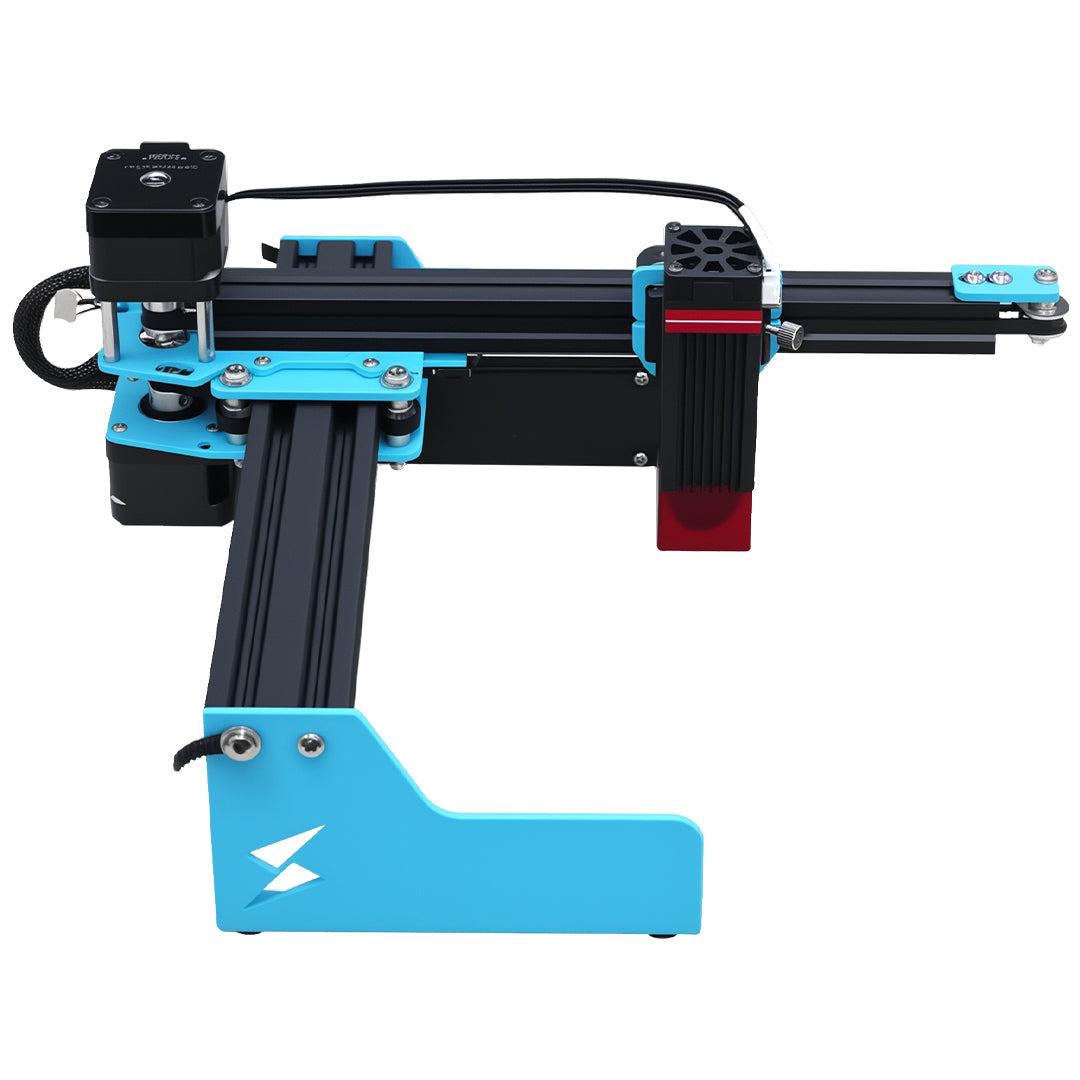
The TYVOK X1S 2026 page describes a large-format platform. Verify the actual installed source, current configuration and instructions directly; mixed product-page references do not mean every source is included. Use only a documented material workflow with suitable extraction, protection and supervision. Larger available area does not change acrylic's interaction with the installed source.
Does cast acrylic automatically engrave better on my X1S?
No. Establish source, color and exact stock compatibility first. Then compare eligible samples against the intended appearance; manufacturing type alone is not a complete selection rule.
Can I remove a film and test an undocumented sheet?
Do not use trial marking to establish safe composition. Obtain the sheet and film documentation before deciding on preparation or processing.
Check the machine fit before buying
Review X1S 2026 configurations before purchasing for a large sign; qualify the exact acrylic first.