

Choose an extraction arrangement from the complete air route, not a fan's headline airflow alone. Record the capture location, duct restrictions, pressure losses, make-up air and discharge destination before buying equipment or processing material. If the route cannot protect occupants and neighbors under applicable requirements, the workspace is not ready for laser operation.

The question in this ventilation discussion reflects a common purchase problem: having a fan does not establish that emissions are captured and discharged appropriately. Comments on other machines cannot size a particular X1S 2026 installation.
Fill in the route from the work outward
Take physical measurements with emission off and equipment safely isolated where required. This is a worksheet for an external system, not a list of items included with the laser. Leave an unknown value blank for the extraction supplier or qualified installer instead of inventing a specification.
| Route element | Measurement or document to obtain | Decision it supports |
|---|---|---|
| Capture position | Work area, source-to-capture distance and opening dimensions | Whether collection reaches all intended processing locations |
| Optional enclosure | Intended geometry, leakage openings and manufacturer requirements | Whether its inlet/outlet arrangement suits the capture design |
| Duct | Actual internal diameter, straight length and material | Supplier assessment of resistance and suitability |
| Bends and transitions | Count, angle, bend radius and diameter reductions | Identification of avoidable restrictions |
| Filters or treatment | Rated application, pressure-loss data and service condition | Whether performance remains adequate as resistance changes |
| Fan | Performance curve at system pressure, not only free-air rating | Selection at the operating point assessed by the supplier |
| Make-up air | Documented incoming-air route and competing exhaust systems | Avoidance of a starved or problematic room airflow arrangement |
| Outdoor termination | Distance and direction relative to windows, intakes and people | Assessment of lawful discharge and recirculation risk |
For example, a measured route might contain two diameter reductions, three bends and a long flexible section. Those observations do not produce a safe airflow number by themselves. Give the measured route and equipment data to the system supplier; ask what operating airflow and verification method are required for that arrangement. Building-specific ventilation and discharge requirements need local assessment.
Verify performance without making smoke as a test
Do not use a flame, incense, aerosol or trial laser burn to demonstrate capture. Use a suitable airflow measurement method specified for the system, with the machine not emitting. A reading at one accessible opening does not automatically prove capture across a large field. Record the measurement locations and acceptance criteria supplied for the installation.
Smell is not a reliable measurement of exposure. If fumes escape or return through a window during an authorized operation, stop processing and have the route reassessed. Filters, an enclosure and air assist are not interchangeable functions, and none makes an unidentified material acceptable.
What belongs to the machine specification
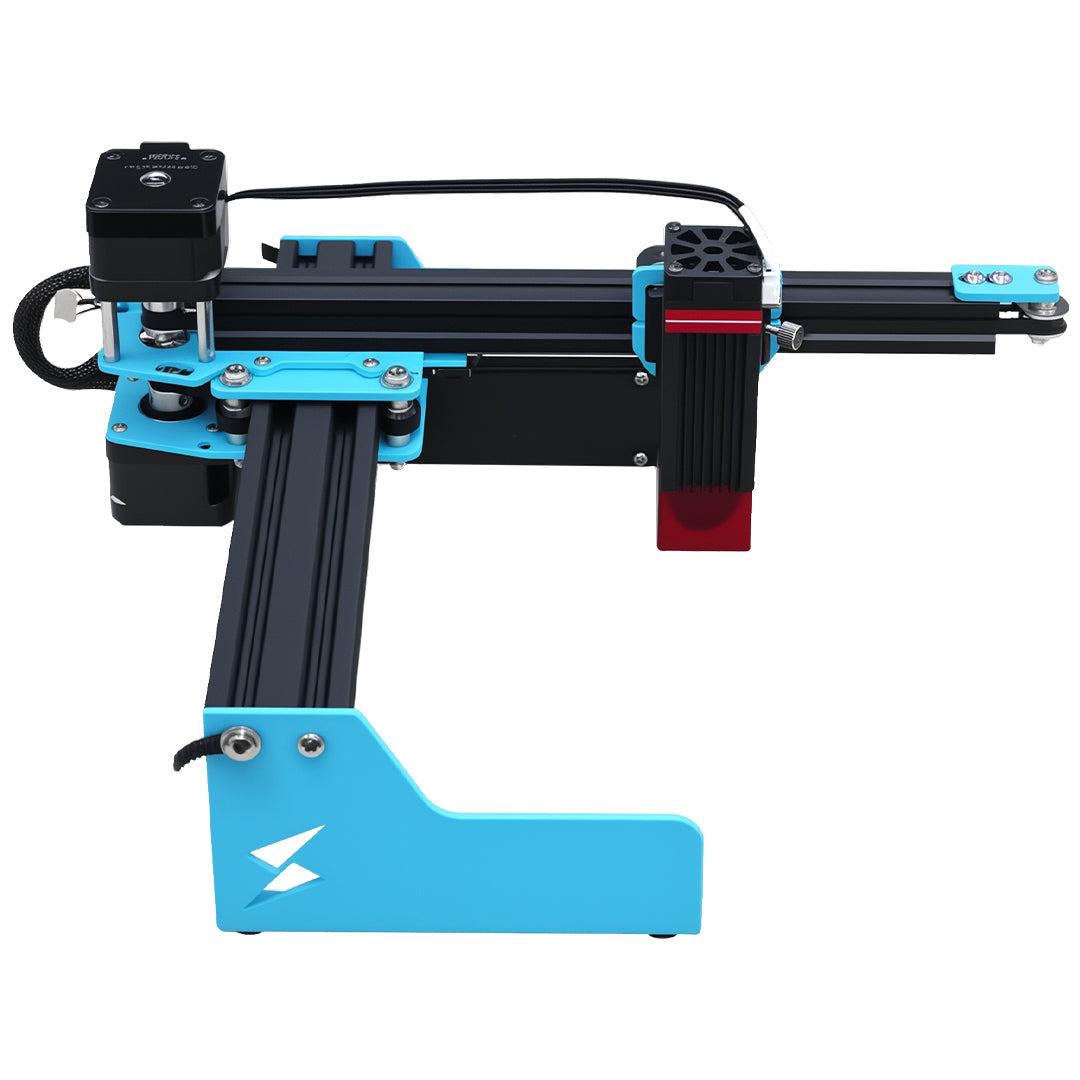
The X1S 2026 page describes a large-format expansion direction while final specifications remain pending. Do not assume an enclosure, fan, duct adapter or treatment device is included. Match any connection and installation to current TYVOK and extraction-equipment instructions.
The smaller wood-engraving exhaust-route check explains route observations without supplying a large-format fan size. For shared windows, garage boundaries and nearby residents, also complete the neighbor feasibility check.
Can I select a fan from its maximum airflow rating?
Not alone. The actual system imposes resistance, and the relevant performance must be assessed at that operating condition. Obtain the curve and the installation requirements.
Does no visible smoke mean the extraction is adequate?
No. Visibility and odor cannot replace the specified verification. Keep material eligibility, operator protection, supervision and fire controls separate from the ventilation assessment.
Check the machine before buying
For the material and workflow discussed above, review TYVOK X1S 2026 configurations and purchase options after testing the exact project materials and setup.