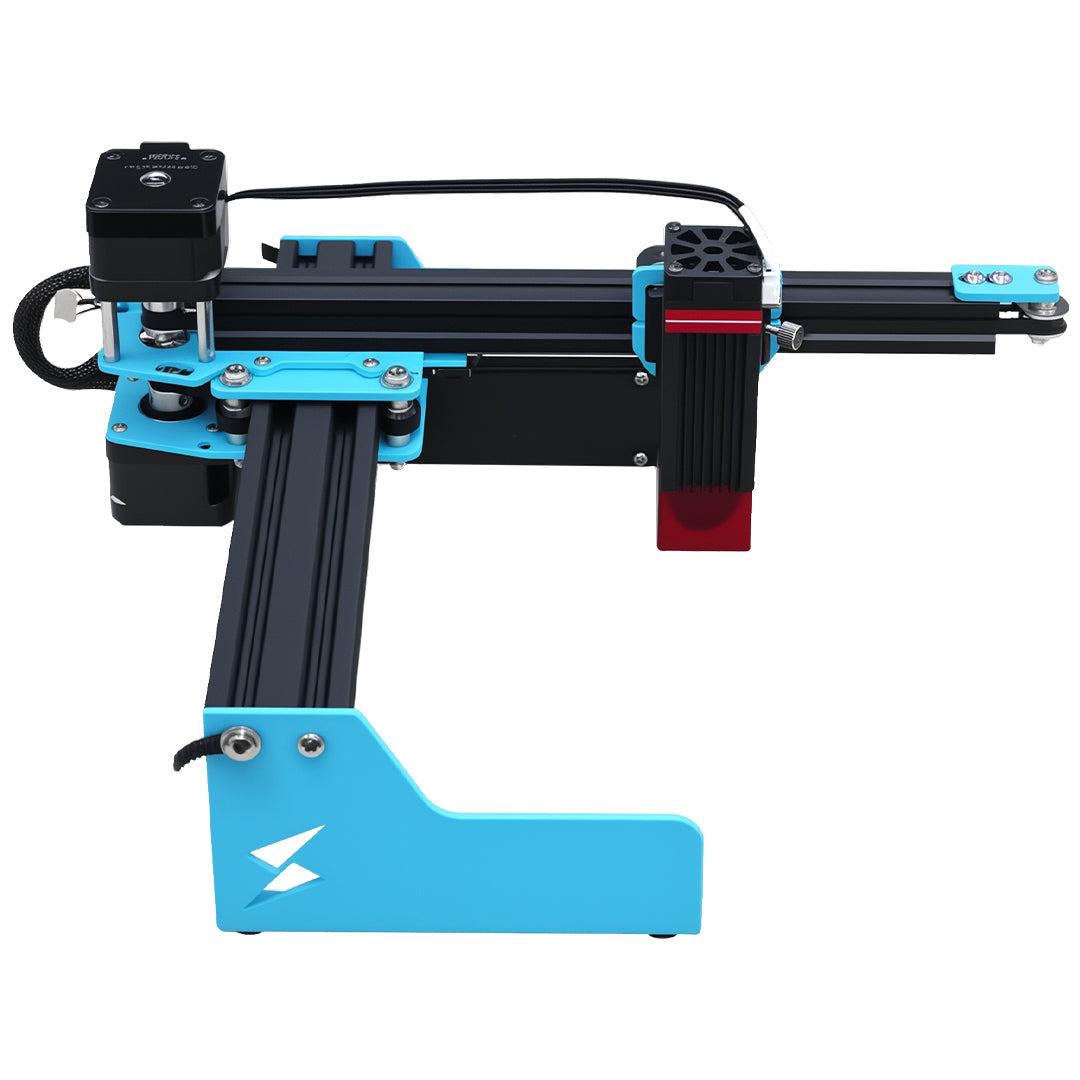


Treat laser cutting and UV printing as separate operations with an agreed physical handoff. Settle the blank material, finished outline, front face and registration reference before making a batch. A clean cut shape is not automatically a print-ready blank, and a UV printer is not a capability of the X1S Pro.

A UV-printer owner's question about an acrylic magnet asks how the two machines complement one another. The project illustrates demand for shaped, full-color goods. It does not demonstrate that a blue-diode laser can process every acrylic blank shown in another shop.
Decide who supplies the blank
For an X1S Pro workflow, start with wood specifically approved for laser processing and accepted by the printing partner for the intended ink system. If the item requires clear acrylic, buy or subcontract that blank from a suitable process. Do not plan on cutting clear acrylic with the X1S Pro's diode platform.
Ask the printer to identify required surface preparation, coating compatibility and any dimensional tolerance relevant to its fixtures. Avoid guessing at cleaners or applying a finish before the partner confirms it. Cut first and print afterward in this arrangement; never return an inked or coated piece to the laser without a separately verified safe process.
Make one shared reference sample
Agree a physical datum, such as a particular straight edge and corner, and label the front face on accompanying paperwork. For a symmetric outline, orientation is particularly easy to confuse. Use a dimensioned sketch that both shops understand rather than relying on which way the file happened to appear on screen.
| X1S Pro-to-printer handoff | Agreement needed |
|---|---|
| Blank composition | Both cutting and printing processes accept it |
| Outline and datum | Printer can place artwork against the same reference |
| Front face | Everyone recognizes the intended print surface |
| Edge and surface condition | Partner accepts the actual sample as received |
| Counts and rejected blanks | Responsibility for replacements is clear |
The TYVOK X1S Pro product page describes an 800 × 2000 mm large-format workflow and LightBurn/LaserGRBL support. Those details may help organize blank cutting; they do not specify UV ink adhesion, printing accuracy or automatic alignment with a separate printer. Approve a completed sample using the actual two processes.
Use the responsibilities in an overflow-work handoff to agree who checks incoming blanks, who approves the first print and who handles a mismatch. Record that agreement before multiplying the layout across a sheet.
Can the printer fix a slightly undersized blank by shrinking the artwork?
Possibly, if the customer approves the resulting dimensions and appearance. It can also alter margins or placement enough to spoil the intended product. Send a measured sample and agree the allowable variation instead of expecting the partner to improvise for every piece.
How should I send a stack of unprinted blanks?
Keep the agreed front faces identifiable and protect them using packaging accepted by the printer. Check mailer depth and stack restraint so pieces do not move or bend during handling. Include counts and the reference sketch outside the protected stack, allowing the partner to inspect the order without guessing its orientation.