

Give one complete kit and its instructions to an adult who has not watched you build it. Observe where they stop, turn a part over, ask a question, or commit an irreversible assembly step. A kit that its designer assembles easily can still contain unclear drawings, indistinguishable pieces, and missing preparation steps.

A June 2026 wooden-clock project discussion attracted requests for files and kits. Its maker explained that designing a buildable kit took much longer than the assembly itself. That is a useful distinction for sellers: making the parts and communicating the build are separate jobs. The maker's reported assembly time is not a promise for another kit.
Prepare a realistic first encounter
Use the exact packaging, part labels, hardware list, and instruction version a buyer would receive. Include only the tools and consumables the product description says are needed. If an adhesive or finishing process is involved, supply the relevant manufacturer's instructions and respect their restrictions.
Choose a representative kit produced from an approved file and eligible material. Do not quietly substitute a specially adjusted sample that differs from the production pieces. Have the tester identify the contents before assembly; this exposes a missing identification key before it becomes a mistaken joint.
Explain that you are testing the instructions, not the person. Ask them to describe what they believe each step requires. If you intervene to prevent damage or unsafe action, record the intervention and its cause. Avoid counting a coached completion as an independent success.
A test sheet for X1S Pro kit production
| Observation | Likely instruction problem | Revision to try |
|---|---|---|
| Two similar panels repeatedly exchanged | Missing orientation cue | Show a distinctive hole or edge in the drawing |
| Part number differs from the list | Identification mismatch | Reconcile the physical label and instruction record |
| Glue applied before a necessary insertion | Incorrect or unclear sequence | Add the prerequisite before the irreversible step |
| Inner face cannot be reached for finishing | Preparation step omitted | Explain surface preparation before closure |
| Builder needs the maker's demonstration | View or wording insufficient | Replace the ambiguous step and retest it |
If labels such as 007 become 7 in the part list, fix the identifier formatting rather than asking the buyer to infer the relationship. The fixed-width number procedure addresses that specific issue.
Surface preparation deserves an explicit place in the sequence. A small decorative box can hide its inside corners once glued. The before-or-after sanding check helps identify surfaces that should be dealt with while the pieces remain accessible.
Revise the confusing step, then repeat the observation
Retest the changed instruction with another unfamiliar builder when practical. Otherwise use fresh parts and record the previous tester's experience. Compare questions and interventions alongside elapsed time.
Keep the instruction identifier with the production file. A later geometry change can make a formerly clear diagram wrong even when its text remains readable.
Product fit for the cutting stage
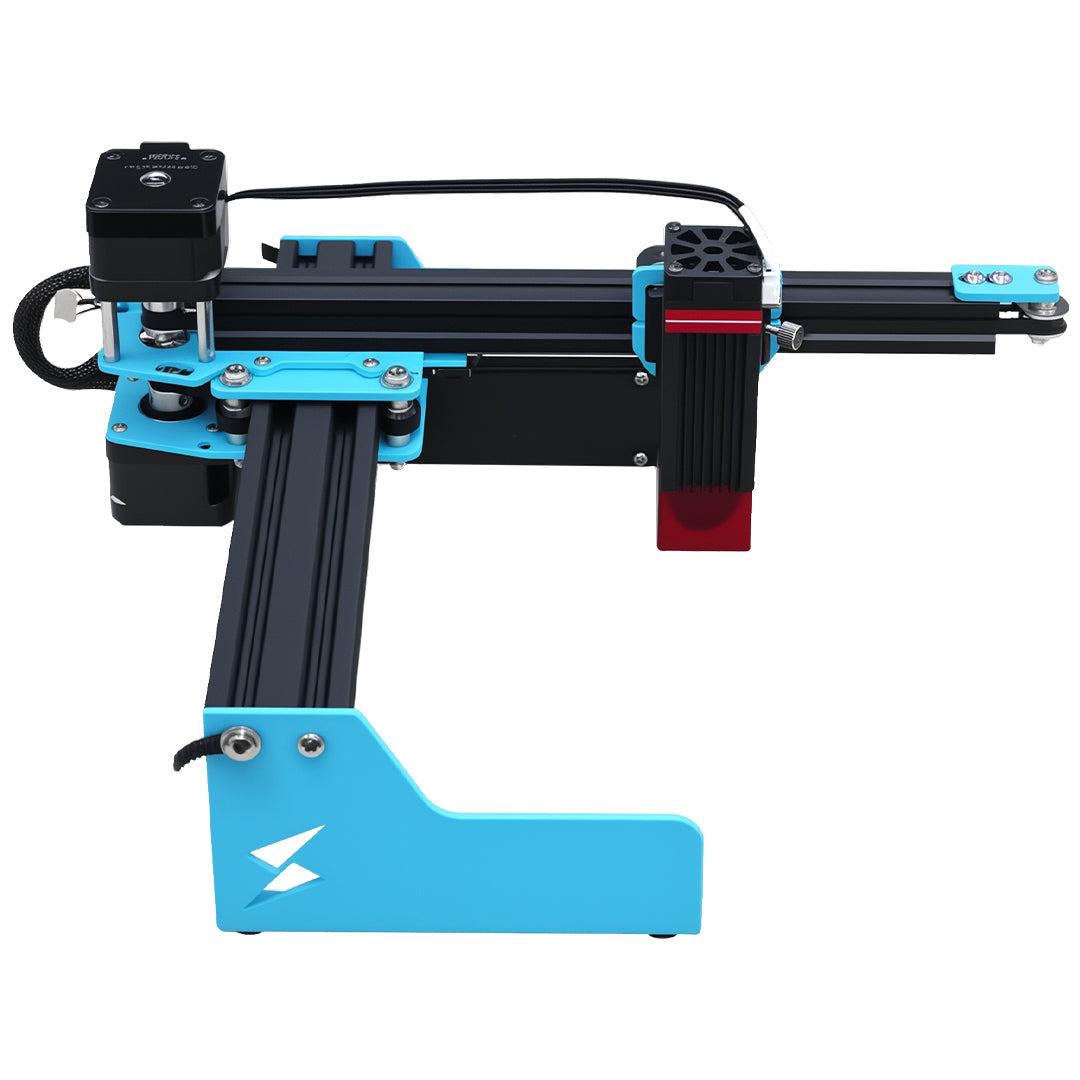
The TYVOK X1S Pro listing describes a large-format diode system with an 800 × 2000 mm listed area. Confirm the actual module, supported material, and setup before manufacturing parts. That area says nothing about whether a kit is easy to assemble, suitable for children, or certified for a particular use.
Buyer questions
Does a successful test establish an advertised assembly time?
One builder provides one observation. Experience, tools, adhesive waiting periods, and mistakes can change the total substantially. Record active work and required waiting separately before deciding whether any time estimate is useful.
Must every buyer receive a numbered part?
Not necessarily. Distinctive geometry may identify a simple kit clearly. Use labels where similar pieces or orientation create confusion, and check that any marks are acceptable on the finished object.