













TYVOK material settings library
Laser material settings for real customer jobs.
Find starter power, speed, and pass ranges for TYVOK P2, X1S, and X1S Pro. Use the table to plan a controlled scrap test before engraving or cutting customer materials.
Choose by job, not only wattage
Use the right TYVOK workflow for the material.
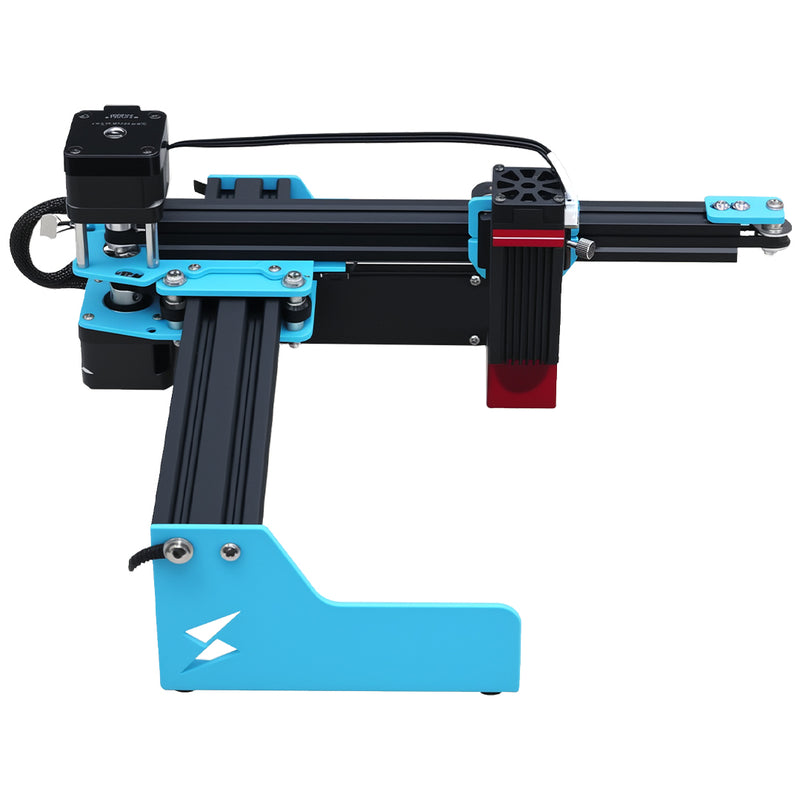
Compact galvo personalization
Use P2 for small gifts, coated products, leather tags, wood keepsakes, cards, and repeat small-item marking.
Fast 1064 nm metal marking
Use P2 Ultra for stainless steel, anodized aluminum, brass, copper, tool IDs, metal cards, and serial plates.
Large-format diode workflow
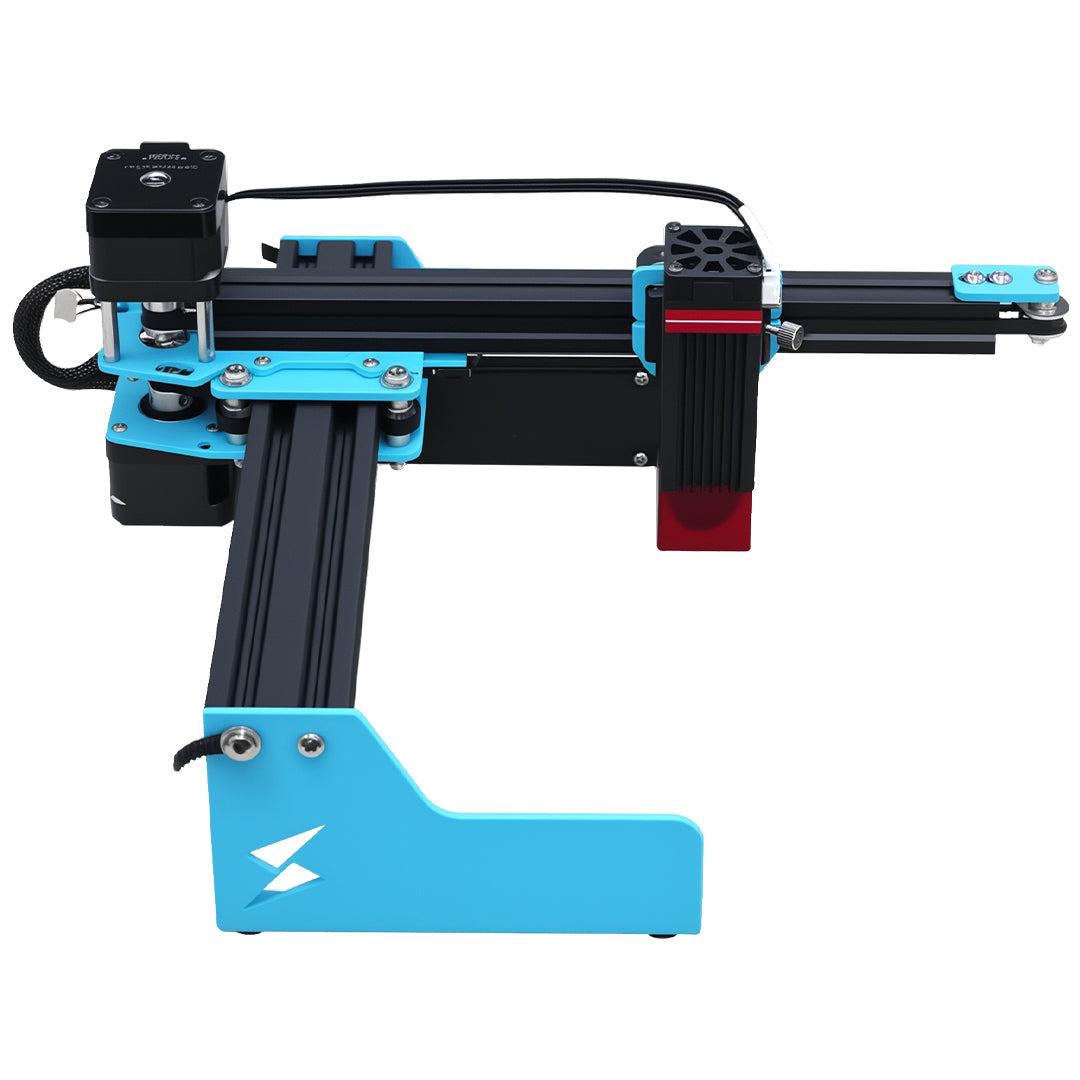
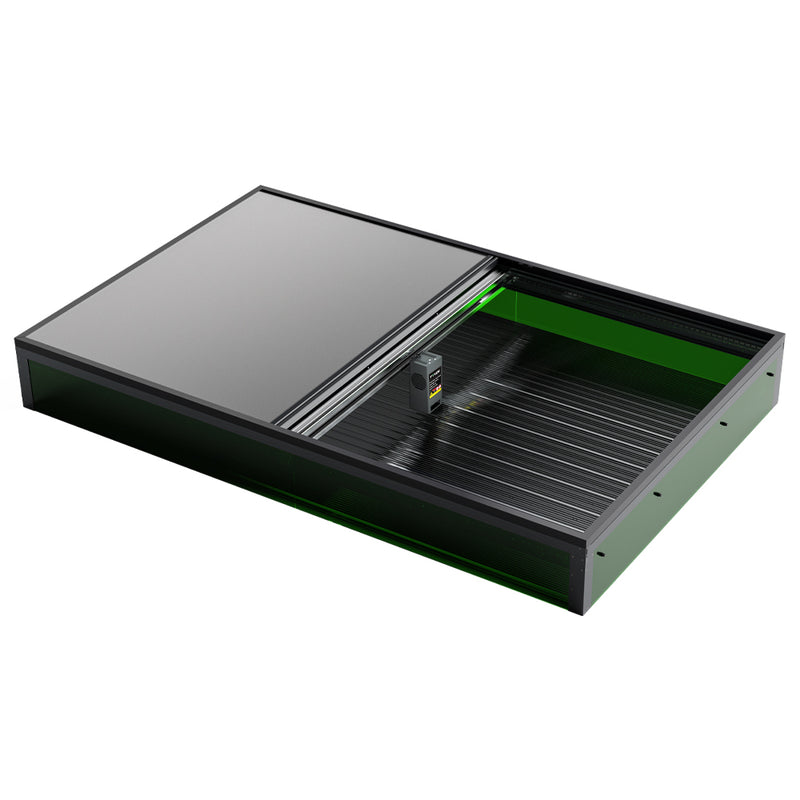
Use X1S when the customer needs signs, boards, panels, leather cutting, packaging prototypes, or larger layout space.
Higher-power batch path
Use X1S Pro when sheet work, plywood cutting, batch layouts, and operator handoff become the bottleneck.
Power, speed, passes
Search the starter settings table.
These values are starting points for material tests. They are not a promise that every material batch will cut or engrave the same way.
| Material | Machine | Operation | Speed | Power | Passes | Air assist | Test range | Status / note | Product |
|---|---|---|---|---|---|---|---|---|---|
| Powder-coated tumblercoated surface | TYVOK P2 10WBlue galvo | Mark | 30-50 mm/s | 45-75% | 1-2 | Light airflow | Run 5 x 5 grid: 30-50 mm/s and 35-65% power | Starter rangeTYVOK's current P2 10W baseline is generally 30-50 mm/s. Use the exact coating and color before selling. | View setup |
| Anodized aluminum cardsurface mark | TYVOK P2 10WBlue galvo | Mark | 30-50 mm/s | 35-65% | 1 | Optional | Start near 40 mm/s, 45%, 1 pass; adjust for contrast | Starter rangeFor P2 10W, use 30-50 mm/s as the first test band. Bare aluminum usually needs a different laser path. | View setup |
| Vegetable-tanned leather1.5-3 mm | TYVOK P2 10WBlue galvo | Engrave | 30-50 mm/s | 25-55% | 1 | Light airflow | Test 20-50% power at 30-50 mm/s before customer orders | Starter rangeLeather finish and dye change quickly. Keep separate settings by supplier and color. | View setup |
| Wood gift blanksmall flat item | TYVOK P2 10WBlue galvo | Engrave | 30-50 mm/s | 35-70% | 1 | Light airflow | Compare 30/45/60% power at 30-50 mm/s on scrap from the same blank batch | Starter rangeSpecies, stain, and finish matter more than the product name. | View setup |
| Slate coastersurface mark | TYVOK P2 10WBlue galvo | Engrave | 30-50 mm/s | 45-80% | 1 | Optional | Test image detail at 30-50 mm/s before production sets | Starter rangeSlate texture varies; use larger text and inspect contrast after cleaning. | View setup |
| Paper card0.2-0.5 mm | TYVOK P2 2WBlue galvo | Score / mark | 20-30 mm/s | 15-35% | 1 | Light airflow | Keep P2 2W in the 20-30 mm/s band and use low power first to avoid scorching | Starter rangeStay supervised. Paper is fire-sensitive. | View setup |
| 304 stainless steelsurface mark | TYVOK P2 Ultra 20W1064 nm red-light fiber | Metal mark | 300-800 mm/s | 55-90% | 1-2 | Not required | Start near 500 mm/s, 70%, 1 pass; tune speed and frequency for contrast | P2 Ultra starter rangeP2 Ultra is a 20W 1064 nm metal-marking workflow. Use this faster band separately from standard P2 blue-laser settings. | View setup |
| Anodized aluminum cardsurface mark | TYVOK P2 Ultra 20W1064 nm red-light fiber | Metal mark | 600-1200 mm/s | 35-70% | 1 | Not required | Start near 800 mm/s, 50%, 1 pass; tune for coating color | P2 Ultra starter rangeThis is a fast metal/card marking baseline inspired by 20W 1064 nm fiber-class workflows; verify on the exact card finish. | View setup |
| Brass or copper tagsurface mark | TYVOK P2 Ultra 20W1064 nm red-light fiber | Metal mark | 250-700 mm/s | 65-95% | 1-3 | Not required | Start near 400 mm/s, 80%, 1 pass; add a pass only after checking heat and contrast | P2 Ultra starter rangeCopper and brass reflect differently from stainless steel. Fixture the part and test before batch work. | View setup |
| Stainless steel deep marksurface / shallow depth | TYVOK P2 Ultra 20W1064 nm red-light fiber | Deep mark | 80-300 mm/s | 80-100% | 2-8 | Not required | Start near 200 mm/s, 90%, 3 passes; inspect heat, depth, and edge quality | P2 Ultra cautious rangeDeep marking is slower than surface marking. Use sample parts before promising depth or cycle time. | View setup |
| 3 mm basswood plywood3 mm | TYVOK X1S 10WDiode gantry | Cut | 450-850 mm/min | 90-100% | 2-5 | Air assist on | Start at 600 mm/min, 100%, 3 passes; adjust by glue layer | Starter rangePlywood glue and density vary. Do not sell until your exact sheet cuts cleanly. | View setup |
| 3 mm basswood plywood3 mm | TYVOK X1S 20WDiode gantry | Cut | 900-1600 mm/min | 80-100% | 1-3 | Air assist on | Start at 1200 mm/min, 90%, 2 passes; reduce speed if tabs remain | Starter rangeTwo moderate passes can be cleaner than one overheated pass. | View setup |
| 3 mm MDF3 mm | TYVOK X1S 20WDiode gantry | Cut | 700-1200 mm/min | 90-100% | 2-4 | Air assist on | Use strong exhaust and test char before production | Starter rangeMDF smoke and glue content are high. Ventilation and supervision are mandatory. | View setup |
| Wood sign boardsurface | TYVOK X1S 20WDiode gantry | Engrave | 3500-6500 mm/min | 25-55% | 1 | Light airflow | Run a grayscale or text test on offcut from the same board | Starter rangeFor large signs, alignment and material support matter as much as power. | View setup |
| Natural leather2-3 mm | TYVOK X1S 20WDiode gantry | Cut | 900-1800 mm/min | 65-90% | 1-2 | Air assist on | Test odor, edge darkening, and cleanup before paid orders | Starter rangeDo not cut unknown synthetic leather or PVC/vinyl materials. | View setup |
| Black acrylic3 mm | TYVOK X1S 20WDiode gantry | Cut | 350-800 mm/min | 90-100% | 2-5 | Low to moderate | Use scrap first; reduce speed before adding many passes | Starter rangeClear acrylic is not a reliable diode-laser cutting material. Verify material safety first. | View setup |
| 5 mm plywood5 mm | TYVOK X1S Pro 40WDiode gantry | Cut | 900-1500 mm/min | 90-100% | 1-3 | Air assist on | Start at 1100 mm/min, 95%, 2 passes; inspect underside | Starter rangeUse batch-specific settings; plywood core voids can ruin one-pass assumptions. | View setup |
| 5 mm plywood5 mm | TYVOK X1S Pro 80WDiode gantry | Cut | 1400-2400 mm/min | 75-95% | 1-2 | Air assist on | Start conservative; reduce power if edge char is too heavy | Starter rangeHigher power still needs test cuts. Faster and cleaner is usually better than slower and hotter. | View setup |
| Corrugated cardboard3-5 mm | TYVOK X1S Pro 40WDiode gantry | Cut | 2500-4500 mm/min | 35-65% | 1 | Air assist on | Keep a fire watch and increase speed before increasing power | Starter rangeCardboard is fire-sensitive. Never leave the machine unattended. | View setup |
| Cork sheet3 mm | TYVOK X1S 20WDiode gantry | Engrave | 4500-7500 mm/min | 18-38% | 1 | Light airflow | Low power first; cork darkens quickly | Starter rangeCork burns easily. Use conservative power and inspect odor. | View setup |
Important safety and accuracy note
Material names are not enough. Save settings by supplier, color, coating, thickness, focus, lens condition, air-assist state, and software unit. Do not cut PVC, vinyl, unknown plastic, or any material without reliable safety information.
Calibration workflow
Turn a starter setting into your own locked setting.
Use scrap from the same supplier, color, coating, and thickness you plan to sell.
Check whether your software expects mm/s or mm/min. Use 20-30 mm/s for P2 2W and 30-50 mm/s for P2 10W unless a lab-locked setting says otherwise.
Vary speed and power first. Add passes only when heat and edge quality stay controlled.
Check cut-through, edge char, contrast, smell, residue, and cleanup time.
Record settings with a photo, material lot, focus note, and customer-ready result.
FAQ
Common material setting questions.
Are these guaranteed production settings?
No. These are starter settings and test ranges. Material supplier, coating, color, thickness, focus, lens condition, airflow, and machine condition can change results. Always test on scrap before production.
Why do P2 settings use mm/s while X1S settings use mm/min?
P2 settings are listed in mm/s. TYVOK's current customer-facing baseline is generally 20-30 mm/s for P2 2W and 30-50 mm/s for P2 10W, because pushing faster can reduce finish quality. P2 Ultra is different: it is a 20W 1064 nm metal-marking workflow and can use much faster metal marking speeds. X1S and X1S Pro are gantry diode workflows where cutting and engraving settings are usually easier to compare in mm/min. Always confirm the unit inside your software before running a job.
Why is P2 Ultra much faster on metal than standard P2?
P2 Ultra is positioned as a 20W 1064 nm red-light fiber metal engraver, so metal marking should be treated as a separate workflow from standard P2 blue-laser personalization. Use the P2 Ultra rows for metal tags, stainless steel, anodized aluminum, brass, copper, tools, and serial plates.
Should I increase power or slow down speed when a cut fails?
For cutting, first check focus, air assist, material flatness, and lens cleanliness. Then reduce speed or add a pass before pushing power much higher. Too much heat can char wood, reseal acrylic, or create fire risk.
Can I cut clear acrylic with X1S?
Clear acrylic is not a reliable diode-laser cutting material. Use opaque or dark acrylic only after safety confirmation and scrap testing. For acrylic-heavy production, compare a CO2 workflow.
How should I save a setting after testing?
Save the machine, laser power, material supplier, material color, thickness, software unit, speed, power, passes, focus note, air-assist state, photo, and final result. This makes repeat orders safer.
Need a machine for this workflow?
Start compact with P2 or scale to X1S.
Use P2 for repeat small-product personalization. Use X1S or X1S Pro when material size, batch layout, or cutting capacity becomes the bottleneck.