

Fit the mailer to the completed kit stack, then restrain the contents without bending delicate parts. A thin kit placed in a deep box needs more than a loose handful of filler: the package must control movement while keeping pressure away from vulnerable features.

In a maker's packaging question, a maker producing letter-size kits from 3 mm MDF worried they would rattle inside much deeper mailers. The discussion considered wrapping and different packaging arrangements. That identifies a real packing concern, but neither a forum suggestion nor a quiet shake test proves protection throughout shipping.
Measure the packed product, not one sheet
Lay out everything the buyer receives: all part sheets, loose pieces, instructions and any hardware packet. Measure the resulting stack at its thickest point. A fastener bag positioned over thin wood can become a pressure point, so give hardware a separate restrained location instead of treating it as another flat layer.
For a hypothetical kit, four nominal 3 mm sheets total 12 mm before protection and instructions. That is enough to show why a nominal two-inch cavity may leave substantial room, but use actual internal package measurements rather than that example to purchase mailers.
Try a shallower package first. If several kit variants must share one box, compare a fitted insert or other suitable restraint that takes up the spare cavity without pressing through the parts. Wrapping can keep sheets together; it does not automatically supply bending resistance.
X1S Pro packing bench record
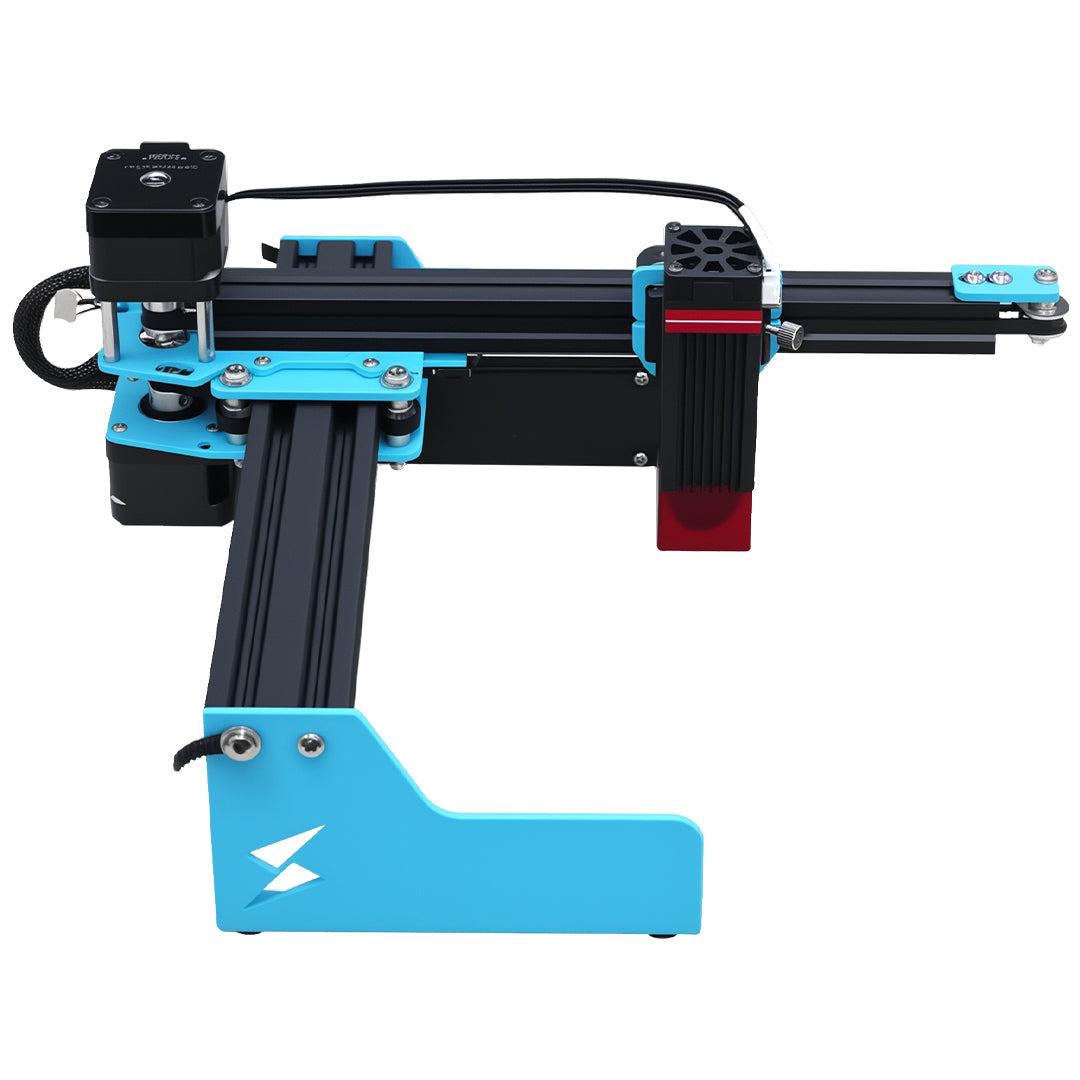
The TYVOK X1S Pro is positioned around an 800 × 2000 mm large-format work area. A sheet layout may produce many small kits, yet the shipping unit is still one customer's complete set. Separate kits and confirm their contents before choosing the final package.
| Packing check | What a useful sample demonstrates |
|---|---|
| Actual internal depth | Closed package contains the stack without forced bowing |
| Side clearance | Contents cannot slide into an unsupported corner |
| Hardware position | Hard pieces cannot press directly into fragile parts |
| Opening sequence | Instructions and numbered parts remain easy to identify |
| Handling trial | No newly loose pieces or visible deformation afterward |
Assemble several representative samples and perform appropriate handling trials before committing to a large packaging order. Review failures by opening the package and inspecting the parts, not simply listening for noise. Use a carrier or packaging specialist's requirements where applicable; this is not a shipping-damage guarantee.
Can I shrink-wrap the kit and use the same deep mailer?
Wrapping may hold the stack together, but the wrapped stack can still move as a unit. Check the cavity and bending support as separate problems. Packaging films and other unknown plastics stay out of the laser process; packaging takes place after the cut parts are cool and ready for handling.
Should the assembly instructions sit above or below the parts?
Choose a position the recipient can discover without spilling the kit. Test the first-builder experience with the actual packed arrangement. For parts going to a printer instead of a retail buyer, protect the orientation reference and printable face agreed in the blank handoff; those features determine how the next person handles the stack.